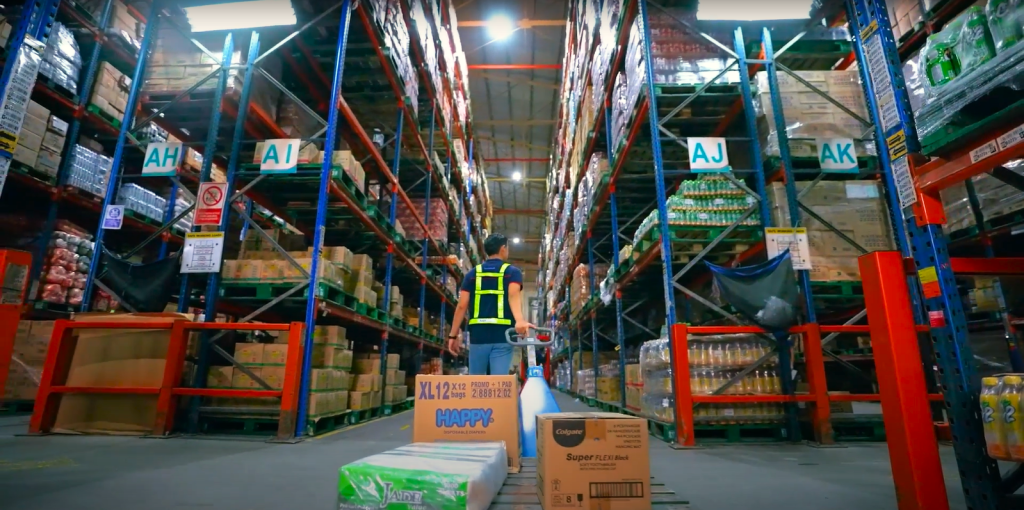
FAST Logistics Group, the country’s leading end-to-end logistics solutions provider, is calling on companies to adopt a Forward Stocking Strategy that places inventory closer to customers to reduce stockouts and keep goods moving during typhoons and other supply chain disruptions.
The logistics provider said 2025 underscored the urgency of building disruption-ready distribution networks, with the Philippines experiencing more than 20 tropical cyclones, according to state weather bureau PAGASA. Back-to-back Typhoons Tino and Uwan damaged infrastructure, restricted routes, and delayed shipments—particularly cargo moving from Metro Manila to provincial markets.
Based on FAST’s operational experience:
- One day of port closure can result in three days of industry-wide delivery delays
- Eight consecutive days of port closure during successive storms in Q4 2025 led to delays stretching up to 24 days
“The question for business leaders is not whether disruption will happen, but how prepared the network is when it does,” said FAST CEO for Logistics Manuel L. Onrejas Jr.
What is Forward Stocking Strategy
FAST is thus advocating for Forward Stocking Strategy. It is a resilience-focused and proactive approach that pre-positions inventory in strategic warehouse locations near key cities and demand centers before disruptions occur.
This allows faster replenishment when routes, ports, or infrastructure are constrained.
The readiness framework of the Forward Stocking Strategy follows three steps:
- Pre-position inventory from factories or central warehouses to forward stock locations or sites
- Protect goods with disaster preparedness controls
- Rapid deployment of inventory to stores using FDS
Manny said the strategy is designed for the realities of an archipelagic country where supply chains depend on a delicate mix of land, sea, and air connectivity.
Why Philippine Businesses Need Forward Stocking Strategy
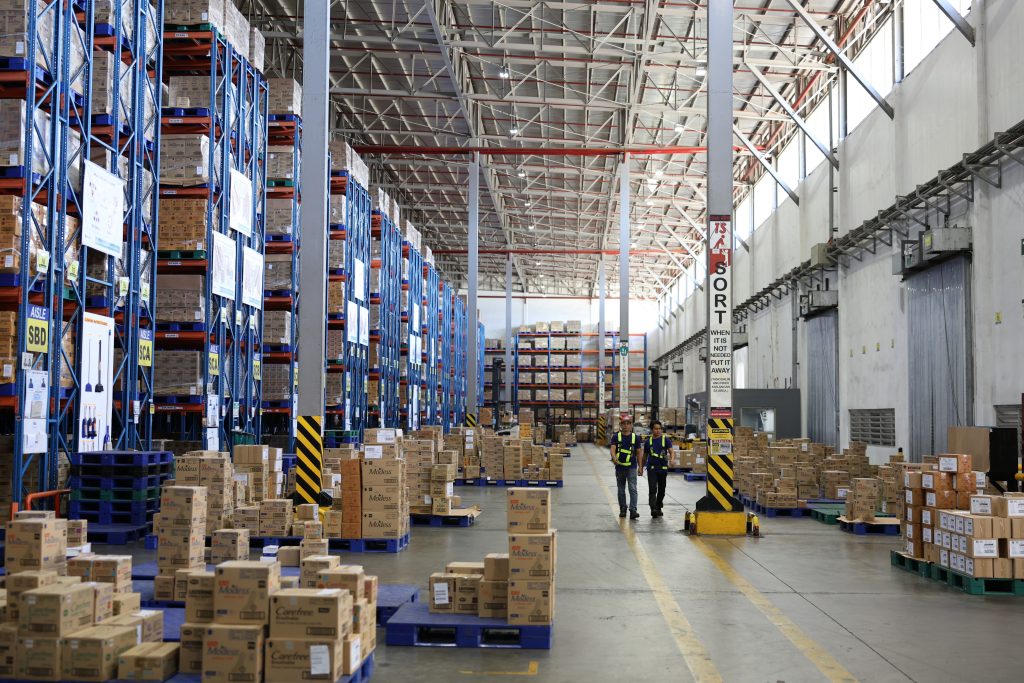
Based on FAST’s 2025 experience, Manny said consumer brands that had inventory already pre-positioned in typhoon-hit areas maintained stability, while those relying on long-haul replenishment from central hubs struggled to keep shelves stocked.
Manny highlighted that essential goods such as canned goods, instant noodles, detergents, and bar soaps must remain accessible when movement is disrupted.
“When demand spikes in calamity-hit areas, the real constraint becomes inventory availability and replenishment speed,” Manny said. “Forward stocking gives businesses a way to respond immediately instead of waiting for the network to normalize.”
FAST also pointed to infrastructure constraints that weaken supply chain reliability. The rehabilitation and retrofitting of the San Juanico Bridge temporarily affected RoRo operations and freight between Eastern Visayas and Luzon, as the bridge’s load capacity was upgraded from three tons to 15 tons.
Manny noted that lean inventory models—often celebrated in developed economies—can become “fragile” in an archipelagic country like the Philippines with complex inter-island networks. Instead, he said businesses should shift to “smart inventory” by moving stocks closer to consumers ahead of disruption-heavy periods.
When Should Businesses Utilize Forward Stocking Strategy
For FAST, the Forward Stocking Strategy is particularly critical during typhoon season from June to November, which overlaps with higher retail demand ahead of the holiday period. Companies should therefore implement this solution in advance of the typhoon season to ensure supply continuity.
“Consumers should never face empty shelves when they need essentials most,” Manny said. “For businesses, stockouts mean lost sales. For communities, it means disruption to daily life.”
To execute the Forward Stocking Strategy, FAST said companies typically partner with a Third-Party Logistics (3PL) provider that can manage warehousing and transport logistics under clear service level agreements.
What Makes FAST the Best Implementor of Forward Stocking Strategy
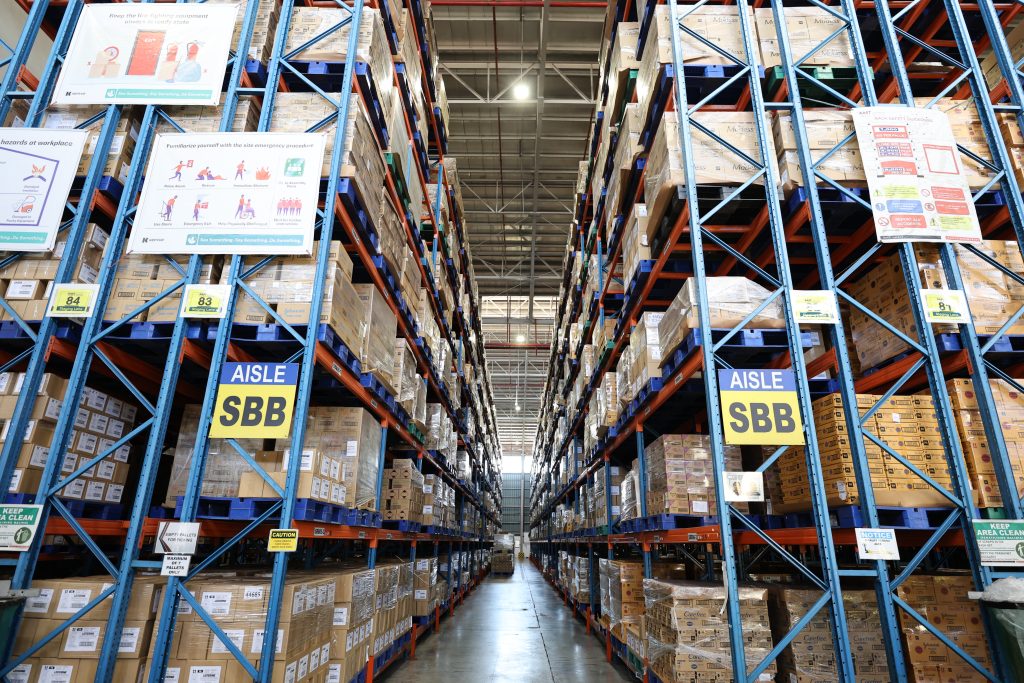
FAST, which operates the country’s largest warehousing and transport network, is the best partner for Forward Stocking Strategy. It has a nationwide presence—about 94% across Luzon, Visayas, and Mindanao, as well as over 160 warehouses and more than 3,100 fleet.
FAST also offers multi-modal transport options via land, RoRo, air, and sea, with its robust network of partner truckers, shipping companies, and airlines. Its end-to-end capabilities also enable clients to store inventory in strategic forward stock locations.
As a 3PL company, FAST also provides intelligent ColdChain solutions, including systems-driven cold storage and refrigerated transport for perishable goods.
With end-to-end execution and a single accountable provider, FAST customers get tighter coordination, clearer service levels, and quicker deployment when conditions change.
Manny also stressed that FAST’s Forward Stocking Strategy is supported by integrated Warehouse Management System and Transport Management System that provide real-time visibility down to pallet and SKU level.
In addition, he cited FAST’s last-leg delivery capabilities for speedy deliveries from forward stock locations to stores.
With over 50 years of industry leadership, FAST is also the trusted logistics partner of multinational companies and major conglomerates. FAST has the experience and expertise in executing the Forward Stocking Strategy at scale, especially during disruption-prone periods.
FAST is preparing for a wider rollout of Forward Stocking Strategy through site readiness checks and disaster audits, standardized SLAs, trained operations and customer service teams, and reporting routines such as daily stock updates and weekly KPI reviews.
“Resilience has to be designed into the network before the storm arrives,” Manny said. “Forward stocking is one of the most practical ways to do that.”
Connect with FAST Solutions Experts to learn more about how Forward Stocking Strategy can help your business
Categories
-

FAST Ahead
Includes case studies and testimonials of our partners as well as other featurettes from industry experts
-

FAST Hacks
We simplify logistics terms and provide practical tips and solutions for the DIY in you
-

FAST Highlights
Know more about our history, various brands, achievements, and news updates
-

FAST Moments
Get to know the people of FAST, our employee programs, as well as our various ways of giving back to the community
-
FAST Solutions
Learn more about the various logistics solutions that we cater to and offer our clients, as well as tech innovations, and service facilities
Related Stories

Cargo Shipping from Mindanao to Luzon and Visayas: How FAST Helps BF Industries Scale Nationwide
Cargo shipping from Mindanao to Luzon and Visayas is a growth enabler for fast-growing businesses in the region. As demand expands, companies need a transport and warehousing partner that can scale with them, manage peak...
FAST Logistics Innovation Prize Launched at Philippine Startup Week 2024
FAST Logistics Group, the leading end-to-end logistics and selling and distribution company in the Philippines, launched the FAST Logistics Innovation Prize at the Philippine Startup Week 2024 – The Innovation Chal...
Unlocking Growth – Challenges and Opportunities in the Philippine Livestock and Poultry Sector
The livestock and poultry sector is an integral part of the Philippine economy. It not only provides livelihoods for millions of Filipinos but also increases the country’s agricultural output. The sector is continu...

FAST Logistics Group is the leading end-to-end logistics and supply chain solutions provider in the Philippines. With over 50 years of industry leadership, we offer a comprehensive suite of services including multi-modal transportation, warehousing, cross-docking, cold chain, and toll manufacturing solutions.
© Copyright 2026 FAST Logistics