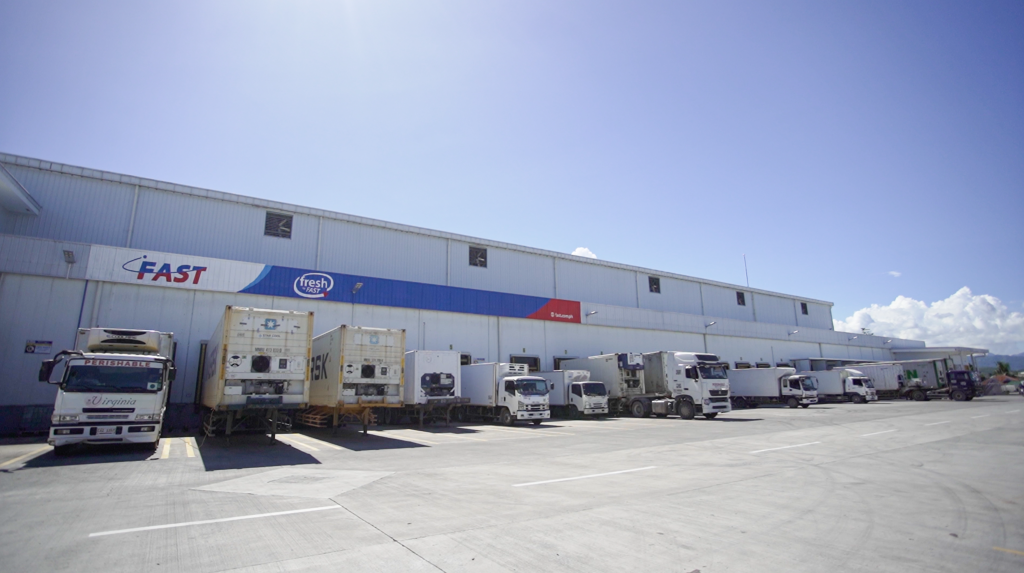
Food and beverage companies operate one of the most demanding supply chains in the Philippines. Unlike many industries where inventory can sit in storage for months, food and beverage manufacturers work with products that are perishable, highly regulated, seasonally volatile, and expected to be available nationwide every single day.
Consumers expect supermarket shelves to remain stocked. Restaurants cannot afford ingredient shortages. Convenience stores require multiple replenishments daily. Managing all of these moving parts requires far more than transportation. It requires an integrated supply chain strategy.
Here’s everything you need to know about food and beverage supply chain management in the Philippines, including key components, challenges and opportunities, best practices, KPIs, strategic logistics solutions, and success stories.
This blog is helpful for companies and businesses in the F&B sector looking to improve their supply chain management, as well as logistics professionals looking for best practices to improve their processes and systems.
What is Food and Beverage Supply Chain Management
Food and beverage supply chain management is the end-to-end coordination of people, processes, inventory, information, transportation, and storage facilities required to move food products from sources and suppliers to manufacturing plants, warehouses, retailers, restaurants, and ultimately consumers.
It is an intricate process that requires multiple vendors, managing information flow, monitoring production, adherence to food safety standards, and looking for efficiencies to reduce cost-to-serve and make the finished goods available and accessible to people who consume the food.
The flow of goods in the food and beverage sector typically looks like this:
- Raw goods and materials are produced by farmers or growers
- Materials are transported to mills or processing facilities to create finished products
- Products are sent to warehouses and distribution centers
- Products are shipped to retailers like restaurants and supermarkets
- Products are sold to customers and end consumers
Unlike other industries, food supply chains must balance three critical objectives simultaneously:
- Product freshness
- Food safety
- Cost efficiency
The critical part of food and beverage supply chain management is looking for a partner that can support their transport and storage requirements from the sourcing of raw materials, as well as retail and distribution to key markets.
Behind this simple flow are dozens of interconnected logistics activities:
- Supplier coordination and procurement
- Inbound logistics
- Production support
- Warehouse management
- Inventory control
- Dry storage and cold storage
- Nationwide transportation
- Retail distribution
- Reverse logistics
- Demand planning
Modern food and beverage manufacturers instead adopt integrated supply chain management, where every logistics activity works together under one coordinated strategy.
Key Components of Food and Beverage Logistics and Supply Chain Management
Procurement and Inbound Logistics
Supply chains begin with sourcing agricultural products, ingredients, packaging materials, and manufacturing inputs. Reliable inbound transportation minimizes production disruptions and prevents costly plant downtime.
Manufacturing Support
Production depends on the timely availability of raw materials. Integrated logistics providers coordinate inbound deliveries with production schedules to minimize inventory while ensuring uninterrupted operations.
Warehouse Management
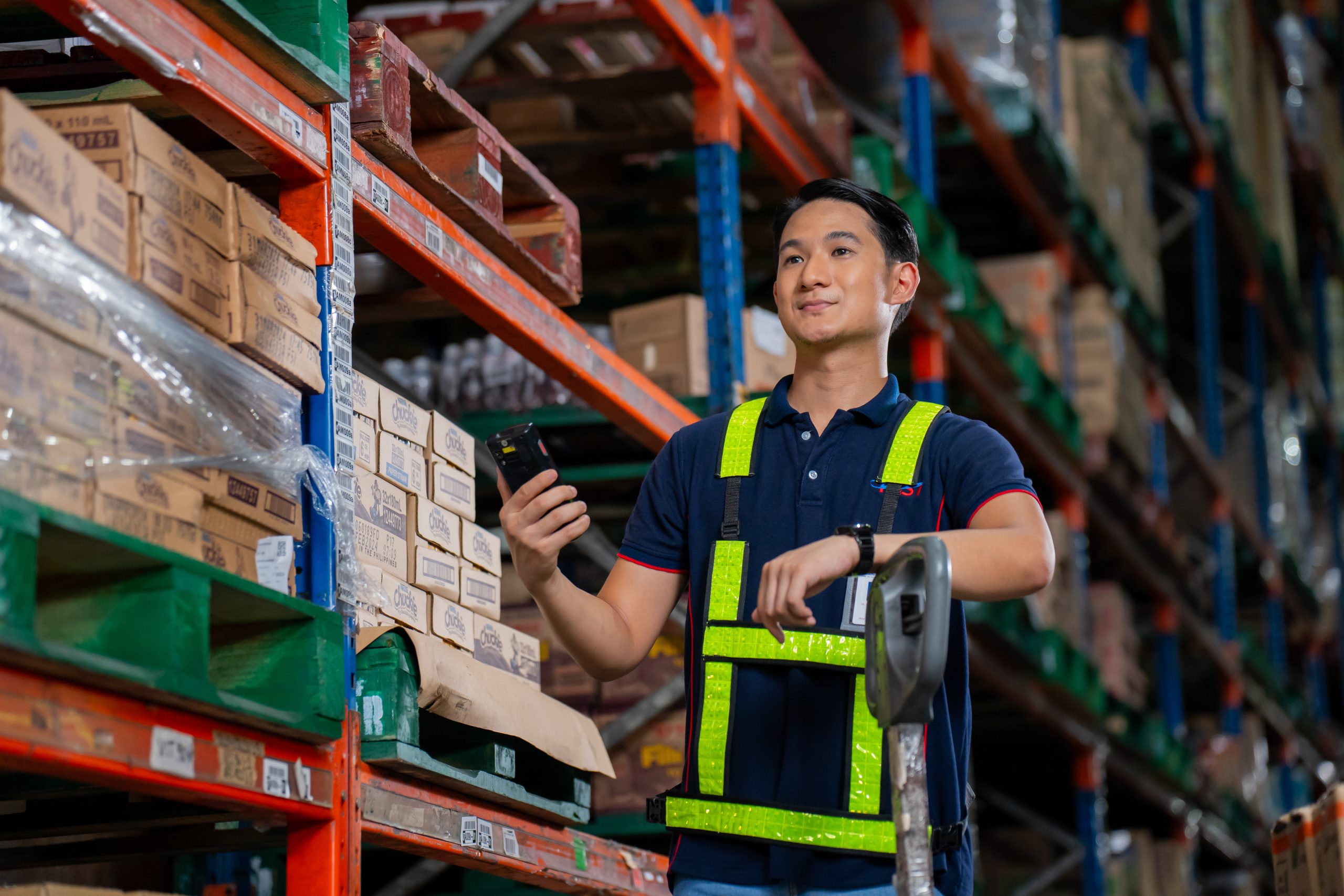
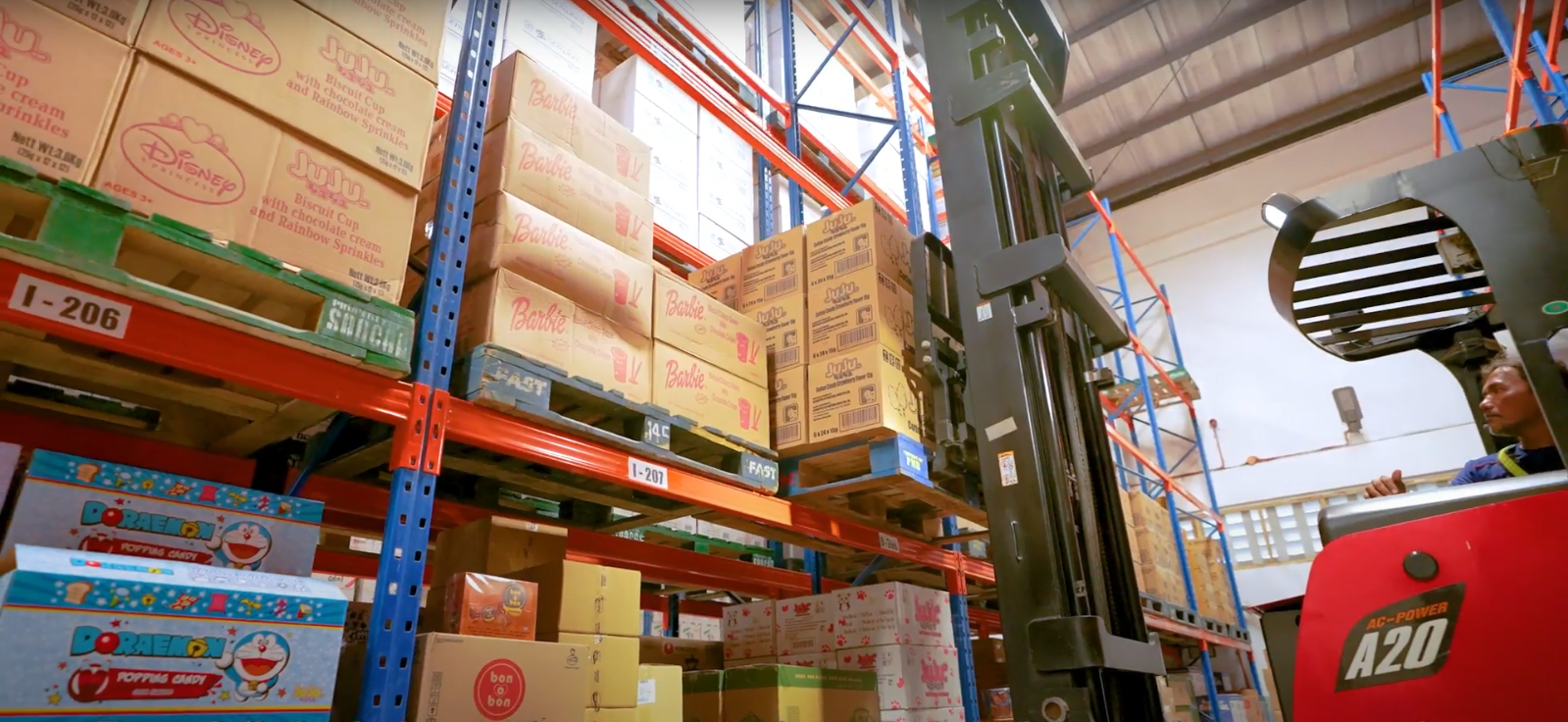
Warehouses serve as inventory buffers between manufacturing and demand. Unlike retail goods, food and beverages are highly sensitive to their environment. Warehouses act as specialized, climate-controlled environments that regulate temperature and humidity.
Modern food warehouses provide:
- FIFO (first-in, first-out) inventory management
- FEFO (first expired, first out) inventory rotation
- WMS-driven inventory visibility
- TMS-enabled transport processes
- Cross-docking
- Order picking
- Quality control
Transportation
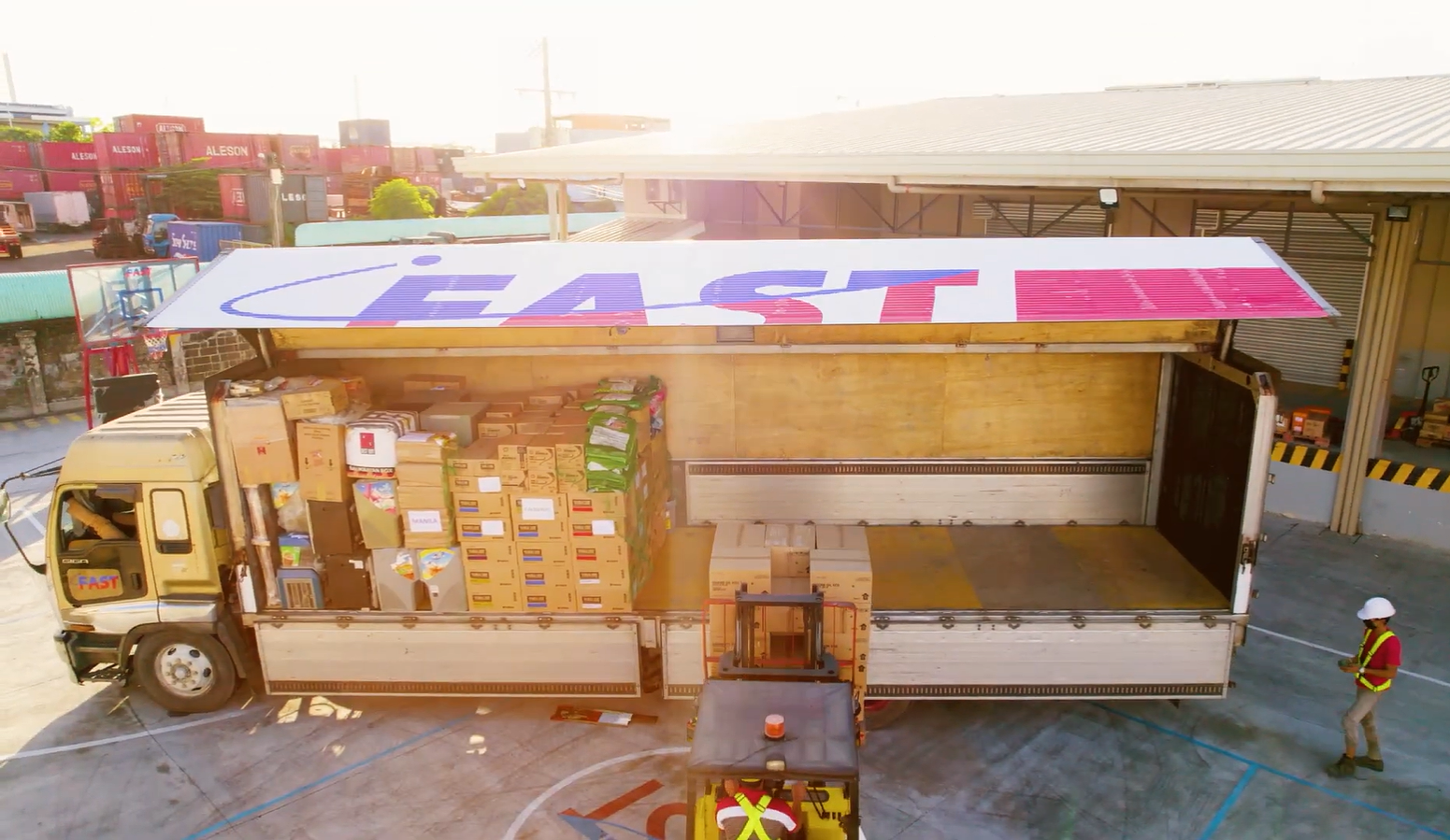
Transport operation is a critical component of the Food and Beverage supply chain. It dictates whether products arrive fresh, safe, and on time. Because F&B goods are heavily perishable and strictly regulated, transportation ensures food safety, prevents massive waste, and directly impacts a manufacturer’s bottom line.
Domestic transportation combines:
- Full truckload (FTL) for land freight
- Less-than-truckload (LTL) for land freight
- Partial truckload (PTL) for land freight
- Full container load (FCL) for sea freight
- Less-than-container load (LCL) for sea freight
- RoRo shipping
- Air freight
Choosing the correct freight mode balances cost, speed, and service levels.
Retail Distribution
Retail replenishment has become increasingly demanding.
Major retailers require:
- Scheduled deliveries
- OTIF compliance
- Electronic proof of delivery
- Barcode compliance
- Appointment scheduling
Failure to meet retailer requirements often results in penalties.
Reverse Logistics
Returned products, damaged inventory, expired goods, and recalls must be managed efficiently to minimize losses while maintaining regulatory compliance.
Food and Beverage Freight Modes
Selecting the right freight mode is one of the most important decisions in food and beverage logistics. Different products have different transportation requirements depending on shipment volume, delivery urgency, product value, shelf life, and destination.
Here are the most common freight modes used by food and beverage manufacturers in the Philippines.
Full Truckload (FTL)
Full Truckload or FTL shipping means an entire truck is dedicated to a single shipper’s products. Since the vehicle carries only one customer’s cargo, shipments typically move directly from the pickup location to the delivery destination without additional stops or cargo consolidation.
When to Use Full Truckload or FTL
FTL shipping is ideal when:
- Shipping enough products to utilize most or all of the truck’s capacity
- Delivering directly to distribution centers or regional warehouses
- Transporting fragile, temperature-sensitive, or high-value food products
- Meeting strict delivery appointments for modern trade customers
- Reducing product handling to minimize damage or contamination risks
Advantages of FTL Shipping
- Cost-effective for larger shipments – Although the upfront transportation cost is higher than shared transport, the cost per pallet or case decreases significantly when the truck is fully utilized. High-volume manufacturers often achieve better transportation efficiency through FTL shipments.
- Faster transit times – Since trucks travel directly to the destination without multiple pickups or deliveries, transit times are generally shorter. Faster delivery is particularly valuable for perishable food products with limited shelf life.
- Reduced product handling – Because cargo remains on one vehicle throughout the journey, FTL minimizes loading and unloading activities. Less handling reduces the risk of damaged packaging, contamination, and product spoilage.
- Greater shipment control – FTL provides greater flexibility in scheduling pickup and delivery times, making it easier to coordinate with manufacturing schedules and retailer appointments.
Limitations of FTL Shipping
- Higher costs for smaller shipments – Businesses shipping only a few pallets may end up paying for significant unused space, making FTL less economical than shared transportation options.
- Limited flexibility for fluctuating demand – Companies with inconsistent shipment volumes may find it difficult to maximize truck utilization, resulting in higher transportation costs.
Less than truckload (LTL)
Less-than-truckload or LTL shipping is designed for smaller shipments that do not require an entire truck. Multiple customers share the same vehicle, allowing transportation costs to be distributed across several shipments.
For food and beverage businesses, LTL is often used for regional replenishment, lower-volume deliveries, or supplying independent retailers that do not require full truckloads. It is also well-suited for F&B companies that are willing to share truck space with other food and beverage businesses whose shipments are bound for the same or nearby destinations.
When to Use LTL Shipping
LTL is suitable when:
- Shipping smaller volumes regularly
- Delivering to multiple customers in the same region
- Managing lower transportation budgets
- Supporting market expansion into new territories
- Replenishing inventory with smaller, more frequent shipments
Advantages of LTL Shipping
- Lower transportation costs – Since truck space is shared among multiple customers, businesses only pay for the trailer space they occupy, making LTL an economical solution for smaller shipments
- Improved shipment frequency – Instead of waiting until enough inventory accumulates to fill an entire truck, F&B manufacturers can dispatch products more frequently, helping maintain inventory availability at retail outlets
- Convenient pickup and delivery – Most LTL providers offer door-to-door pickup and delivery services, eliminating the need for businesses to transport products to freight terminals
Limitations of LTL Shipping
- Longer transit times – Because trucks make multiple stops to collect and deliver shipments, transit times are generally longer than FTL
- Greater cargo handling – Products are often transferred between terminals during transit, increasing handling frequency. This can increase the risk of damaged packaging or spoilage for sensitive food products
- Less shipment control – Pickup schedules, routing, and delivery windows are largely determined by the carrier rather than the shipper
Partial truckload or PTL
Partial truckloads consolidate freight that won’t require a full truckload while keeping goods on one truck. Shipments are matched for compatibility in real time, so goods aren’t waiting around for truckloads headed in the same direction.
PTL shipping bridges the gap between FTL and LTL. It is designed for medium-sized shipments that occupy a significant portion of a truck but do not require exclusive use of the entire vehicle.
Unlike traditional LTL, PTL shipments usually remain on the same truck throughout the journey, reducing cargo transfers while allowing transportation costs to be shared among compatible shipments.
When to Use PTL Shipping
PTL is ideal when:
- Shipping between 5 and 14 pallets
- Transporting products that require less handling than LTL
- Looking for lower costs than FTL
- Shipping to regional warehouses or distributors
- Balancing transportation cost and transit speed
Advantages of PTL Shipping
- Lower transportation cost than FTL – Businesses benefit from sharing transportation costs while avoiding the expense of reserving an entire truck
- Reduced cargo handling – Since PTL shipments generally remain on one truck from origin to destination, the likelihood of product damage is significantly lower than traditional LTL shipments
- Faster transit times – With fewer terminal transfers and less cargo consolidation, PTL often reaches destinations more quickly than LTL
- Simplified pricing – PTL pricing is generally based on trailer space used rather than freight classifications, making transportation costs easier to estimate
Limitations of PTL Shipping
- Less scheduling flexibility – Although faster than LTL, PTL shipments still depend on compatible freight being available
- Not suitable for very small shipments – Businesses shipping only a few pallets usually benefit more from LTL services
- Availability may vary – PTL services are not always available across every route or province, particularly in areas with lower freight volumes
Full Container Load or FCL
For food and beverage manufacturers distributing products across the Philippine archipelago, FCL is one of the most efficient sea freight solutions. FCL means a single shipper utilizes an entire shipping container, whether or not the container is completely full.
FCL is commonly used for transporting large volumes of products between Luzon, Visayas, and Mindanao, especially when supplying regional distribution centers or large retail networks. Most food and beverage companies in the Philippines operate their primary distribution centers in Luzon, making FCL shipping essential for transporting goods to the Visayas (especially key centers Cebu, Bacolod, Iloilo, Ormoc, and Tacloban) and Mindanao (Davao, Cagayan de Oro, General Santos City, Butuan City, and Zamboanga).
In the Philippines, businesses typically use either 20-foot containers, which offer approximately 33 cubic meters (CBM) of cargo space and support payloads of up to 21,600 kg, or 40-foot containers, which provide approximately 67cbm of cargo space and support payloads of up to 27,600 kg.
Advantages of FCL Shipping
- Faster loading and unloading since containers remain sealed from origin to destination
- Reduced cargo handling, lowering the risk of contamination and damage
- Better security for high-volume or high-value shipments
- More predictable transit schedules for nationwide distribution
Limitations of FCL Shipping
- Higher cost for businesses with lower shipment volumes
- Requires sufficient inventory to maximize container utilization
Less-than-Container Load (LCL)
Less-than-Container Load or LCL shipping allows multiple shippers to share a single container, making it an economical option for companies that do not have enough cargo to fill an entire container.
LCL is commonly used by SMEs, importers, and food manufacturers making smaller inter-island shipments.
Advantages of LCL Shipping
- Lower shipping costs for smaller cargo volumes
- Greater flexibility for businesses with fluctuating shipment sizes
- Allows businesses to ship products more frequently without waiting to fill an entire container
Limitations of LCL Shipping
- Longer transit times due to container consolidation and deconsolidation
- Increased cargo handling compared to FCL
- Higher risk of delays during port operations
Food and Beverage Warehousing Requirement and Solutions
Storage requirements vary depending on several factors, including product type, sales volume, distribution channels, shipment frequency, seasonality, and temperature requirements.
Dedicated Warehousing
Dedicated warehousing involves using an entire warehouse facility exclusively for one company’s products and operations. In the Philippines, these facilities may be owned and operated by the manufacturer or outsourced to a third-party logistics (3PL) provider that manages the warehouse on the company’s behalf.
This setup is often preferred by large food and beverage manufacturers with predictable inventory volumes, complex operational requirements, or strict regulatory compliance standards. Since warehouse space, manpower, equipment, and processes are tailored to a single business, dedicated warehousing provides greater operational control, customized workflows, and higher service consistency.
Dedicated warehouses are particularly beneficial for companies that:
- Handle high-volume inventory throughout the year
- Require specialized storage environments such as ambient, chilled, or frozen facilities
- Serve nationwide retail networks with daily replenishment requirements
- Operate multiple production lines with continuous inventory movement
- Require dedicated personnel, equipment, and quality control procedures
Although dedicated warehousing requires a larger operational investment than shared facilities, it offers greater flexibility in designing warehouse layouts, implementing automation, and integrating warehouse management systems (WMS) to improve productivity and inventory visibility.
Shared Warehousing
Not every food and beverage company requires an entire warehouse facility. Businesses experiencing seasonal demand, launching new products, expanding into new markets, or managing fluctuating inventory levels often benefit from shared warehousing solutions.
Shared warehousing allows multiple businesses to utilize the same warehouse while only paying for the storage space and services they consume. Many third-party logistics providers also offer pay-per-pallet or pay-per-day pricing models, enabling businesses to reduce fixed costs while maintaining access to professional warehouse operations.
This model is ideal for:
- Small and medium-sized food manufacturers
- Importers and distributors
- Seasonal businesses
- Companies testing new regional markets
- Businesses managing promotional or holiday inventory
Shared warehousing provides greater operational flexibility while eliminating the capital expenditure associated with constructing or leasing dedicated warehouse facilities. As demand increases, companies can easily scale their storage requirements without disrupting ongoing operations.
Inventory Management Best Practices for Food and Beverage Companies
Regardless of whether a company utilizes dedicated or shared warehousing, effective inventory management remains essential to maintaining product quality and minimizing waste.
Food products have limited shelf lives, making inventory rotation a critical warehouse function. Two inventory management principles are widely adopted across the food and beverage industry:
First-In, First-Out (FIFO)
FIFO ensures that older inventory is dispatched before newer stock. This method is commonly used for products with relatively stable expiration periods and helps prevent aging inventory from remaining in storage for extended periods.
First-Expiry, First-Out (FEFO)
FEFO prioritizes products based on their expiration dates rather than their receiving dates. This approach is particularly important for products with varying manufacturing dates or shelf lives, helping reduce spoilage and ensuring consumers receive fresher products.
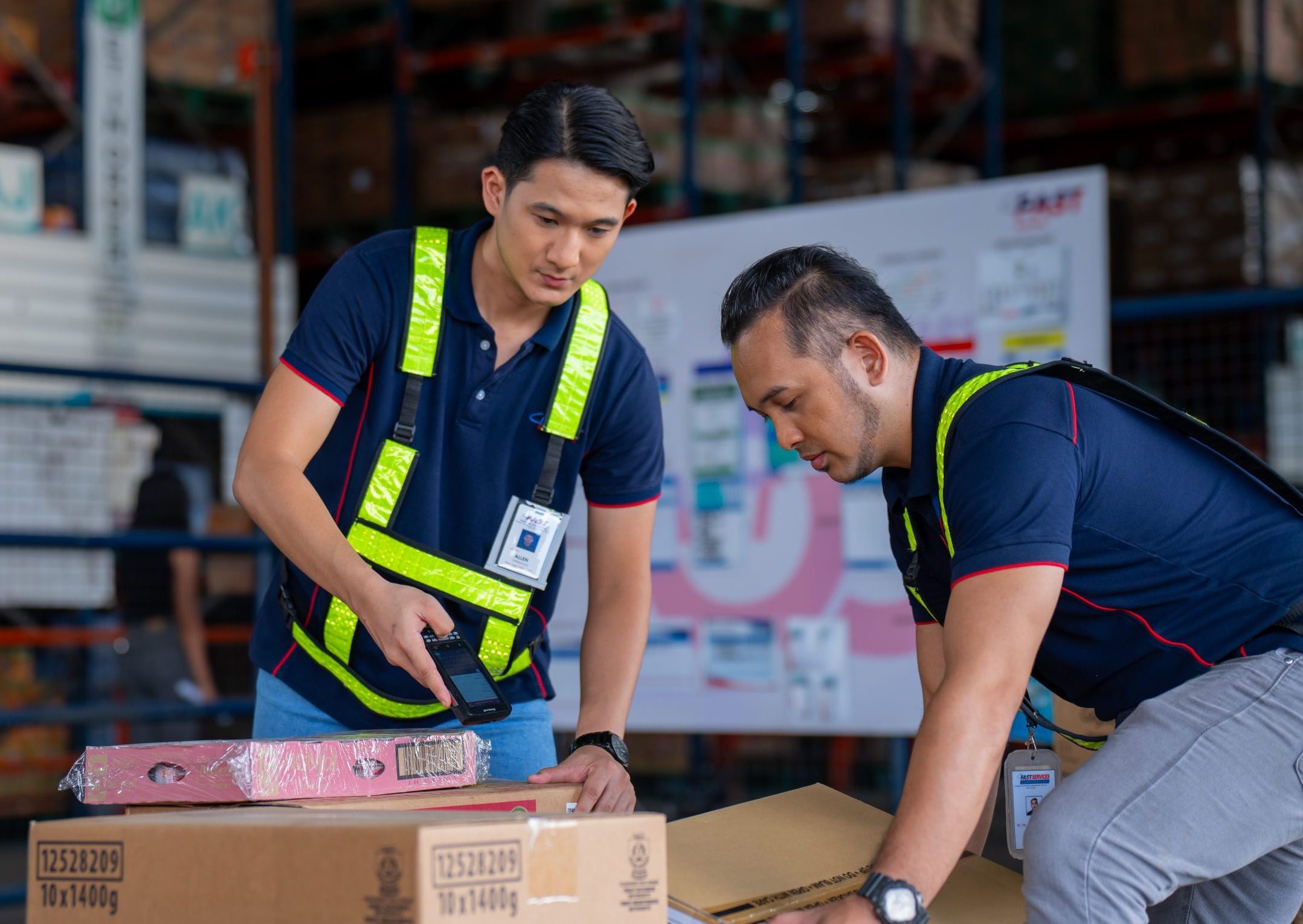
Modern warehouse management systems support FIFO and FEFO through barcode scanning, batch tracking, lot traceability, and real-time inventory visibility. These capabilities help manufacturers maintain accurate inventory records, comply with food safety regulations, and respond quickly in the event of product recalls.
Challenges and Opportunities in Food and Beverage Logistics and Supply Chain Management
Here are some of the most common challenges faced by food and beverage businesses and opportunities they can leverage:
Supply Variability of Raw Materials
Many food manufacturers depend on agricultural raw materials that are highly susceptible to weather conditions, pests, diseases, seasonal harvest cycles, and fluctuations in commodity prices. Typhoons, droughts, flooding, and other climate-related events can significantly disrupt supply, resulting in production delays and increased procurement costs.
Maintaining a diversified supplier network and building stronger collaboration with producers can help reduce sourcing risks while improving supply continuity.
Food Safety and Product Quality
Food safety remains one of the industry’s highest priorities. Improper handling, contamination, damaged packaging, or temperature excursions can compromise product quality, trigger costly recalls, and damage consumer trust.
Manufacturers must implement stringent quality assurance procedures throughout warehousing, transportation, and distribution while complying with regulations established by the Food and Drug Administration (FDA) and other regulatory agencies.
Cold Chain Integrity
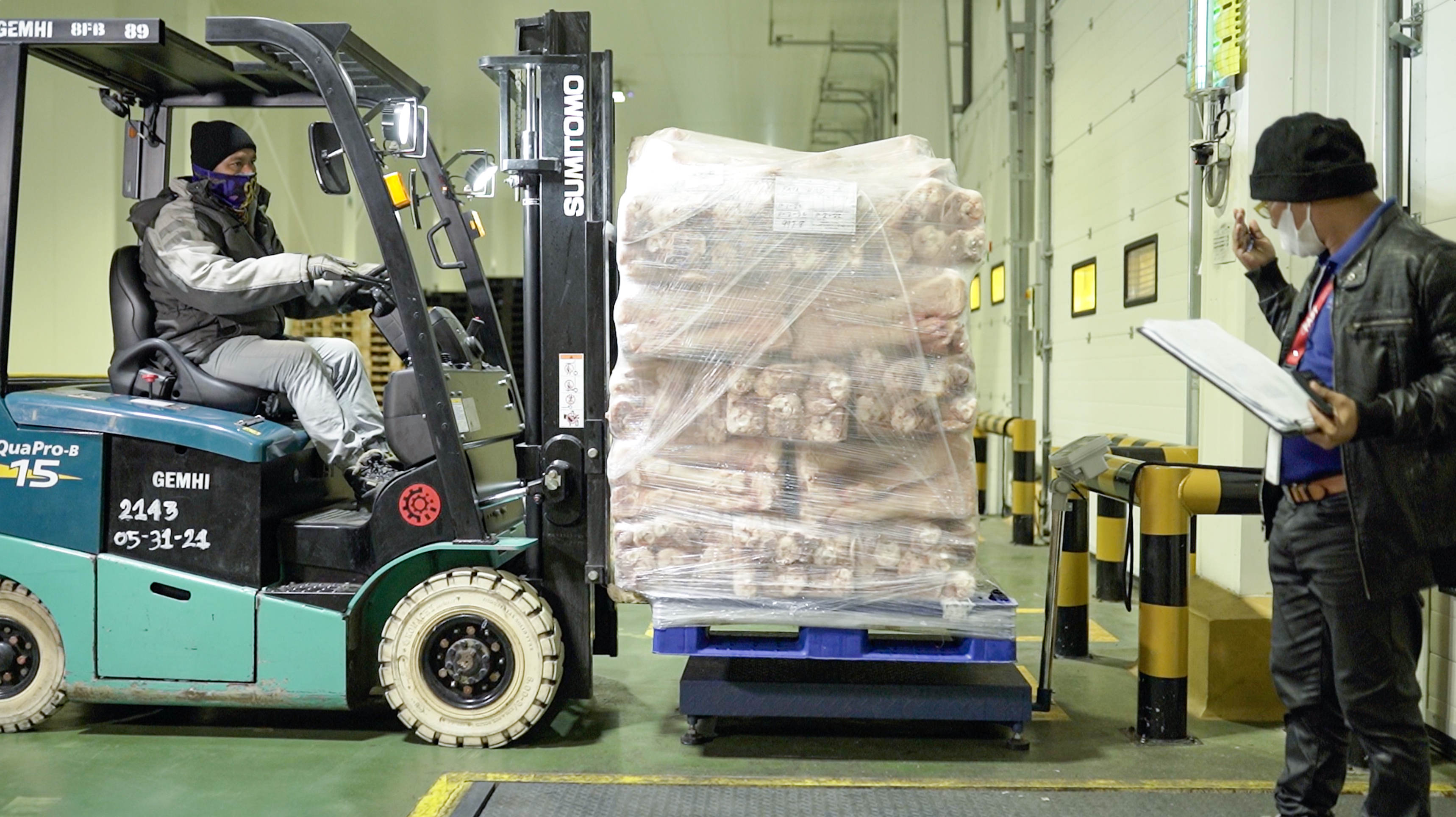
Products such as dairy, frozen foods, meat, seafood, ready-to-eat meals, and beverages require uninterrupted temperature control from production to final delivery.
Any break in the cold chain can reduce shelf life, increase spoilage, and result in financial losses. Maintaining temperature-controlled warehouses, refrigerated transport, and continuous monitoring systems is essential for preserving product quality throughout the supply chain.
Rising Logistics Costs
Increasing fuel prices, labor costs, warehousing expenses, and transportation rates continue to place pressure on profit margins. For manufacturers serving both modern trade and general trade nationwide, logistics often represents one of the largest operational expenses.
Many companies are responding by optimizing transportation routes, adopting co-loading strategies, improving warehouse productivity, and partnering with integrated third-party logistics providers to reduce overall cost-to-serve.
Complex Retail Distribution Requirements
Major retail chain outlets in the Philippines require strict compliance with delivery appointments, barcode standards, electronic proof of delivery, and On-Time, In-Full (OTIF) performance targets. Failure to meet these requirements may result in chargebacks, rejected deliveries, or lost business opportunities.
An integrated logistics network with synchronized warehousing, transportation, and retail distribution helps manufacturers consistently meet retailer expectations while improving service levels.
Expanding Distribution Channels
The Philippine food and beverage market continues to diversify. Manufacturers now distribute products through supermarkets, convenience stores, restaurants, wholesalers, distributors, institutional buyers, e-commerce platforms, and direct-to-consumer channels.
Each channel has different ordering patterns, inventory requirements, delivery frequencies, and service-level expectations. Managing these channels efficiently requires flexible logistics operations supported by data-driven planning and nationwide distribution capabilities.
Traceability and Inventory Visibility
Consumers, retailers, and regulators increasingly expect complete traceability across the food supply chain.
Companies relying on manual documentation or disconnected systems often struggle to identify affected inventory during product recalls or quality investigations. Modern warehouse management systems, barcode technology, and lot tracking improve traceability while providing real-time visibility into inventory across multiple locations.
Best Practices in Food and Beverage Supply Chain Management
1. Build a Resilient Multi-Channel Distribution Network
A resilient distribution network ensures products reach supermarkets, convenience stores, restaurants, wholesalers, and e-commerce customers without disruption. Diversifying transportation routes, distribution centers, and delivery channels minimizes the impact of supply chain disruptions while maintaining product availability.
2. Improve Demand Forecasting and Inventory Planning
Accurate demand forecasting reduces stockouts, excess inventory, and product spoilage. Combining historical sales data, seasonal demand patterns, and market trends enables businesses to optimize inventory levels while improving service performance.
3. Reduce Lead Times Through Strategic Warehousing
Positioning inventory closer to demand centers shortens delivery times and improves responsiveness. Regional distribution centers, cross-docking facilities, and forward stocking strategies help businesses replenish customers faster while lowering transportation costs.
4. Increase End-to-End Supply Chain Visibility
Real-time visibility allows businesses to monitor inventory, shipments, and delivery performance across the supply chain. Digital platforms and control towers provide actionable insights that support faster decision-making and proactive issue resolution.
5. Optimize Transportation Costs Without Compromising Service
Transportation represents one of the largest logistics expenses for food and beverage companies. Route optimization, load consolidation, shipment planning, and the appropriate use of FTL and LTL services help reduce costs while maintaining delivery reliability.
6. Prioritize Food Safety and Regulatory Compliance
Compliance with food safety standards is essential throughout storage, transportation, and distribution. Standardized handling procedures, traceability systems, and regular quality audits help protect consumers while reducing operational risks.
7. Leverage Technology and Supply Chain Automation
Warehouse Management Systems (WMS), Transport Management Systems (TMS), barcode scanning, RFID, and AI-powered analytics improve operational efficiency and accuracy. Automation reduces manual errors while increasing productivity across the supply chain.
8. Develop Contingency Plans for Supply Chain Disruptions
Natural disasters, supplier shortages, port congestion, and transportation delays can significantly affect food distribution. Business continuity plans, supplier diversification, and flexible logistics networks enable companies to recover more quickly from disruptions.
9. Partner with an Experienced Third-Party Logistics (3PL) Provider
An experienced 3PL provider offers scalable warehousing, transportation, cold chain, and distribution capabilities that allow food and beverage companies to focus on their core business. By leveraging an established nationwide logistics network, businesses can improve service levels, expand into new markets, and reduce overall supply chain complexity.
10. Integrate Sustainability into Supply Chain Operations
Sustainable logistics practices reduce environmental impact while improving long-term operational efficiency. Renewable energy, route optimization, fuel-efficient transportation, recyclable packaging, and waste reduction initiatives help companies achieve both sustainability and business goals.
Logistics KPIs Every Food and Beverage Company Should Track
On-Time, In-Full (OTIF)
On-Time, In-Full (OTIF) measures the percentage of customer orders delivered on schedule and in the correct quantity. A high OTIF score indicates reliable order fulfillment and helps manufacturers meet retailer requirements, avoid penalties, and strengthen customer relationships.
Fill Rate
The Fill Rate measures how much customer demand can be fulfilled immediately using available inventory. Maintaining a high fill rate minimizes stockouts, improves product availability, and ensures retailers receive sufficient inventory to meet consumer demand.
Inventory Accuracy
Inventory Accuracy compares recorded inventory with actual warehouse stock. Accurate inventory data supports better production planning, reduces excess inventory and stock shortages, and improves overall warehouse efficiency.
Perfect Order Rate
The Perfect Order Rate measures the percentage of orders delivered on time, in full, damage-free, and with accurate documentation. It provides a comprehensive view of order fulfillment quality and customer service performance.
Cost-to-Serve
Cost-to-Serve measures the total logistics cost of serving a customer, product, or distribution channel. It helps manufacturers identify cost drivers, improve profitability, and optimize transportation, warehousing, and inventory strategies.
Order Cycle Time
Order Cycle Time measures the total time from receiving a customer order to completing delivery. Shorter cycle times improve responsiveness, support faster replenishment, and help businesses meet increasing customer expectations.
Transportation Cost
Transportation Cost tracks the expenses associated with moving goods throughout the supply chain. Monitoring this KPI enables businesses to improve route planning, maximize vehicle utilization, and reduce overall distribution costs.
Warehouse Productivity
Warehouse Productivity measures how efficiently warehouse resources are utilized through metrics such as picking accuracy, throughput, labor productivity, and storage utilization. Higher productivity improves order fulfillment while lowering operating costs.
Tracking these logistics KPIs enables food and beverage manufacturers to continuously improve operational performance, enhance customer service, and reduce total supply chain costs. These metrics help manufacturers improve service while reducing total supply chain costs.
Strategic Logistics Solutions for Food and Beverage Companies
Food and beverage companies are increasingly adopting strategies that improve responsiveness without proportionally increasing logistics costs. These solutions help manufacturers build more agile, resilient, and efficient supply chains.
Co-loading
Co-loading consolidates shipments from multiple customers or brands into a single truck to maximize vehicle utilization. This approach reduces transportation costs, minimizes empty truck capacity, and improves delivery efficiency for smaller shipment volumes.
Forward Stocking
Forward stocking positions inventory closer to key markets through regional warehouses or distribution hubs. By reducing the distance between inventory and customers, businesses can shorten lead times, improve product availability, and respond more quickly to market demand.
Cross-Docking
Cross-docking transfers products directly from inbound to outbound vehicles with minimal storage time. This accelerates product movement, lowers inventory holding costs, and is particularly effective for fast-moving food and beverage products requiring rapid replenishment.
Technology-Enabled Logistics
WMS, TMS, real-time shipment tracking, and electronic proof of delivery provide greater visibility across the supply chain. These technologies improve inventory accuracy, optimize operations, strengthen traceability, and support faster, data-driven decision-making.
Outsourcing Requirements to Integrated Third-Party Logistics (3PL)
An integrated 3PL manages warehousing, transportation, inventory management, and distribution under a single provider. This simplifies supply chain coordination, improves end-to-end visibility, and enables businesses to scale nationwide without making significant investments in logistics infrastructure.
Because 3PL providers are measured against service-level agreements (SLAs) and key performance indicators (KPIs), they are incentivized to consistently meet the operational requirements of food and beverage companies and other industries. As a result, businesses can be confident that their logistics operations are managed according to high operational standards.
Success Stories of Food and Beverage Supply Chain Management
Nestlé Philippines
As one of the country’s largest food and beverage manufacturers, Nestlé Philippines produces and distributes a wide portfolio of products, including coffee, dairy, beverages, cereals, and culinary products. Its extensive reach across traditional trade channels, such as sari-sari stores, as well as modern trade channels, including supermarkets, grocery chains, and convenience stores, requires a highly efficient and reliable supply chain.
To support nationwide distribution, companies of this scale rely on integrated logistics solutions that combine strategically located warehouses, inventory management, and nationwide transportation. These capabilities help ensure product availability, maintain on-time deliveries, and replenish retail outlets across the Philippines while supporting seasonal demand fluctuations and market expansion.
Monde Nissin
Monde Nissin is one of the Philippines’ leading manufacturers of instant noodles, biscuits, baked goods, and other packaged food products. While many of its products are lightweight and fast-moving, the large shipment volumes required to supply distributors, regional distribution centers, and major retail chains often make full truckload or FTL and full container load or FCL the most efficient options for inter-island distribution.
To support high-volume operations, manufacturers like Monde Nissin benefit from strategically located warehousing, efficient inventory management, and an extensive transportation network that enables consistent replenishment across Luzon, the Visayas, and Mindanao. An integrated logistics provider helps streamline these operations by coordinating storage, transportation, and distribution under a single supply chain partner.
Why Leading Food Manufacturers Choose FAST Logistics Group
With over 50 years of industry leadership in Philippine logistics, FAST Logistics Group has helped food and beverage companies overcome the complexities of nationwide distribution. As an integrated supply chain partner, FAST combines warehousing, transportation, cold chain, cross-docking, value-added services, and retail distribution into a unified logistics network.
FAST’s capabilities enable manufacturers to:
- Scale nationwide without building their own logistics infrastructure
- Improve inventory visibility and service levels across multiple channels
- Reduce cost-to-serve through route optimization and co-loading
- Support temperature-sensitive products with compliant cold chain operations
- Deliver consistently to modern trade, general trade, food service, and e-commerce customers through a single logistics partner
Whether expanding into new regions, improving retailer compliance, or building a more resilient supply chain, FAST provides the operational expertise and nationwide reach to help food and beverage businesses grow sustainably. Connect with our Solutions Experts to learn more
Categories
-
FAST Ahead
Includes case studies and testimonials of our partners as well as other featurettes from industry experts
-

FAST Hacks
We simplify logistics terms and provide practical tips and solutions for the DIY in you
-

FAST Highlights
Know more about our history, various brands, achievements, and news updates
-

FAST Moments
Get to know the people of FAST, our employee programs, as well as our various ways of giving back to the community
-
FAST Solutions
Learn more about the various logistics solutions that we cater to and offer our clients, as well as tech innovations, and service facilities
Related Stories
FAST Logistics delivers Bicol’s best to OKB 2025 at Festival Mall Alabang
FAST Logistics Group, the Philippines’ leading end-to-end logistics solutions provider, is supporting micro, small, and medium enterprises from the Bicol Region at the upcoming 33rd Orgullo Kan Bicol (OKB) Regional...
Stronger MSME Logistics – FAST Logistics Champions ‘Shared Logistics’ at 2026 National Food Fair
FAST Logistics Group, the Philippines’ leading provider of integrated end-to-end logistics, reinforced the role of shared logistics as a practical and cost-efficient solution for micro, small, and medium enterprises (M...

Building Competencies – Key Questions to Ask When Designing Employee Training Program
FAST Logistics Group, the leading end-to-end logistics and selling distribution company in the Philippines, dives into the key questions managers should ask when designing an employee training program to support sustaina...

FAST Logistics Group is the leading end-to-end logistics and supply chain solutions provider in the Philippines. With over 50 years of industry leadership, we offer a comprehensive suite of services including multi-modal transportation, warehousing, cross-docking, cold chain, and toll manufacturing solutions.
© Copyright 2026 FAST Logistics