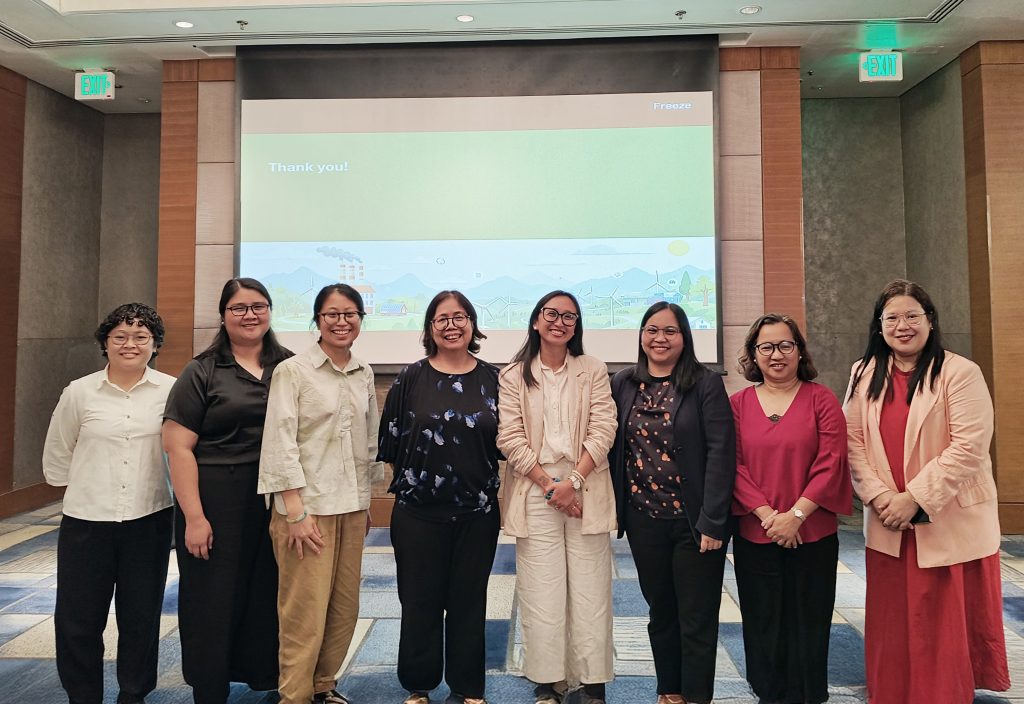
FAST Logistics Group, the Philippines’ leading provider of integrated end-to-end logistics solutions, joined a recent forum organized by the Asian Development Bank (ADB) in partnership with the United Nations Development Programme (UNDP). The event focused on practical ways to help small and medium enterprises (SMEs) transition to more resilient and environmentally sustainable practices.
The forum, titled “Greening Value Chain: Practical Approaches to Decarbonizing SMEs and Enhancing Climate Resilience,” was held on Friday, March 27, at Makati Shangri-La. It brought together policymakers, regulators, financial institutions, and business leaders to discuss actionable approaches to accelerating the green transition of SMEs.
A key highlight of the forum was the presentation of lessons from Malaysia’s Greening Value Chain (GVC) pilot program, led by the Joint Committee on Climate Change (JC3). The program demonstrated positive outcomes for SME participants, including greater awareness of sustainability, adoption of greener practices, and reduced greenhouse gas (GHG) emissions. These insights were presented as a potential model for broader adoption across ASEAN member states.
As a leader in sustainable logistics in the Philippines, FAST participated in the discussions and shared insights from its operational experience in supply chain management and its efforts to adopt greener logistics practices.
Green is an Opportunity, Not Just Additional Cost
During the forum, ADB Chief Economist and Director General Albert Francis Park emphasized that for many SMEs, survival remains the top priority, with sustainability often taking a backseat in their decision-making.
Sustainability efforts should thus be framed not as an added burden, but as an opportunity for growth and long-term resilience for up-and-coming businesses, he added.
Park also highlighted the important role of technology and data in enabling both SMEs and financial institutions to support the shift toward greener business practices.
Financial Support to SMEs
Bangko Sentral ng Pilipinas (BSP) Assistant Governor and Chief Sustainability Officer Pia Bernadette Roman-Tayag underscored the vulnerability of Philippine SMEs to economic shocks, such as the sharp rise in fuel prices, while also pointing out their limited access to tools that could help them respond effectively.
She noted that Philippine SMEs operate on thin margins, making them more exposed to external shocks. As such, she emphasized the need for financial institutions to expand and tailor their solutions to better support SME requirements.
Roman-Tayag also shared that BSP is working to strengthen the country’s sustainable finance ecosystem through key regulatory initiatives, including:
- Development of the Philippine Sustainable Finance Taxonomy Guidelines (SFTG), which are aligned with the ASEAN Taxonomy and aim to standardize the language used by financial institutions in classifying sustainable economic activities;
- Creation of the Philippine Adaptation and Resilience Catalogue (PARC), which is being developed to guide investments that strengthen the resilience of SMEs;
- Permitting banks to exceed the standard 25% Single Borrower’s Limit (SBL) by an additional 15%, for a total of 40%, for eligible green or sustainable projects until January 2028; and
- Maintaining 0% reserve requirement for green, social, sustainability, and other sustainable (GSS) bonds issued by banks, effective until the end of 2025, to incentivize financing for qualified projects.
In closing, Roman-Tayag emphasized the need to equip SMEs with the right financial tools to seize green opportunities.
FAST Logistics Group is embedding sustainability across its Philippine operations as part of its commitment to achieve net-zero emissions by 2050. Guided by its ESG Strategy, the company is focused on reducing Scope 1 and 2 emissions, improving energy efficiency, and minimizing packaging waste through targeted operational initiatives. These include the adoption of electric vehicles, the use of renewable energy in warehouses, and the rollout of more eco-friendly supply chain solutions.
Overview of Malaysia’s Greening Value Chain (GVC) Program
The forum also featured an overview of Malaysia’s Greening Value Chain (GVC) Program from Suraya Sani, Deputy Director of the Sustainability Unit at Bank Negara Malaysia.
She explained that the GVC Program, launched by the Joint Committee on Climate Change (JC3) and co-chaired by Bank Negara Malaysia and the Securities Commission Malaysia, was designed to support Malaysian SMEs in adopting low-carbon and sustainable practices across their supply chains.
She noted that the program helps SMEs through funding, training, and partnerships that enable them to reduce emissions, improve energy efficiency, and meet global environmental, social, and governance (ESG) standards.
Beyond sustainability gains, the program also helps businesses save energy, reduce waste, and lower costs, making them more competitive in international markets.
As of 2025, she reported that the program had already trained more than 3,300 SMEs, with around 300 of them reporting GHG emissions. Participating businesses recorded electricity cost reductions of as much as 30% to 50%.
Looking ahead, she said the program will scale up to support more SMEs and build more sustainable supply chains by continuously refining its approach. She also said they are looking at integrating the GVC Program with other pilot projects and expanding into other ASEAN member states and industry sectors.
Building Supply Chain Resilience: Insights into Greening Value Chains for ASEAN Playbook
Another key session featured UNDP Malaysia, Singapore, and Brunei Darussalam Development Economist Ashvinder Singh and Senior Technical Advisor Natalie Chan.
They presented Building Supply Chain Resilience: Insights into Greening Value Chains (A Collective Intelligence Playbook), which outlines six tactical levers for creating an enabling environment for a just transition, along with practical steps and insights drawn from stakeholders across sectors and from Malaysia’s GVC Program.
Among the opportunities identified in response to key challenges were the following:
- Creating top-down demand by mandating Scope 3 disclosure for PLCs and GLCs
- Phasing in Scope 1 and 2 reporting for SMEs by sector and enterprise size, with manageable steps;
- Launching incentives such as tax relief for filing audited carbon data in business license renewal over a clear time horizon;
- Harmonizing requirements to simplify compliance by mapping frameworks and involving stakeholders early to reduce confusion; and
- Simplifying green financing by providing prescriptive criteria, starting with intensity metrics, and upskilling relationship managers.
FAST Logistics Group showcased its pioneering green logistics initiatives as the Philippine representative to the two-day APEC Workshop on Promoting Green SMEs Logistics Service Providers Towards Sustainable and Inclusive Growth held last September in Hanoi. The workshop brought together APEC member economies — including Vietnam, China, Indonesia, Malaysia, Chinese Taipei, and the Philippines — to present case studies and share strategies on how SMEs can adopt greener practices while remaining competitive in the global supply chain.
‘Big Brother’ Approach to Decarbonizing Supply Chain
During the Q&A session, FAST’s VP for Strategic Growth Initiatives noted that many SMEs remain hesitant to adopt greener practices. This is largely due to high upfront costs, limited financing, and unclear or delayed returns.
She shared that FAST, as the country’s largest third-party logistics (3PL) provider, works with over 900 partner truckers that still operate internal combustion engine (ICE) vehicles.
While many are open to shifting to electric vehicles (EVs), limited demand from large corporations and FMCG companies makes adoption difficult and delays returns.
In response, FAST has taken a “Big Brother” approach by supporting its SME partners through mentorship, financing assistance, and more stable business opportunities. By helping secure steady trips and income through its strong relationships with principals, FAST aims to make the shift to greener technologies more practical and sustainable.
She said FAST is open to working with local and international financial institutions to widen access to financing and help SMEs shift to greener logistics practices faster. She added that strong public-private collaboration can make green investments more accessible, scalable, and practical for SMEs.
FAST’s active participation in the ADB-UNDP forum reaffirmed its commitment to empowering SMEs and promoting sustainable supply chain practices across the ASEAN region.
With over 50 years of industry leadership, FAST continues to lead the way in shaping smarter, greener logistics in the Philippines and beyond. Connect with our Solutions Experts to learn how we can help your business move forward
Categories
-
FAST Ahead
Includes case studies and testimonials of our partners as well as other featurettes from industry experts
-

FAST Hacks
We simplify logistics terms and provide practical tips and solutions for the DIY in you
-

FAST Highlights
Know more about our history, various brands, achievements, and news updates
-

FAST Moments
Get to know the people of FAST, our employee programs, as well as our various ways of giving back to the community
-
FAST Solutions
Learn more about the various logistics solutions that we cater to and offer our clients, as well as tech innovations, and service facilities
Related Stories

Elevating Customer Experience – A Tech-Driven Approach to Efficient Returns Management for Local Businesses
FAST Logistics Group, the country’s leading end-to-end logistics company, dives into the world of retail and looks at how technology can improve the overall returns management and operations of businesses, both big and...
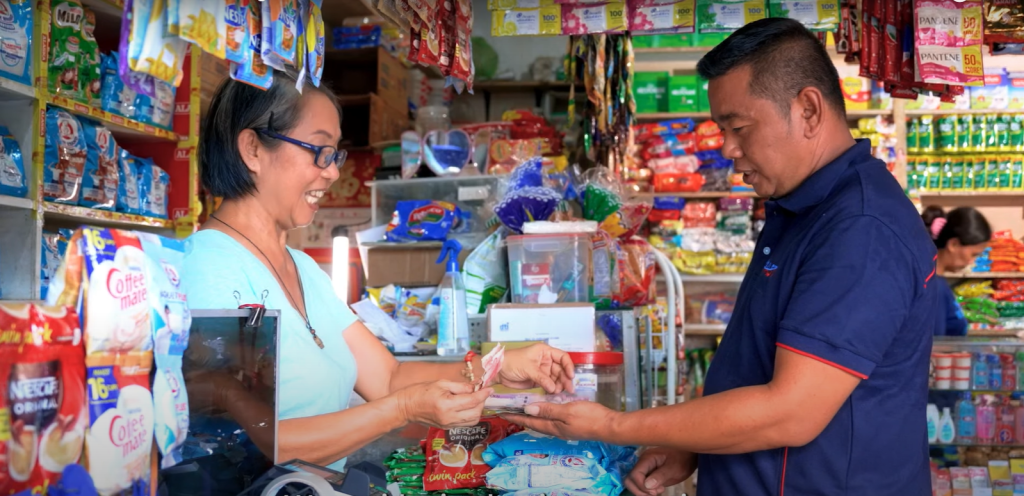
Smart Business Moves – Ways to Make Sari-Sari Store More Profitable
FAST Logistics Group, the leading logistics and selling and distribution company in the Philippines, explores various ways to make sari-sari store more profitable. With these strategies, business owners can attract custo...

The Future of Warehouse Safety – How Automation is Redefining Warehouse Operations in the Philippines
FAST Logistics Group, the Philippines’ premier end-to-end logistics company, recognizes how trends in warehouse safety can reduce the work that relies on human labor and various risks on daily operations. Technolo...

With over 40 years' experience, Fast Group operates an extensive network of transport, warehousing, distribution, and logistics solutions covering inland, air, and sea forwarding and courier services across the 7,641 Philippines islands to help our customers reach the furthest regions of the country.