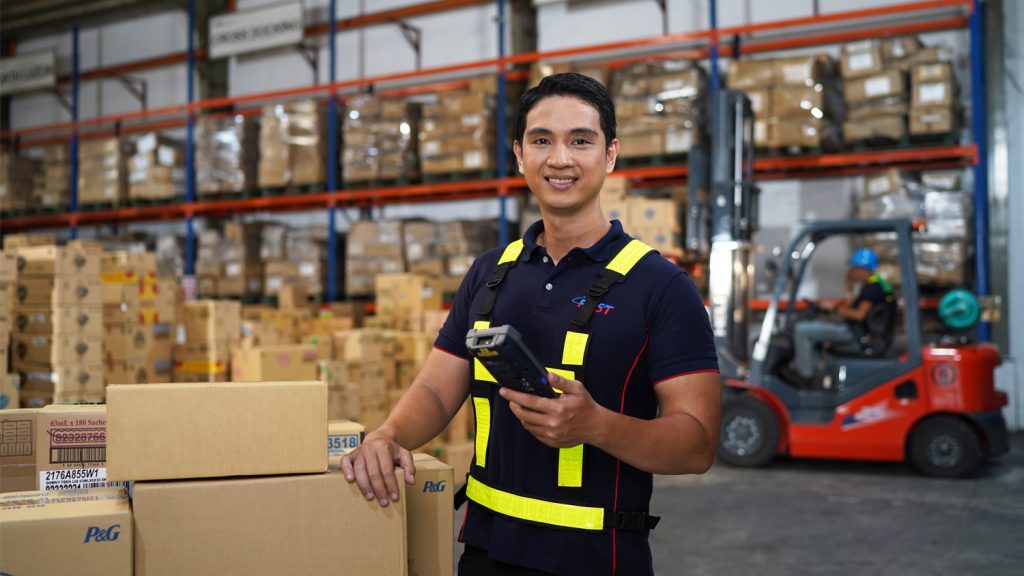
FAST Logistics Group, the Philippines’ leading end-to-end logistics solutions provider, is urging fast-moving consumer goods (FMCG) companies and retailers to adopt co-loading delivery models to cut transport costs and improve efficiency as fuel prices continue to rise.
Higher oil prices, driven by global conflict, should push companies to rethink traditional direct-to-store delivery systems, which often result in underutilized trucks, long queuing time, and higher fuel consumption, according to FAST.
In a consultation conducted by the Department of Trade and Industry – Supply Chain and Logistics Group with leading FMCG companies and retailers on Tuesday, March 17, FAST proposed co-loading to mitigate the impact of fuel price hikes on the prices of Filipinos’ preferred brands.
FAST warned that goods prices could increase if inefficiencies in transport and direct-to-store deliveries are not addressed. Based on the company’s study, about 56% of trucks delivering FMCG goods in retail distribution units (RDUs) or receiving bays are only 32% to 40% utilized.
This setup creates long queues at receiving bays, particularly in supermarkets, shopping centers, groceries, and other modern trade outlets where multiple FMCG companies deliver during the same time window.
FMCG companies deliver most goods to retail stores using AUVs, which cost 61% more than using larger six-wheeler trucks, according to FAST.
Imagine if FMCG companies with the same product type co-load, making them capable of fully utilizing larger fleets and thus reducing the number of half-filled trucks on the road.
The company said co-loading would enable the deployment of bigger trucks for a single drop, an advantage that becomes even more critical as pump prices surge.
Co-Loading as Smarter, More Efficient Alternative to Direct-to-Store Deliveries
To address these inefficiencies, FAST is promoting co-loading, a logistics model in which shipments from multiple suppliers share space in the same delivery truck. Instead of paying for a dedicated vehicle, FMCG companies pay only for the space occupied by their goods in the co-loading model.
FAST said the approach increases vehicle utilization, reduces empty miles, and lowers fuel consumption per delivery.
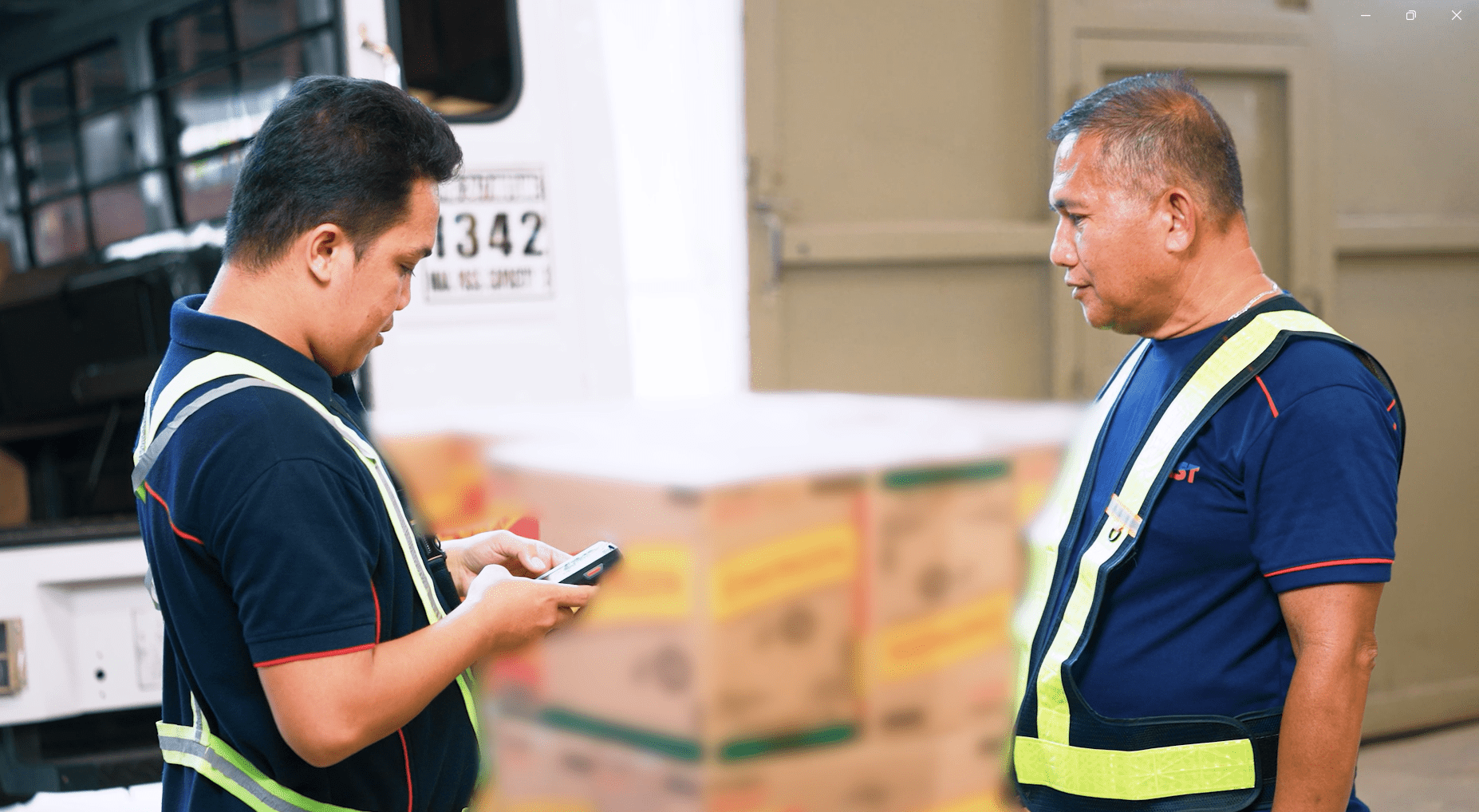
The company has long been pushing for co-loading through Flow by FAST, a system-guided direct-to-store delivery solution that consolidates shipments at strategically located cross-docking facilities.
Under the system, products from multiple FMCG companies are sorted and consolidated at strategically located logistics hubs across Luzon, Visayas, and Mindanao, then delivered to retail outlets based on scheduled receiving windows.
Collaboration Needed to Make Co-Loading a Success
FAST CEO for Logistics Manuel L. Onrejas Jr. said the company has long been pushing for the solution after studying inefficiencies in traditional direct-to-store deliveries.
He added that oil price hikes driven by conflict in the Middle East should prompt companies to consider co-loading as a practical and cost-efficient alternative to fragmented delivery operations.
“Every direct-to-store delivery should create value, not waste,” Manny said. “With Flow by FAST, we eliminate half-empty trucks and unnecessary trips so FMCG companies can move goods to retail stores more efficiently, lower logistics costs, and keep shelves stocked despite rising fuel prices.”
“Our goal is to help companies lower costs and carbon footprint while ensuring Filipino families have easy access to the nation’s leading brands, at costs that are affordable to them, at their favorite supermarkets and retail stores,” he added.
The success of co-loading hinges on the support of retailers, whose cooperation is essential to making co-loading work at scale. They have an important role in aligning receiving windows, improving bay scheduling, and supporting more coordinated store deliveries.
Stronger retailer collaboration would also help reduce congestion at receiving areas and maximize the efficiency gains from co-loading across the supply chain.
Watch this video to learn more.
Improving Efficiency in FMCG Logistics
The broader adoption of co-loading among FMCG companies and retailers could improve efficiency across the supply chain, especially during periods of rising fuel costs.
Many FMCG firms have traditionally avoided sharing transport space with competitors, even though they ultimately deliver their products to the same retail shelves. This fragmented delivery model places added strain on both suppliers and retailers, with hundreds of delivery vehicles servicing retail locations daily.
Separate truck arrivals from different FMCG firms often create congestion at store receiving areas, resulting in driver idle time and reduced truck turnaround, which lowers profitability for trucking companies.
There is also a need to co-load goods to ensure the availability, accessibility, and affordability of everyday essentials in the provinces, particularly in the Visayas and Mindanao.
Transporting FMCG products to these areas typically involves higher fuel and operating costs. A co-loading setup helps improve vehicle utilization and makes these deliveries more financially viable.
This need is reinforced by the fact that most stocks are sourced from the Greater Metro Manila area. Since goods are largely dispatched from a common origin, consolidating shipments bound for the same general regions can create significant efficiency gains, reduce transport costs, and improve overall network productivity.
Aside from lowering delivery costs, FAST said co-loading can also help reduce traffic congestion around retail areas and lower carbon emissions from transport operations.
FAST Logistics Group: Trusted Partner of FMCG Companies and Retailers in Co-Loading Solution
As a leader in FMCG logistics, FAST is well-positioned to execute a co-loading model for FMCG companies because of its scale, operational reach, and nationwide network.
“We are offering this solution as a plug-and-play model, using our existing facilities that already serve modern trade and function as consolidation points for co-loading. We already have the digital and physical infrastructure in place, and we are ready to begin as soon as our partners are,” Manny said.
“FAST is committed to working closely with FMCG companies and manufacturers to make this model work. We bring agile problem-solving, strong digital capabilities, load optimization, and route planning to help improve delivery efficiency,” he added.
With its broad distribution footprint, existing transport assets, and experience in managing complex supply chain requirements, FAST can better consolidate loads across multiple manufacturers and deliver them to modern trade outlets while maintaining service reliability and delivery efficiency.
With over 50 years of industry leadership, FAST Logistics Group provides multi-modal transport, warehousing, cross-docking, cold chain, and toll manufacturing solutions to multinational companies, local conglomerates, international startups, and micro, small, and medium enterprises (MSMEs).
Connect with our Solutions Experts to learn more about co-loading option as an alternative to direct-to-store deliveries
Categories
-
FAST Ahead
Includes case studies and testimonials of our partners as well as other featurettes from industry experts
-

FAST Hacks
We simplify logistics terms and provide practical tips and solutions for the DIY in you
-

FAST Highlights
Know more about our history, various brands, achievements, and news updates
-

FAST Moments
Get to know the people of FAST, our employee programs, as well as our various ways of giving back to the community
-
FAST Solutions
Learn more about the various logistics solutions that we cater to and offer our clients, as well as tech innovations, and service facilities
Related Stories
Leveraging Technology – How Advanced Logistics Solutions Can Transform Davao Business Landscape
FAST Logistics Group, the leading end-to-end logistics and selling distribution company in the Philippines, explains the importance of advanced logistics solutions for Davao business landscape. As one of the economic hu...
FAST Logistics: Cutting Truck Dwell Time Key to Unlocking EV Potential in FMCG Logistics
FAST Logistics Group, the Philippines’ leading provider of end-to-end logistics solutions, said reducing truck dwell time is critical to making electric vehicles (EVs) commercially viable in FMCG logistics. Speaking at...

The Future of Workplace Learning: Embracing Learning Management System
FAST Logistics Group, the leading provider of end-to-end logistics in the Philippines, explores the importance of learning management system on talent development and organizational growth as workplaces continue to evolv...

With over 40 years' experience, Fast Group operates an extensive network of transport, warehousing, distribution, and logistics solutions covering inland, air, and sea forwarding and courier services across the 7,641 Philippines islands to help our customers reach the furthest regions of the country.