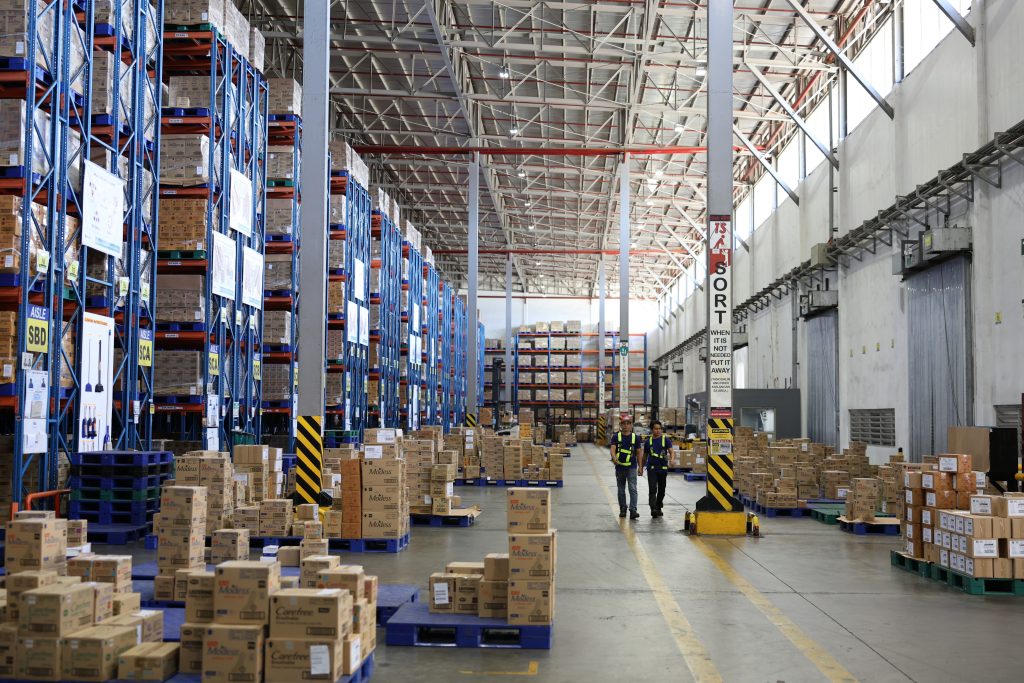
Luzon, the biggest island in the Philippines, is a prime and strategic location for warehouses to optimize distribution and reach key markets efficiently.
Choosing the right warehouse location to reduce transportation costs and ensure timely delivery. While Metro Manila is often the default choice, nearby provinces in South Luzon and North Luzon offer excellent alternatives for businesses seeking strategic logistics hubs. These locations are strategic for their proximity to ports, airports, major highways, industrial zones, and high-demand consumer markets.
FAST Logistics Group, the Philippines’ leading provider of integrated end-to-end logistics solutions, outlines the areas in Luzon that are strategic warehouse locations. Here are some of them.
Metro Manila
Metro Manila is a highly strategic warehouse location in Luzon, primarily due to its role as the country’s largest consumer market. Home to over 13 million people, it provides businesses with access to a dense network of end-users. Having a hub in the National Capital Region allows companies to serve multiple high-demand areas with shorter lead times, reducing transportation costs and ensuring timely delivery.
Businesses operate warehouses across northern cities such as Valenzuela and Quezon City, southern cities including Parañaque and Muntinlupa, eastern areas like Pasig and Marikina, and western locations such as Manila and Navotas, either directly or through third-party (3PL) and fourth-party logistics (4PL) providers.
Cavite
Located just 20 to 40 kilometers from Metro Manila, depending on the entry point, Cavite offers businesses quick access to the National Capital Region while avoiding congestion and high land costs associated with it. The province is well-connected through major road networks such as Cavite Expressway (CAVITEX), the South Luzon Expressway (SLEX), CALAX (Cavite–Laguna Expressway), and the Aguinaldo Highway. Cavite also enjoys maritime access through the Cavite Gateway Terminal (CGT), which facilitates roll-on/roll-off container movement between Cavite and Manila ports, reducing trucking traffic and improving turnaround time for shipments.
Cavite is also home to a significant concentration of economic zones and industrial parks, including Cavite Export Processing Zone (CEPZ) in Rosario, Gateway Business Park in General Trias, Cavite-Carmona Industrial Estate, First Cavite Industrial Estate (FCIE), and Cavite Economic Zone, among others. These zones house manufacturers and exporters in electronics, automotive parts, garments, and packaging, which drives the demand for warehouse and distribution centers in the province.
Cities and municipalities such as General Trias, Dasmariñas, Silang, Carmona, Bacoor, and Rosario are particularly known for their high density of warehouses and industrial facilities. Their accessibility to ports and expressways, combined with available industrial land and workforce supply, make them top choices for companies in the FMCG, manufacturing, and retail sectors.
Laguna
Laguna, situated within 30 to 60 kilometers south of Metro Manila, provides convenient access to the region while offering more space for large warehouses and distribution facilities. The province is connected through major road networks such as the SLEX, CALAX, STAR Tollway via Sto. Tomas, and arterial roads linking to Batangas and Quezon. Additionally, Laguna benefits from the Laguna Gateway Inland Container Terminal (LGICT) — the country’s first dry port spanning 21 hectares — which links directly to the Port of Manila. This allows faster cargo movement and reduces port congestion and trucking time for manufacturers and logistics providers.
In addition, Laguna is home to multiple economic zones and industrial parks that support manufacturing, technology, and logistics activities. These include Laguna International Industrial Park, Laguna Technopark, Light Industry & Science Park (LISP), Carmelray Industrial Park, Sta. Rosa Industrial Complex, Calamba Premier Industrial Park, Silangan Industrial Park, and more. These zones house electronics, automotive, FMCG, and export-driven companies, continuously driving demand for warehousing facilities.
Cities and municipalities with a high concentration of warehouses and industrial developments include Biñan, Sta. Rosa, Cabuyao, and Calamba. These locations are favored due to their immediate access to SLEX, proximity to major production hubs, and availability of skilled labor.
Batangas
Batangas has become a major logistics and industrial hub in South Luzon, making it a top-choice location for warehouse development. Located about 90 to 110 kilometers south of Metro Manila, Batangas offers strategic access to both Metro Manila and the wider Luzon market while serving as a gateway for interisland cargo movement.
The province is highly accessible through major expressways such as SLEX, STAR Tollway, and connecting routes leading to CALABARZON and central port facilities. Batangas is uniquely advantaged by the Batangas International Port, one of the biggest and busiest ports in the Philippines. It operates separate passenger and cargo terminals, enabling efficient sea freight operations for companies shipping to Visayas and Mindanao and for businesses with import-export operations.
Batangas also hosts notable economic and industrial zones, such as First Philippine Industrial Park (FPIP) in Sto. Tomas and Tanauan, Batangas Industrial Park, Light Industry & Science Park, Lima Technology Center, Harbour Town, Sto. Tomas Economic Zone, Iligan Economic Zone, and other PEZA-accredited locations. Cities and municipalities with a high concentration of warehouses and industrial developments include Sto. Tomas, Tanauan, Malvar, Lipa, and Batangas City. Areas along the SLEX-STAR corridor are particularly active due to direct road access to production zones and the Batangas Port.
Bulacan
Located approximately 15-40 kilometers north of Metro Manila, Bulacan gives businesses quick access to Metro Manila markets while offering more space and lower operating costs compared to locations inside the capital region.
The province is directly connected to the National Capital Region through the North Luzon Expressway (NLEX), with seamless links to SCTEX (Subic–Clark–Tarlac Expressway), and upcoming infrastructure such as the Bulacan-Clark-Tarlac Expressway (BCTEX). These road networks support fast delivery routes from Bulacan to northern provinces, Clark Freeport Zone, and central Luzon distribution points. Bulacan is also accessible from the Ports of Manila, and future cargo handling will be strengthened by the New Manila International Airport in Bulakan, which is currently under development.
Bulacan is home to several industrial and economic zones, particularly in areas like Meycauayan, Marilao, and Bocaue—locations known for logistics, warehousing, and manufacturing activities. The province also hosts industrial parks such as First Bulacan Industrial City, Bulacan First Industrial Park, and Horizon Industrial Park, accommodating industries in consumer goods, metals, garments, packaging, and food production.
Rizal
The province of Rizal also enables businesses to serve Metro Manila markets efficiently while benefiting from comparatively lower warehouse rental and land costs than most cities in the region. Located just 30 kilometers east of Metro Manila, depending on the entry point, it is accessible via major road networks such as Marikina-Infanta Highway, Marcos Highway, Ortigas Avenue Extension, C-6 Road, and Cogeo-Antipolo Road, among others.
Rizal is also in close reach of Manila Port (about 15 kilometers) and Ninoy Aquino International Airport (about 20 kilometers), ensuring smooth transport for both international and domestic cargo movements. Ongoing infrastructure improvements, such as the LRT-2 Masinag Extension Corridor and East Metro Manila Expressway, further enhance connectivity and labor access for logistics operations.
Locations with a high density of warehouses include Cainta, Taytay, and Antipolo, especially areas along Ortigas Extension and major east-west trade routes. Its connectivity offers smooth routing toward Metro Manila and CALABARZON.
FAST Logistics Group: Leading Warehouse Solutions Provider in the Philippines
As one of the top end-to-end logistics companies in the Philippines, FAST offers comprehensive warehousing solutions for businesses of all sizes.
Expansive Network
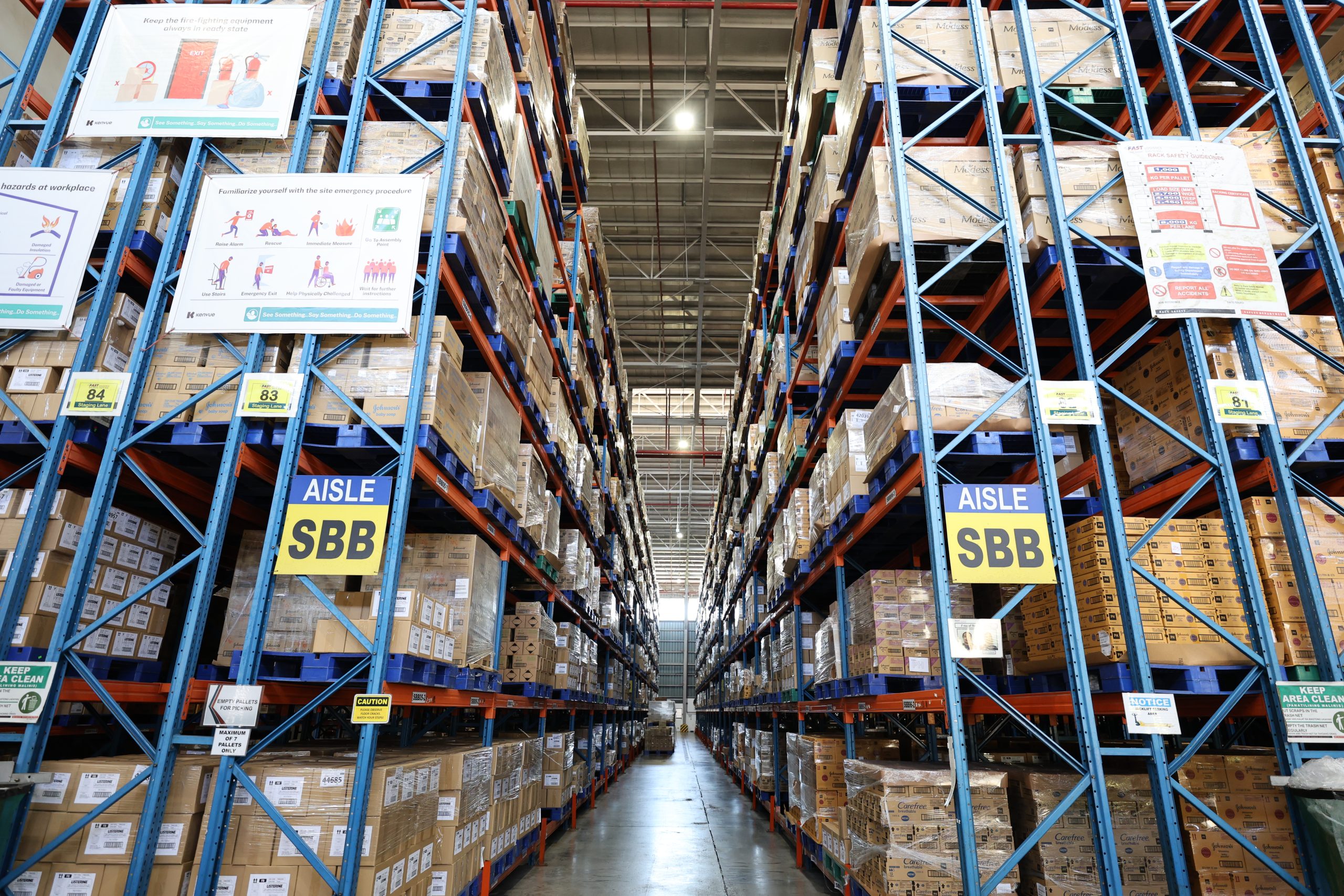
Operating the country’s largest warehousing footprint, FAST has over 160 warehouses for dry and cold storage, 79 dry warehouses of which are located in Luzon. Meanwhile, FAST also manages 49 dry warehouses in the Visayas and 31 in Mindanao.
FAST warehouses are strategically located across Luzon, Visayas, and Mindanao, including Pasig, Meycauayan, and Plaridel in Bulacan; Taytay in Rizal; Mandaue City and Consolacion in Cebu; Opol in Cagayan de Oro; and Acacia, Indangan in Davao, among other key locations.
In addition, FAST has two cold storage facilities: one in Imus, Cavite (13,500 pallet positions) and one in Tayud, Consolacion in Cebu (10,500 pallet positions). These facilities include freezer rooms, chiller rooms, air-conditioned rooms, and ambient storage areas.
Overall, FAST’s warehouse network covers more than two million square meters, with over one million pallet positions and an annual throughput exceeding one billion cases. FAST provides build-to-suit solutions for expanding businesses and a flexible storage model that allows clients to pay per pallet and per day.
Tech-Driven, Value-Added Services
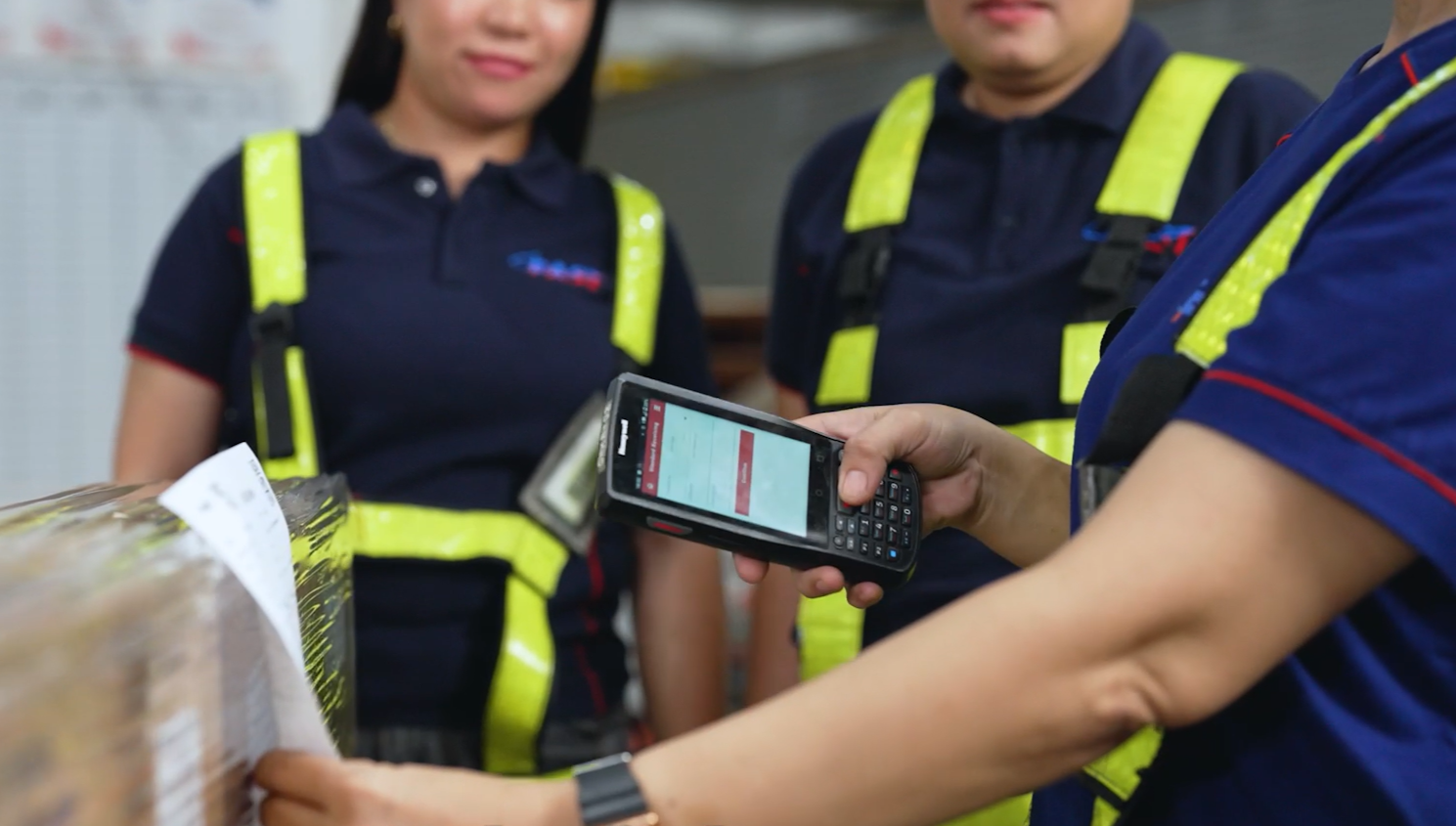
FAST equips its warehouses with a Warehouse Management System and Voice Pick Technology from Honeywell. These tools automate and streamline warehouse operations. These systems enhance efficiency, accuracy, and real-time visibility for inventory management, order processing, and workforce operations.
FAST also offers toll manufacturing and value-added services — such as repacking, labeling, stickering, and bundling — to support retail sales promotions and promotional campaigns. With extensive experience serving the FMCG, food, retail, pharmaceutical, automotive, and agribusiness sectors, FAST caters to businesses of all sizes—from multinational corporations and leading conglomerates to small and medium enterprises. Its expertise ensures compliance with global industry standards and meets the specific requirements of diverse industries.
Connect with our Solutions Experts to learn more
FREQUENTLY ASKED QUESTIONS (FAQs) ABOUT STRATEGIC WAREHOUSE LOCATIONS IN LUZON
Where is the Best Strategic Warehouse Location in Luzon
The ideal warehouse site depends on operational needs, target markets, and transport requirements. Provinces such as Cavite, Laguna, Batangas, Bulacan, Pampanga, Rizal, and Tarlac stand out due to their access to major expressways, ports, industrial zones, and labor supply. These locations enable faster distribution across Metro Manila and the rest of Luzon while avoiding the heavy congestion and high land costs inside Metro Manila.
How Do You Choose a Warehouse Location in the Philippines
Key considerations include proximity to suppliers, production sites, customers, and consumption markets. Ideal locations should also provide access to major expressways and transport corridors, industrial zones or manufacturing clusters, as well as ports, airports, and interisland shipping gateways.
A well-located warehouse reduces transportation time and cost, improves responsiveness to demand, and increases supply chain reliability.
Categories
-

FAST Ahead
Includes case studies and testimonials of our partners as well as other featurettes from industry experts
-

FAST Hacks
We simplify logistics terms and provide practical tips and solutions for the DIY in you
-

FAST Highlights
Know more about our history, various brands, achievements, and news updates
-

FAST Moments
Get to know the people of FAST, our employee programs, as well as our various ways of giving back to the community
-

FAST Solutions
Learn more about the various logistics solutions that we cater to and offer our clients, as well as tech innovations, and service facilities
Related Stories

From Used Tires to Upcycled Bins: FAST Donates Waste Containers to Laguna Pupils
FAST Logistics Group, the Philippines’ leading provider of end-to-end logistics solutions, donated waste bins upcycled from used truck tires to grade school pupils in Calamba, Laguna. As part of its sustainabili...
Driving Towards Success – The Importance of Transport Management System in the Philippines
FAST Logistics Group, the leading end-to-end logistics and selling distribution company in the Philippines, explains the importance of transport management system in the Philippines. Reliable supply chain processes and e...

FAST Logistics Group Secures New Warehouse Facility in Calamba, Completes Contract-Signing with Robinsons Logistix and Industrials Inc. (RLX)
FAST Logistics Group and Robinsons Logistix and Industrials, Inc. finalize the agreement for the new warehouse facility in Paciano Rizal, Calamba City, last October 5 FAST Logistics Group, the Philippines’ premier end-...

With over 40 years' experience, Fast Group operates an extensive network of transport, warehousing, distribution, and logistics solutions covering inland, air, and sea forwarding and courier services across the 7,641 Philippines islands to help our customers reach the furthest regions of the country.