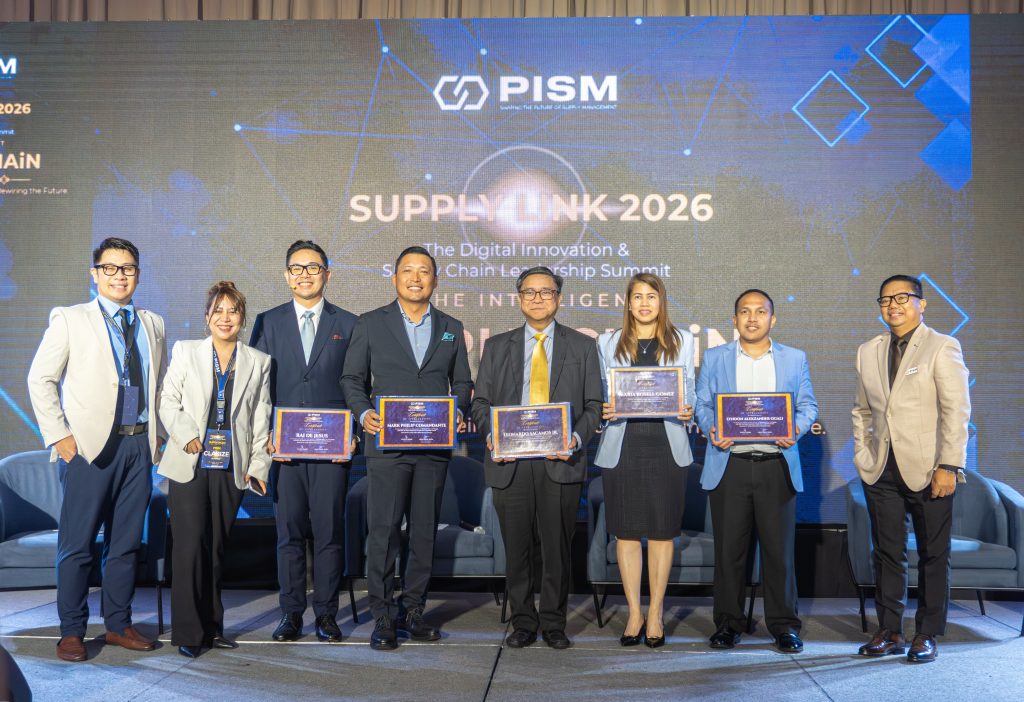
FAST Logistics Group, the Philippines’ leading third-party logistics (3PL) provider, called for wider adoption of artificial intelligence (AI) across Philippine supply chains during Supply Link 2026: The Digital Innovation and Supply Chain Leadership Summit, emphasizing its role in enabling faster decision-making, improving operational efficiency, and strengthening supply chain resilience.
FAST Chief Information Officer Leo Sacamos Jr. joined industry leaders as a panelist during the summit held on Thursday, July 16, at Solaire Resort in Parañaque. The session, titled “Reimagining Supply Chains Through AI: Intelligent Systems, Predictive Networks, and Digital Ecosystem,” explored how AI is transforming supply chain operations and enabling organizations to respond more effectively to an increasingly complex business environment.
During the discussion, Leo shared how FAST has been embedding AI across its integrated third-party logistics (3PL) solutions to improve operational efficiency and help the company respond more quickly to supply chain disruptions.
One example is AI-powered load planning. According to Leo, what previously took load planners around three hours to complete manually can now be accomplished in just a few minutes using AI. He said it significantly improves employee productivity, allowing teams to focus on higher-value and more strategic decision-making instead of repetitive manual tasks.
“AI has become a strategic capability that enables organizations to make faster, smarter decisions, anticipate disruptions, and build more resilient supply chains. As logistics becomes more complex, businesses that embrace AI will be better positioned to adapt and grow,” Leo said.
Beyond load planning, AI has also accelerated reporting, improved data tracking, and automated various operational processes, enabling FAST to respond more efficiently to changing customer requirements.
Looking ahead, Leo identified predictive AI as one of the technology’s greatest opportunities for the logistics industry. By forecasting potential disruptions caused by natural disasters such as typhoons, businesses can proactively adjust delivery schedules, make advance shipments, and activate alternative transport routes before disruptions occur.
Reliable Data Is the Foundation of Effective AI in Supply Chain
While advocating for broader AI adoption, Leo emphasized that organizations must first establish reliable and trustworthy data.
“AI is trained on data, and without reliable data, organizations cannot make informed decisions,” he said.
Leo added that realizing AI’s full potential requires more than deploying individual technologies. Organizations must build an integrated digital ecosystem where data, digital platforms, employees, suppliers, customers, and technology partners work together seamlessly to maximize the value of AI-driven solutions.
At FAST, strengthening data integrity and building confidence in AI technologies have become strategic priorities as the company continues its digital transformation.
“Technology delivers the greatest value when employees understand how to use it responsibly and when organizations can trust the insights it generates,” Leo said.
He added that FAST is continuously equipping its employees with the knowledge and skills to use AI responsibly, enabling them to deliver greater transparency and value to customers.
Maximizing AI While Managing Its Risks
Joining Leo on the panel were Lyndon Ogali, core industry lead at Salesforce Philippines; Mark Philip Comandante, founder of ExoAsia Innovation Hub and country head of Propspient AI; and Maria Rosell Gomez, partner for risk services and Forensics leader at PwC Philippines.
Rai De Jesus, chief procurement officer of ePLDT Inc. and vice president and head of procurement at PLDT Inc., moderated the discussion.
Sharing Salesforce’s perspective, Lyndon encouraged organizations to identify repetitive and routine tasks that can be automated through AI, as these often deliver the fastest and most measurable business value.
He also noted that conversations around enterprise AI have evolved beyond automation toward agentic AI — intelligent systems capable of autonomously setting goals, creating multi-step plans, and executing tasks using external tools with minimal human intervention.
“Supply chain professionals should identify and quantify repetitive business processes that AI can perform because those are the areas where organizations can realize the greatest value,” Lyndon said.
Meanwhile, ExoAsia’s Mack emphasized the importance of developing “decision literacy” in the AI era.
“The time available to make decisions is becoming increasingly compressed. Organizations must learn how to frame decisions quickly enough for machines to support them while maintaining the discernment to determine when humans should remain in control.”
He added that organizations should clearly define three key elements when deploying AI:
- What decisions employees should continue making;
- Who should make each decision; and
- What metrics should guide those decisions.
On one hand, PwC’s Roselle reminded organizations that governance and risk management should remain central to AI adoption. She highlighted challenges such as “AI hallucinations” and cybersecurity threats.
Although some organizations view governance frameworks and preventive controls as obstacles to AI deployment, Rosell emphasized that these safeguards are essential to ensuring AI delivers long-term value while minimizing organizational risk.
Building a Smarter, More Connected Supply Chain Through Technology
Concluding the discussion, Leo emphasized that AI should ultimately empower organizations and create more resilient, efficient, and customer-centric supply chains.
“AI is at its best when it augments human expertise, not replaces it,” Leo said.
At FAST, that vision is already taking shape through continuous investment in digital technologies that strengthen every stage of the supply chain—from fleet management and smart warehousing.
To strengthen transportation operations, FAST migrated from its proprietary Transport Management System (TMS) to FarEye’s AI-powered delivery platform. The solution provides real-time shipment visibility, intelligent route optimization, and delivery orchestration.
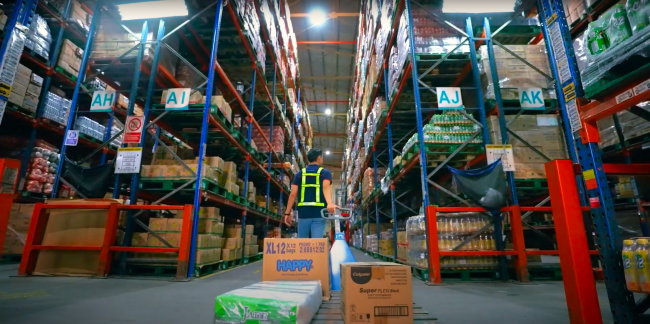
FAST uses a Honeywell-powered Warehouse Management System (WMS) to automate workflows in its warehouse processes — from inbound receiving to outbound fulfillment. The platform improves inventory accuracy, provides real-time inventory visibility, streamlines order fulfillment, and gives customers greater control over inventory movements.
FAST has also invested in intelligent fleet technologies, including AI-powered dashcams that monitor driver behavior in real-time and encourage safer driving behavior.
These digital investments support one of the country’s largest and most extensive logistics networks. FAST operates a fleet of more than 3,100 trucks, complemented by integrated RoRo, sea, and air freight services that provide nationwide connectivity. The company also manages the Philippines’ largest warehousing network, with more than 160 facilities, over one million pallet positions across dry and cold storage, and annual throughput exceeding one billion cases.
Connect with our Solutions Experts to learn how we combine nationwide logistics capabilities with advanced digital technologies to help businesses sustain long-term growth.
Categories
-

FAST Ahead
Includes case studies and testimonials of our partners as well as other featurettes from industry experts
-

FAST Hacks
We simplify logistics terms and provide practical tips and solutions for the DIY in you
-
FAST Highlights
Know more about our history, various brands, achievements, and news updates
-

FAST Moments
Get to know the people of FAST, our employee programs, as well as our various ways of giving back to the community
-
FAST Solutions
Learn more about the various logistics solutions that we cater to and offer our clients, as well as tech innovations, and service facilities
Related Stories
Choosing the Right Sea Freight Solutions Provider for Your Business
A dependable and efficient sea freight solutions provider is important for businesses aiming to succeed in today’s competitive landscape. Partnering with a trusted provider to handle your sea freight needs can greatly ...

Blockchain Technology Simplified: FAST Logistics Group CEO Mr. Manuel L. Onrejas Jr. Shares Key Insights at the Supply Chain Blockchain Mixer
CEO of Logistics for FAST Mr. Manuel Onrejas Jr. joined the prestigious Supply Chain Blockchain Mixer as a distinguished panelist alongside other thought leaders, at the IBP Tower in Common Ground, Ortigas on September 2...
Supply Chain Resiliency: FAST Logistics Pushes ‘Forward Stocking Strategy’ to Curb Stockouts During Disruption
FAST Logistics Group, the country’s leading end-to-end logistics solutions provider, is calling on companies to adopt a Forward Stocking Strategy that places inventory closer to customers to reduce stockouts and keep g...

FAST Logistics Group is the leading end-to-end logistics and supply chain solutions provider in the Philippines. With over 50 years of industry leadership, we offer a comprehensive suite of services including multi-modal transportation, warehousing, cross-docking, cold chain, and toll manufacturing solutions.
© Copyright 2026 FAST Logistics