Is your third-party logistics (3PL) provider delivering results that match your business expectations? Managing fast-moving consumer goods or FMCG 3PL performance requires a structured approach to measurement, clear service level agreements, and disciplined governance that holds both parties accountable.
This is particularly important in the Philippines, where FMCG companies must manage nationwide distribution across an archipelago while balancing high-volume orders, demanding delivery schedules, inventory requirements, promotions, and stringent modern trade channel requirements.
The right 3PL partner should therefore bring together infrastructure, technology, people, operational expertise, and nationwide network capability. Working with the right logistics partner would enable them to meet business requirements and deliver customer demands.
This guide explains how FMCG and enterprise supply chain leaders can evaluate and manage 3PL performance—from selecting the right key performance indicators (KPIs) and structuring service-level agreements (SLAs) to establishing governance, improving visibility, and preparing for nationwide distribution challenges.
Key Takeaways: How to Manage FMCG 3PL Performance in the Philippines
- Define 3PL performance around business outcomes such as product availability, order accuracy, inventory accuracy, delivery reliability, and responsiveness
- Establish measurable KPIs and SLAs before operations begin, with clear definitions, targets, reporting periods, and escalation procedures
- Review operational performance regularly through weekly reviews, monthly scorecards, and quarterly business reviews
- Evaluate a 3PL based on its total capability and cost to serve, not price alone
- Technology matters: integrated Warehouse Management Systems (WMS), Transport Management Systems (TMS), and real-time visibility can strengthen operational control
- Nationwide FMCG distribution requires strategically positioned warehouses, multimodal transport, cross-docking capabilities, and local operational expertise
- The most costly 3PL mistakes in the Philippines stem from vague contracts, poor integration, and insufficient communication, rather than pricing alone
- FAST Logistics Group combines more than 50 years of logistics experience with a nationwide network covering 94% of Philippine provinces, more than 160 warehouse facilities, 2 million+ square meters of warehouse space, and more than 3,100 trucks
What Is FMCG 3PL Performance Management
FMCG 3PL performance management refers to the systematic process of measuring, monitoring, and improving the operational outcomes delivered by a third-party logistics provider.
For FMCG companies, this process is particularly critical because product availability, freshness, and shelf-life constraints leave little room for fulfillment errors or delivery delays.
The 3PL performance management goes beyond tracking basic metrics. It involves establishing clear expectations, building reporting mechanisms, and creating accountability structures that align your logistics partner’s operations with your business objectives.
A mature performance-management framework considers the entire logistics operation, including:
- Inbound receiving
- Inventory accuracy
- Storage and warehouse productivity
- Order fulfillment
- Picking and packing accuracy
- Transportation
- On-time delivery
- Proof of delivery
- Returns management
- Data and system visibility
- Exception management
- Customer service
- Peak-season capacity
This is why enterprise FMCG companies should manage their 3PL relationship as an integrated supply chain operation, rather than as a collection of individual logistics services.
In the Philippine context, archipelagic geography adds complexity. Products must move across more than 7,000 islands, through urban congestion in Metro Manila, and into provincial markets with limited infrastructure. An effective performance management framework accounts for these realities while maintaining service standards.
Why 3PL Performance Management Matters for FMCG Companies
FMCG supply chains operate at high volumes and often involve thousands of stock keeping unit (SKUs), frequent replenishment cycles, promotional activities, and demanding service requirements.
The stakes for FMCG logistics performance are substantial. A mispicked order or delayed shipment creates a chain reaction: a support ticket, a replacement shipment, potential product spoilage, and in many cases, a lost customer. Multiply this by thousands of daily orders, and the financial impact becomes material.
Performance gaps in 3PL operations also affect retailer relationships. Modern trade channels operate under strict delivery schedules and compliance requirements. Consistent delays or documentation errors result in chargebacks, rejected deliveries, and strained supplier relationships.
For FMCG companies managing inventory with short shelf lives, the cost of poor logistics execution extends beyond operational metrics. Expired products and delivery failures lead to revenue losses and damaged brand reputation.
Core KPIs for Managing 3PL Performance in the Philippines
Effective 3PL performance management starts with identifying the metrics that matter most to your operation. These KPIs form the foundation of service level agreements and ongoing performance reviews.
Rather than adopting generic targets, FMCG companies should establish specific performance standards tailored to their operating models, product characteristics, customer requirements, and distribution networks.
Receiving Turnaround Time
Receiving turnaround measures the time required to process inbound inventory and make it available for fulfillment. Slow receiving can delay inventory availability and create congestion within the warehouse.
For standard inbound, benchmarks range from 1 to 2 days. Peak-season requirements should be defined separately as volumes differ from normal operations.
Slow receiving directly impacts product availability. The inventory sitting on the receiving dock represents capital that cannot generate revenue. For FMCG products with promotional windows or seasonal demand, delays in receiving can mean missed sales opportunities.
Inventory Accuracy Rate
Inventory accuracy measures how closely physical inventory matches the inventory recorded in the system. This is one of the most important controls in FMCG logistics.
A capable 3PL should have systematic controls such as barcode scanning, cycle counting, location controls, inventory reconciliation, and exception reporting.
Best-in-class operations maintain inventory accuracy at 99% or higher through regular cycle counting programs. Rather than relying on annual physical inventories, disciplined warehouses count high-velocity SKUs weekly and slower-moving items monthly. This approach catches discrepancies early, before they compound into larger problems.
Order Accuracy Rate
Order accuracy measures the percentage of orders shipped with the correct items or SKUs, packaging configuration, and batch or lot if applicable. The formula is straightforward: error-free orders divided by total orders, multiplied by 100.
Industry benchmarks place strong performance at 99.5% or higher. At this level, fewer than 5 orders per 1,000 contain errors. For high-volume FMCG operations processing thousands of orders daily, even small accuracy improvements translate into meaningful reductions in replacement shipments and administrative burden.
At FAST Logistics Group, one of best practices implemented is the use of barcode scan verification at every warehouse touchpoint through its Warehouse Management System powered by Honeywell, helping FMCG clients maintain accuracy standards across high-SKU environments.
On-Time Pick-Up
On-time pickup measures whether the 3PL collects and loads shipments according to the agreed schedule. This is particularly important for FMCG companies operating with fixed replenishment cycles, customer delivery windows, or time-sensitive shipments.
A consistently high on-time pickup rate indicates that the logistics provider is able to align transport resources with the customer’s operating requirements.
Truck Availability
Truck availability measures whether the required vehicle capacity is available when the customer needs it. This becomes particularly important during peak periods, when demand for different vehicle types can increase significantly.
For FMCG operations, transportation requirements may include various truck configurations depending on shipment volume, route, product characteristics, and customer requirements. Capacity planning should therefore begin before peak demand.
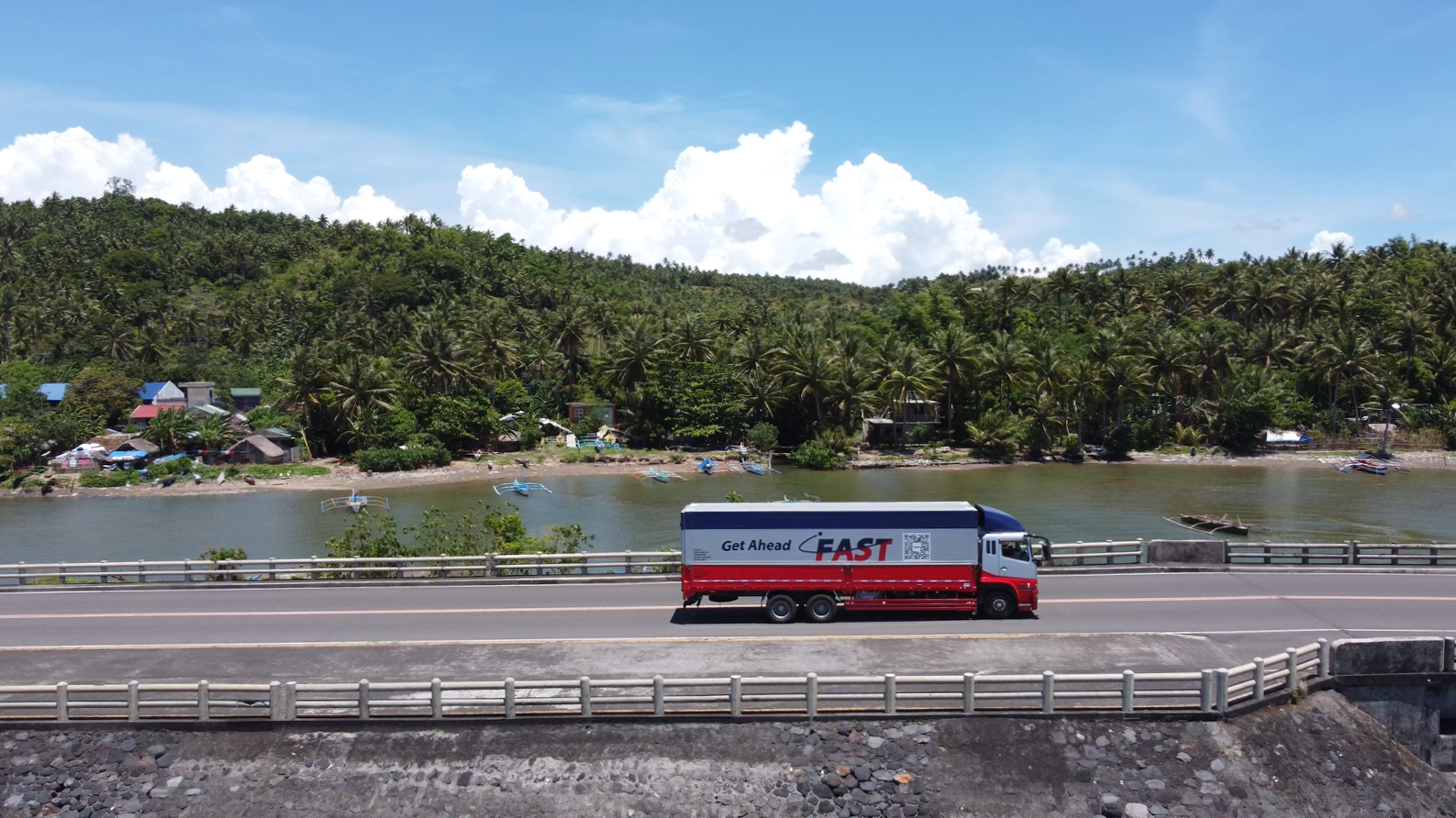
FAST Logistics Group’s experience supporting high-volume FMCG accounts shows that peak planning needs to begin before orders materialize. Logistics teams need to forecast vehicle requirements, confirm truck types, inspect and prepare vehicles, and align dispatch schedules with expected volume. For customers with predictable seasonal demand, truck lock-in arrangements can help secure capacity ahead of the “ber” months rather than relying on spot capacity when demand has already peaked.
On-Time Delivery Performance
On-time delivery measures whether shipments arrive within the agreed delivery window.
Delivery performance can be affected by warehouse readiness, order cutoffs, loading schedules, and even truck or sea container availability. Other factors also impact delivery performance, including traffic, port schedules, inter-island transfers, and weather.
Transport systems in the Philippines remain hugely volatile, making proper coordination and planning important especially for the more critical shipment. A capable 3PL should therefore monitor the complete delivery process and identify where delays originate.
POD Return Performance
Proof of delivery or POD return performance tracks how quickly and accurately Proof of Delivery (POD) documents or signed delivery receipts are returned by drivers or couriers to the main office. It verifies that both the business and customer have proof of the delivery’s completion.
Fast POD returns are necessary for customer billing, dispatch closure, and claims management. While some companies have electronic PODs or e-PODs, some companies rely on manually signed documents, making the POD return performance a necessary KPI.
Returns Processing Time
Returns processing measures the time between receiving returned goods and completing inspection, disposition, and inventory updates.
For FMCG businesses, effective returns management can help recover sellable inventory, identify recurring quality or delivery issues, and reduce unnecessary inventory write-offs.
How to Set Effective Service Level Agreements for 3PL Partnerships
Service level agreements are only valuable when they contain specific, measurable commitments with defined consequences. A clause stating “commercially reasonable efforts to ship orders in a timely manner” is not enforceable. It provides no threshold, no measurement period, and no remedy for underperformance.
Components of Enforceable SLAs
Every effective SLA clause requires four elements.
- Specific and measurable metric with a clear definition
- Defined measurement window, whether weekly, monthly, or quarterly.
- Numeric threshold that represents acceptable performance
- Defined consequence for missing the target, such as service credits, fee adjustments, or termination rights after repeated failures
For example, an SLA may define an on-time delivery metric by specifying the delivery window, applicable orders, exclusions, measurement period, reporting methodology, and escalation process.
The exact target should be agreed based on the customer’s operational requirements rather than copied from a generic industry benchmark.
FMCG companies may impose penalties on their 3PL partners if the latter fails to meet the agreed SLAs.
SLA Priorities for FMCG Operations
When negotiating with a 3PL provider, FMCG companies should prioritize SLAs around order accuracy rate, on-time shipping with explicit cutoff times, inventory accuracy verified through cycle counts, receiving turnaround with separate standard and peak-period thresholds, and returns processing time measured from warehouse receipt.
Include a reporting cadence requirement in the contract. A monthly performance report obligation gives you the data needed to enforce other clauses and identifies trends before they become crises.
Building an Effective Performance Governance Structure
Contract language establishes the floor for acceptable performance. Governance practices determine whether that performance is actually delivered and sustained over time. For enterprise FMCG accounts, a practical governance structure can include three levels, namely:
Weekly Operational Reviews
A weekly operational review should cover immediate operational issues such as on-time ship rate, order accuracy, and any exceptions from the prior week.
These sessions are usually brief. The purpose of weekly operational reviews is to catch issues early before they become recurring problems.
Monthly Performance Scorecards
Monthly scorecards should provide a consolidated view of performance against agreed KPIs. Discussions usually involve inventory accuracy, cycle count coverage, and documentation of any damage or loss incidents.
This is the report that SLA clauses are measured against, so it should make comparisons obvious rather than requiring manual calculation.
Quarterly Business Reviews
Quarterly business reviews address strategic concerns: trend analysis across multiple months, volume forecasting for upcoming periods, capacity planning ahead of peak seasons, and process improvement initiatives from both parties.
FMCG companies should be prepared with their forecast and SKU changes rather than a list of concerns or feedback. Quarterly business reviews are usually attended by leaders; thus, discussions evolve from a transactional service arrangement into a strategic supply chain partnership.
Regular Cadence During Critical Times
Regular alignment meetings should be held between the FMCG company and the 3PL company ahead of typhoons, following calamities, and during peak seasons that require extensive planning.
This level of alignment during critical periods differentiates a vendor from a true supply chain partner — one that proactively supports the FMCG company and works to improve business outcomes.
FAST Logistics Group’s experience supporting FMCG clients during typhoons illustrates why this cadence matters. Ahead of major weather disruptions, FAST Solutions Experts align with FMCG companies on inventory positioning, warehouse readiness, transport capacity, priority SKUs, and contingency routes. These discussions allow both parties to make decisions before normal transportation and replenishment patterns are disrupted.
Common 3PL Performance Mistakes and How to Avoid Them
Understanding where 3PL relationships typically fail helps you structure partnerships that avoid these patterns.
Choosing a 3PL Based Only on Price
Price is important, but it should not be the only consideration when selecting a 3PL. The lowest bid may save money in the short term but lead to missed deliveries or damaged goods.
Supply chain companies should examine the total cost of ownership including error rates, return handling costs, and customer impact rather than focusing solely on line-item fees.
FAST Logistics Group may not be the lowest-cost option for every operation. The real value of FAST as a 3PL lies in solving operational complexity and recommending tailor-fit solutions across an archipelago of 7,000+ islands. For FMCG companies managing nationwide distribution, the efficiency gains from an integrated network often outweigh apparent savings from fragmented providers and improve bottom line in the long run.
Vague Contracts Without Specific KPIs
Contracts without clear KPIs make it difficult to hold providers accountable or measure service quality. Define metrics for order accuracy, inventory accuracy, and data timeliness. Without these specifications, performance conversations become subjective and remediation efforts lack direction.
Poor Technology Integration
Bad data flows create inventory mismatches, delayed shipments, and order processing failures during peak periods. Prioritize system integration testing before full launch. Validate order flows, inventory synchronization, and exception handling with pilot SKUs before scaling operations.
Not Sharing Forecasts and Promotional Plans
Surprises like promotional spikes or sudden volume increases overwhelm 3PL operations and lead to stockouts or late shipments. Communicate forecasts, marketing calendars, and promotional plans well in advance. If forecasts are uncertain, include flexible capacity terms in the contract.
Weak Communication and Governance
Failure to maintain regular review cadences means small issues compound into larger problems. Establish weekly operational calls, monthly KPI reviews, and quarterly strategic meetings. Use dashboards and exception alerts to monitor performance continuously rather than waiting for formal reviews.
Technology Requirements for 3PL Performance Visibility
FMCG supply chains generate large volumes of operational data. Without the right systems, businesses struggle to gain visibility into inventory positions, transportation status, and fulfillment performance. Here are some of the technologies that FMCG companies should leverage:
Warehouse Management System
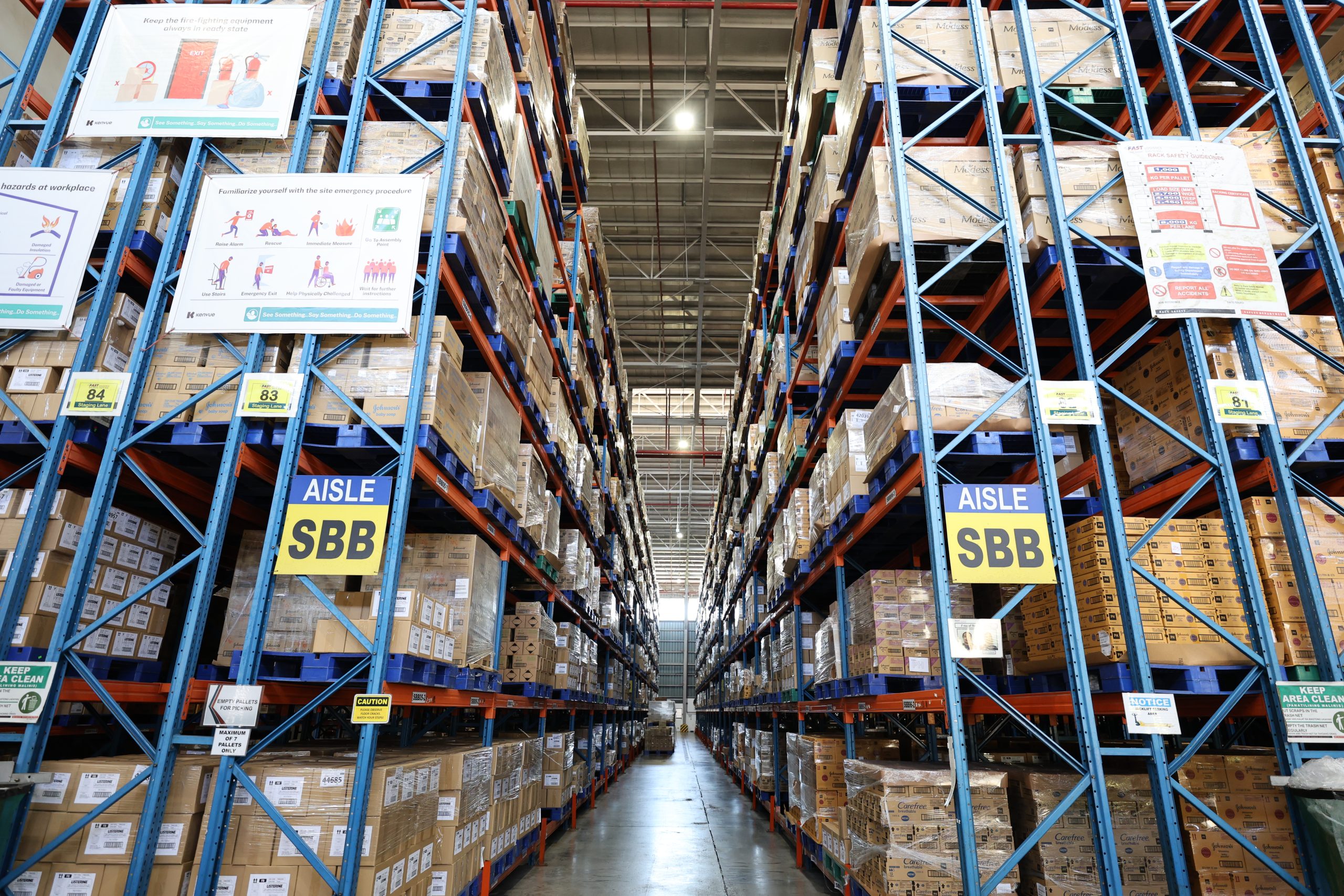
A Warehouse Management System or WMS should track every product movement in real time: receiving, putaway, picking, packing, and shipping. Barcode scanning at each touchpoint reduces manual errors and creates an audit trail for exception investigation.
FAST Logistics Group operates the Warehouse Management System powered by Honeywell, giving FMCG clients real-time inventory visibility across more than 160 warehouse locations. This standardized platform ensures consistent processes and reporting regardless of which facility handles your inventory.
Transport Management System
A Transport Management System or TMS platforms automate carrier comparisons, track shipments across multiple providers, and deliver real-time delivery estimates with alerts for potential delays. For FMCG operations with strict delivery windows, these capabilities are essential.
FAST’s Transport Management System powered by FarEye coordinates movement across the company’s fleet of more than 3,100 trucks, enabling FMCG clients to monitor delivery status and respond quickly to unexpected challenges.
Real-Time Dashboard Access
A provider should offer a client portal or dashboard that serves as a single source of truth for order status, inventory levels, and shipping timelines. Live updates eliminate the need to wait for scheduled reports and enable faster decision-making when issues arise.
Practical Strategies to Managing On-Time Delivery Performance Across Philippine Geography
The Philippine archipelago presents unique delivery challenges. Products must move through urban congestion in Metro Manila, across water via RoRo or sea freight, and last-leg deliveries to provincial areas.
Forward Stocking Strategy
Forward stocking refers to pre-positioning inventory at regional distribution centers closer to demand centers. This helps reduce delivery times and transportation costs, particularly for provincial markets. Instead of shipping products from a central warehouse in Metro Manila to destinations across the country, companies can position inventory closer to where demand is expected.
FAST Logistics Group has extensive experience in supporting business continuity with forward stocking strategy. During Tropical Storm Tino in 2025, a major sardine brand maintained product availability in affected markets after inventory had been pre-positioned ahead of the typhoon. As the brand’s 3PL partner, FAST used its cross-docking and transportation capabilities to rapidly deploy inventory to affected areas. With warehouse and distribution operations across Luzon, Visayas, and Mindanao, FAST enables FMCG companies to strategically position inventory closer to demand centers, helping them maintain service levels and respond quickly to disruptions such as typhoons.
Multi-Modal Transport Coordination
Reaching island destinations requires coordinating multiple transport modes: inland freight or trucking, RoRo shipping, sea freight, and air freight. Effective 3PL partners manage these handoffs and maintain visibility across mode transitions.
Outsourcing multi-modal transport requirements to a 3PL company removes the need to manage multiple carriers or truckers independently.
From FAST Logistics Group’s experience managing nationwide distribution, the challenge is not simply having access to different transport modes but coordinating the handoffs between them. A shipment moving from Metro Manila to a destination in Mindanao involves trucking, port handling, sea transport, another truck transfer, and last-mile delivery. Each handoff creates a potential delay, making centralized coordination and shipment visibility important to maintaining the overall delivery commitment.
Peak Season Planning
FMCG demand spikes during holidays, summer months, and promotional periods. Start peak planning two to three months in advance. This gives your 3PL time to arrange temporary warehouse space, onboard seasonal staff, and secure carrier capacity.
Insist on a written peak staffing plan that specifies additional workers, training schedules, and contingency measures if staffing goals are not met.
How to Evaluate 3PL Performance Beyond the KPI Dashboard
A high-performing 3PL should be evaluated on both performance and capability. Ask these questions during the selection or review process:
Network
- Can the provider support our current distribution footprint?
- Can it support our expansion plans?
- Does it have regional facilities close to key demand centers?
Infrastructure
- How much warehouse capacity is available?
- Can capacity scale during peak periods?
- Does the provider support both dry and temperature-controlled requirements?
Technology
- Is inventory visible in real time?
- Can transportation be tracked?
- Can systems integrate with our ERP or other platforms?
- How are exceptions reported?
Operations
- How are inventory discrepancies investigated?
- How are delivery exceptions escalated?
- What controls are used for high-volume fulfillment?
- How does the provider manage peak periods?
Governance
- Who owns the account?
- How frequently are KPIs reviewed?
- How are corrective actions tracked?
- How are strategic improvements identified?
Scalability
- Can the provider support new products?
- Can it support new regions?
- Can it accommodate major volume changes?
- Can it integrate additional logistics services as the business grows?
Building a Performance-Driven 3PL Partnership
Effective FMCG 3PL performance management combines clear measurement frameworks, enforceable service agreements, and disciplined governance practices. The companies that achieve consistent results define expectations upfront, track performance systematically, and address issues promptly rather than allowing problems to compound.
This is particularly important for enterprise FMCG companies, where logistics performance can influence everything from product availability to customer relationships. Logistics is too closely connected to revenue, customer experience, and growth to be managed as a purely transactional service.
The right 3PL should therefore be evaluated not only by what it can execute today, but by how well it can support the business as requirements become more complex.
FAST Logistics Group: 3PL Partner Built for Complex FMCG Supply Chains
With more than five decades of experience, nationwide infrastructure, integrated logistics capabilities, and technology-enabled operations, FAST Logistics Group is positioned to support businesses that require scale, visibility, and consistent execution across the Philippines.
- Nationwide distribution across Luzon, Visayas, and Mindanao with 94% provincial coverage
- Real-time inventory visibility through Honeywell WMS and FarEye TMS
- Scalable warehousing with over 2 million square meters of warehouse space and more than 1 million pallet positions for dry and cold
- Integrated transport management coordinating more than 3,100 trucks, 14 shipping line partners, and 2 airline carriers
- Modern trade expertise meeting strict retailer compliance requirements
- Expertise in supporting FMCG companies during periods of disruptions and volatile market conditions
Multinational FMCG companies, leading conglomerates, and growing brands rely on FAST to manage complex logistics requirements while maintaining service standards. Connect with our Solutions Experts to learn more about building a performance-driven logistics partnership for your FMCG operations in the Philippines.
Frequently Asked Questions (FAQs) about Managing FMCG 3PL Performance in the Philippines
What are the most important KPIs for FMCG 3PL performance
There is no single KPI that fits every FMCG operation. Core metrics typically include order accuracy, inventory accuracy, on-time delivery, OTIF, receiving turnaround, returns processing, damage and loss, and proof-of-delivery performance. The most important KPIs should be aligned with the company’s customer commitments and supply chain objectives.
How often should FMCG companies review 3PL performance
A combination of weekly operational reviews, monthly KPI scorecards, and quarterly business reviews provides a practical governance structure for many enterprise accounts. The frequency can be adjusted depending on operational complexity, volume, service requirements, and current performance.
What should be included in an FMCG 3PL SLA
An SLA should clearly define the KPI, calculation method, measurement period, target, exclusions, reporting process, escalation procedure, and corrective action. Common areas include order accuracy, inventory accuracy, on-time delivery, OTIF, receiving turnaround, returns, damage and loss, and system performance.
How can FMCG companies improve inventory accuracy
Start with disciplined warehouse processes and system controls. Key practices include cycle counting, barcode scanning, system-directed putaway, inventory reconciliation, location controls, and appropriate FEFO or FIFO processes. A WMS can provide the visibility and process controls needed to consistently manage these activities at scale.
What makes nationwide FMCG logistics challenging in the Philippines
The country’s geography requires logistics providers to coordinate transportation across islands, ports, roads, urban centers, and provincial markets.
A nationwide FMCG network therefore requires more than trucks. It requires strategically located warehouses, multimodal transportation, cross-docking capabilities, technology, local operating expertise, and contingency planning.
When should an FMCG company consider changing its 3PL provider
Consider evaluating alternatives when persistent performance issues continue despite documented corrective actions, particularly when the provider cannot consistently meet agreed service levels, provide reliable data, communicate exceptions proactively, or scale with the business. Before changing providers, however, companies should document the performance gap, conduct root-cause analysis, and establish a clear remediation plan.
Categories
-

FAST Ahead
Includes case studies and testimonials of our partners as well as other featurettes from industry experts
-

FAST Hacks
We simplify logistics terms and provide practical tips and solutions for the DIY in you
-

FAST Highlights
Know more about our history, various brands, achievements, and news updates
-

FAST Moments
Get to know the people of FAST, our employee programs, as well as our various ways of giving back to the community
-

FAST Solutions
Learn more about the various logistics solutions that we cater to and offer our clients, as well as tech innovations, and service facilities
Related Stories

FAST Logistics Highlights Supply Chain Resiliency Solutions at 2026 Visayas Area Business Conference
FAST Logistics Group, the Philippines’ leading provider of integrated end-to-end logistics solutions, highlighted practical supply chain resiliency strategies during the 2026 Visayas Area Business Conference (VABC) hel...
FAST Logistics Showcases Integrated End-to-End Logistics Solutions at Hotel & Foodservice Suppliers Show 2026
FAST Logistics Group, the Philippines’ largest third-party logistics (3PL) company, showcased its integrated end-to-end logistics solutions and capabilities designed for hotels, restaurants, and foodservice providers a...
FAST Logistics Head Office Manila, FSC JFC Calamba Recertified for ISO 9001:2015
FAST Logistics Group, with over 50 years of industry leadership, continues to set the standard for end-to-end logistics and supply chain management in the Philippines. The FAST Logistics Head Office in Manila and the FAS...

FAST Logistics Group is the leading end-to-end logistics and supply chain solutions provider in the Philippines. With over 50 years of industry leadership, we offer a comprehensive suite of services including multi-modal transportation, warehousing, cross-docking, cold chain, and toll manufacturing solutions.
© Copyright 2026 FAST Logistics