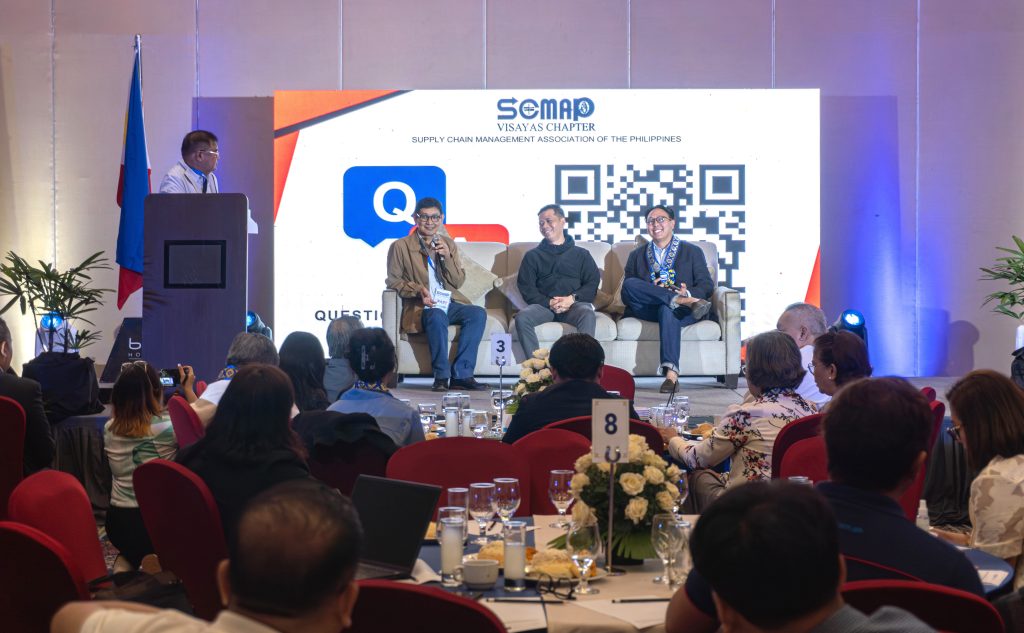
Stronger collaboration between industry and academe is essential to preparing the next generation of Filipino talent for the demands of logistics and supply chain management, FAST Logistics Group executives said at the SCMAP Visayas Supply Chain Conference 2026, as they emphasized the need to develop both soft skills and specialized technical competencies.
The message was underscored by FAST Chief Operating Officer for Transport Operations Bobby Lim, Business Unit Head for Warehousing Aron Javier, and AVP for Customer Revenue Strategy & Digital Transformation Anton Chiongbian during the conference’s panel discussion.
Organized by the Supply Chain Management Association of the Philippines (SCMAP) Visayas Chapter, Inc., the annual conference brought together government leaders, business executives, logistics practitioners, and other industry stakeholders to discuss emerging challenges and opportunities in the supply chain sector.
A key highlight of the program was Anton’s presentation, “Powering Cebu’s Growth Through AI-Enabled, End-to-End Logistics,” followed by a panel discussion featuring the three FAST executives.
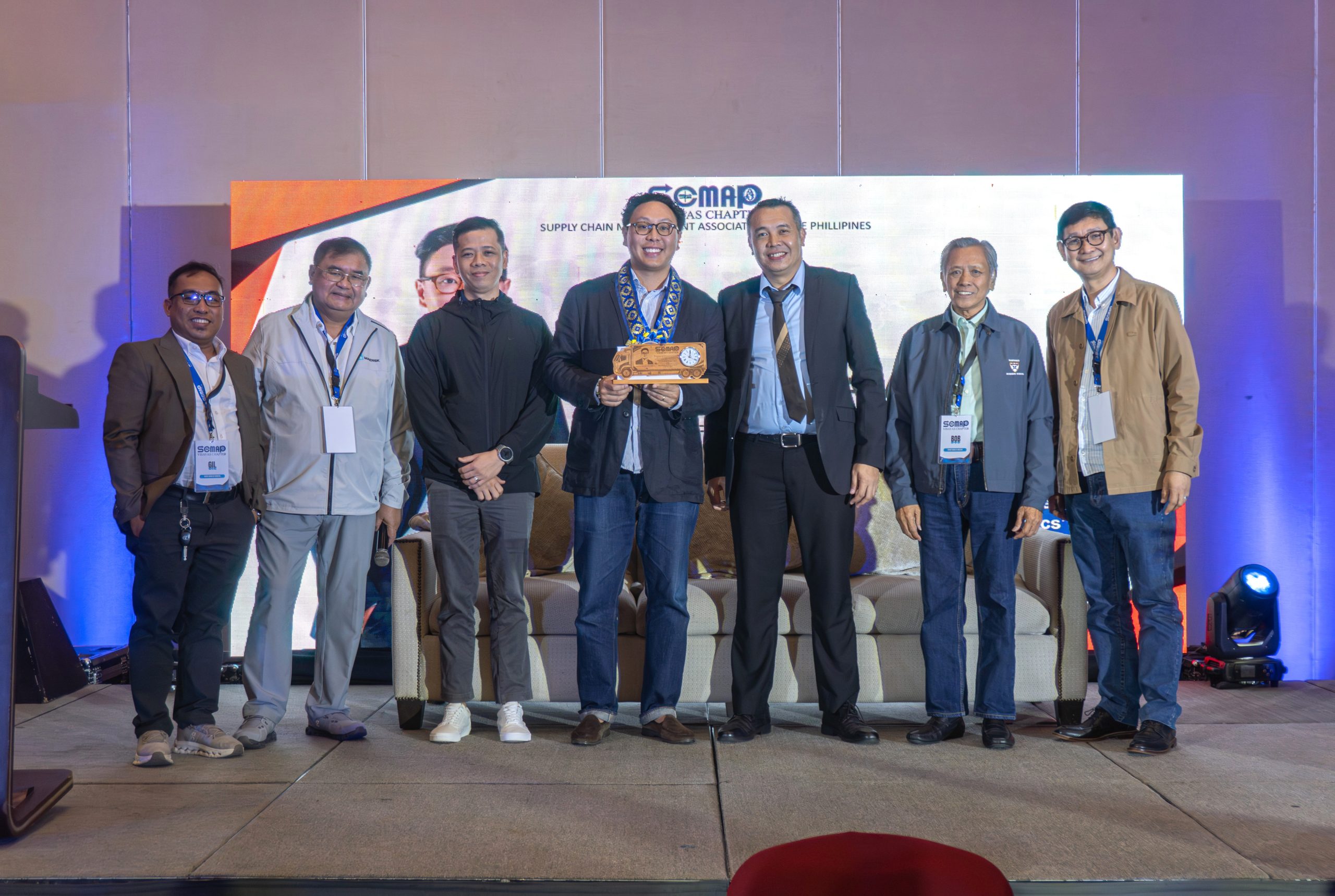
Building Communication and Leadership Skills for the Future
Aron emphasized the importance of developing communication and other interpersonal skills early in the education of future supply chain professionals.
Beyond technical knowledge, he said, the ability to communicate clearly is essential to effective leadership, team coordination, and customer service.
“Communication is an important part of our day-to-day operations. It is an essential skill for leaders,” Aron said. “Our teams should know how to communicate clearly and provide proper instructions to people on the shop floor, their colleagues, and customers whose pain points we address.”
Speaking to a diverse audience that included school administrators and faculty members, he underscored the importance of equipping students with capabilities to supervise teams and present ideas to business leaders and customers.
These capabilities become increasingly important as logistics operations grow more complex and require seamless coordination across warehouse and transport networks.
For FAST, which employs approximately 13,000 people nationwide, logistics is as much a “people business as it is an infrastructure business,” Aron said.
Warehouses, transport fleets, and technology platforms can deliver their intended value only when supported by a workforce capable of coordinating operations, solving problems, and maintaining strong customer relationships.
To help develop future leaders, FAST runs a Management Trainee Program that provides qualified fresh graduates with structured, hands-on development and mentorship.
Through cross-functional exposure, trainees gain practical experience and build the leadership and communication skills needed to support the company’s nationwide operations. They also learn to provide tailored solutions to FAST’s growing number of customers.
Bridging the Technical Skills Gap Through Industry-Academe Collaboration
Alongside soft skills, Bobby highlighted the growing importance of specialized competencies in keeping logistics operations efficient and reliable.
Forklift and reach truck skills, as well as professional truck driving, are essential to the day-to-day movement, handling, and storage of goods, he said. For logistics providers, developing this talent requires closer coordination between employers, educational institutions, and technical training providers.
Bobby said stronger industry-academe partnerships can help ensure that training programs reflect actual workplace requirements, giving students and aspiring workers access to relevant, practical skills.
“Technical skills are fundamental to keeping logistics operations running efficiently and reliably. We need stronger collaboration between industry and academe to create more opportunities for Filipinos to build careers in the logistics and supply chain sector,” Bobby said.
FAST is investing in workforce development through initiatives that connect education with industry practice. The company also works with educational institutions to help eligible employees pursue degree completion through the Expanded Tertiary Education Equivalency and Accreditation Program (ETEEAP).
The program recognizes relevant prior learning and work experience toward formal higher education qualifications, subject to applicable requirements.
These efforts reflect the importance of creating accessible pathways for workers to advance their education and pursue career growth within the logistics and supply chain sector.
By working more closely with academe and training institutions, industry players can help address workforce gaps. Collaboration is also key to prepare Filipinos for both current operational needs and emerging roles shaped by technological change.
Investing in People to Deliver Smarter, More Resilient Logistics
As Anton highlighted in his presentation, empowering people remains central to FAST’s approach to building an agile, technology-enabled logistics network. AI and digital tools improve operational efficiency, and their impact depends on the expertise and judgment of the people who use them.
“Technology and AI complement strategy and expertise. They do not replace them. Human-in-the-loop — always. Our people remain essential to decision-making, execution, and customer relationships,” Anton said.
FAST has a Learning and Innovation Hub in Cabuyao, Laguna. The hub provides technical training and certifications in warehousing and forklift operations, accredited by the Technical Education and Skills Development Authority (TESDA).
FAST also offers micro-credential courses in reach truck operations, helping equip its employees and other practitioners with specialized competencies.
Anton said a capable workforce enables businesses to respond to operational challenges and meet changing customer expectations.
Customer-Centric Innovation and Operations
For companies seeking to optimize their supply chains, a 3PL partners’ capabilities ultimately depend not only on its physical assets and technology. Instead, it depends on the people who plan, manage, and execute operations every day.
“We will continue to invest in our people and embrace technologies that deliver real value,” Anton said. “We will continue to challenge ourselves to find better ways of doing logistics in the Philippines, serving businesses of every size for them to thrive in a competitive market.”
Through its workforce development initiatives, FAST continues to advocate for a more collaborative approach to talent development. FAST is committed to preparing its workforce for the evolving demands of logistics and supply chain management.
With over 50 years of industry leadership, FAST Logistics Group is the Philippines’ leader in end-to-end logistics. Connect with our Solutions Experts to learn more
Categories
-

FAST Ahead
Includes case studies and testimonials of our partners as well as other featurettes from industry experts
-

FAST Hacks
We simplify logistics terms and provide practical tips and solutions for the DIY in you
-

FAST Highlights
Know more about our history, various brands, achievements, and news updates
-

FAST Moments
Get to know the people of FAST, our employee programs, as well as our various ways of giving back to the community
-

FAST Solutions
Learn more about the various logistics solutions that we cater to and offer our clients, as well as tech innovations, and service facilities
Related Stories

Decarbonizing FMCG Supply Chain: How Companies Can Achieve Net Zero Through Sustainable Logistics
FAST Logistics Group, the Philippines’ end-to-end logistics company, is helping Fast-Moving Consumer Goods (FMCG) brands to accelerate their journey toward net zero. Net zero means balancing the greenhouse gas emission...

FAST Boosts Logistics Support for Nueva Vizcaya Farmers, MSMEs
FAST Logistics Group, the country’s leading end-to-end logistics provider, is bringing its extensive logistics capabilities to support farmers and local enterprises in Nueva Vizcaya to help them improve market access a...

Smart Business Moves – Ways to Make Sari-Sari Store More Profitable
FAST Logistics Group, the leading logistics and selling and distribution company in the Philippines, explores various ways to make sari-sari store more profitable. With these strategies, business owners can attract custo...

FAST Logistics Group is the leading end-to-end logistics and supply chain solutions provider in the Philippines. With over 50 years of industry leadership, we offer a comprehensive suite of services including multi-modal transportation, warehousing, cross-docking, cold chain, and toll manufacturing solutions.
© Copyright 2026 FAST Logistics