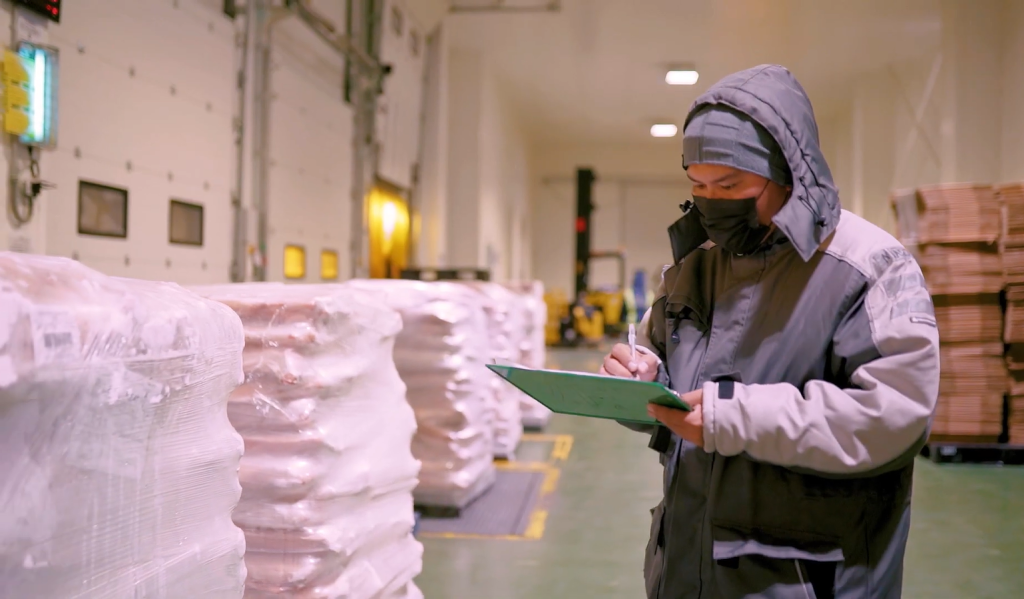
The Philippines can significantly reduce post-harvest losses and improve food security by bringing cold storage and order fulfillment facilities closer to agricultural production areas and adopting shared cold chain models that make modern logistics more accessible to farmers and agribusinesses, according to a cold chain expert.
During the 2026 Mid-Year Food and Agribusiness E-Conference organized by the University of Asia and the Pacific-Center for Food and Agribusiness, FAST Logistics Group ColdChain Business Unit Head Marc Anthony Dizon said the country’s cold chain strategy should evolve beyond simply increasing storage capacity and instead focus on where facilities are built and how they are utilized.
“We need cold storage closer to where food is produced, while making these facilities accessible through shared logistics models that allow more farmers and food businesses to benefit from modern cold chain infrastructure,” Marc said during the virtual conference attended by food and agribusiness experts, industry stakeholders, and members of the academe.
According to Marc, the Philippines requires around 1.4 million pallet positions to meet annual food consumption requirements, but currently has only about 860,000 pallet positions, with much of the country’s cold storage capacity concentrated near major consumption markets like Metro Manila rather than agricultural production areas.
Marc said locating cold storage and value-adding processing facilities near harvest sites or livestock production areas allows producers to quality-check, sort, clean, and transform products into ready-to-sell or ready-to-eat goods closer to the source.
By completing these activities near production areas, producers no longer need to transport non-value-adding parts, excess weight, or waste to distribution centers and consumer markets. Instead, agri-producers only transport market-ready products for more efficient use of transport capacity and lower logistics costs, he explained.
Marc said it also reduces the need to establish processing operations in Metro Manila, where real estate and labor costs are generally higher. “Producers avoid transporting non-essential weight and waste over long distances, making logistics operations more efficient while lowering overall supply chain costs,” he said.
Shared Cold Chain Logistics Model for Cost-Efficiency
Marc said strategically locating processing and cold storage facilities near production areas also creates opportunities for growers and producers to leverage shared logistics infrastructure. Instead of each small producer investing in individual processing facilities, multiple growers can utilize the same infrastructure while the facility operator benefits from higher utilization and economies of scale.
The same principle extends to warehousing and transportation, where producers consolidate volumes and share logistics resources rather than paying separately for storage and transport.
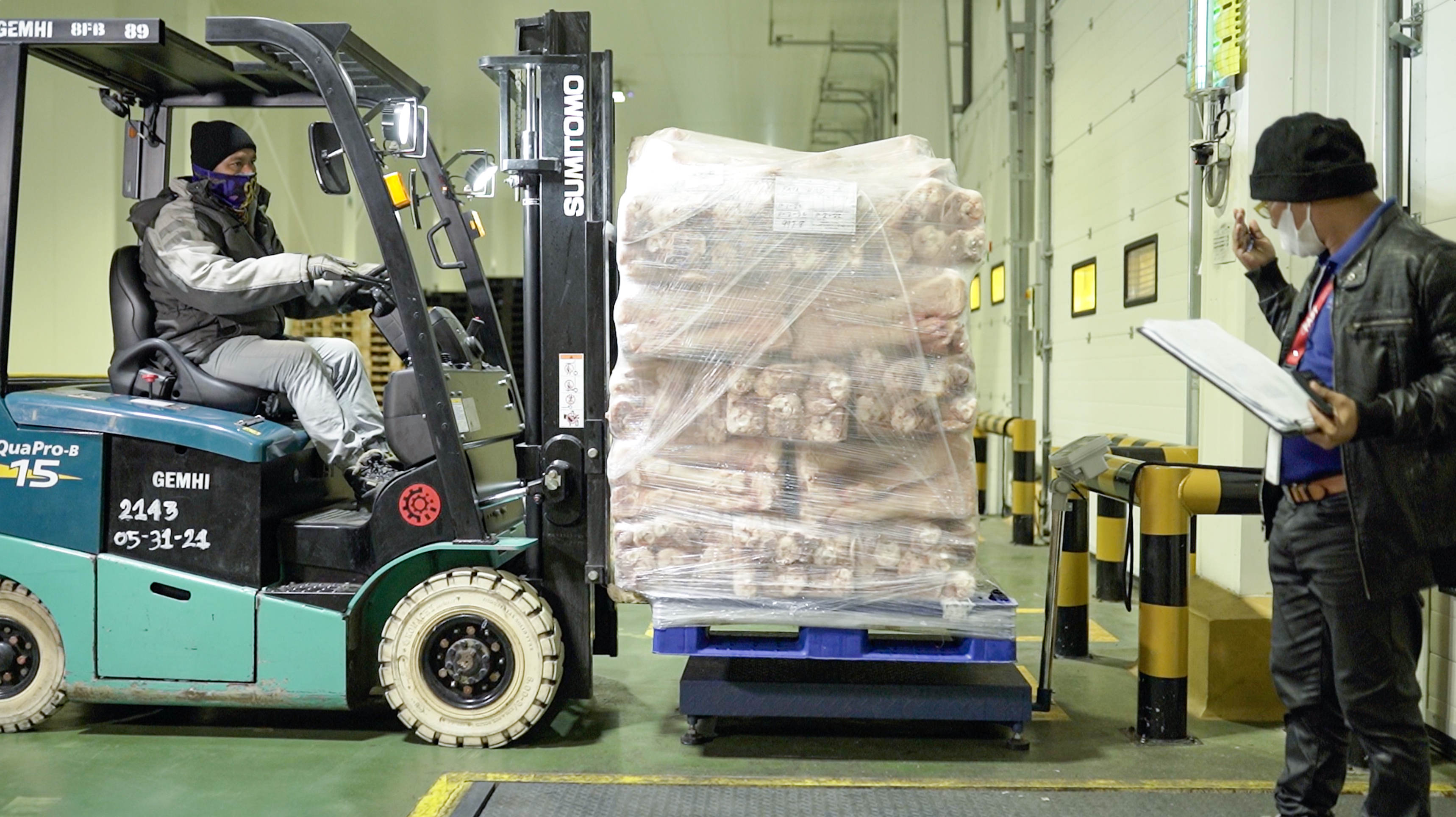
Marc advocated for a shared cold chain logistics model in which businesses share warehouse infrastructure and transportation assets while maintaining dedicated storage environments based on each commodity’s specific temperature, humidity, and food safety requirements.
He emphasized that a shared cold chain model does not mean storing different agricultural commodities in the same storage environment.
Products such as onions, for example, require storage conditions that differ from other fruits, vegetables, meat, or seafood.
“Shared cold chain is about sharing infrastructure efficiently while maintaining commodity-specific storage zones and food safety standards,” he explained.
Marc said the shared logistics model gives small and medium-sized agricultural enterprises access to cold chain capabilities that would otherwise require significant capital investment.
Navigating Fuel Price Hikes
He noted that the US-Iran war has significantly affected fuel prices and underscored the need for shared logistics models and cost-efficient supply chain solutions.
Beyond physical infrastructure, Marc also called for greater adoption of digital technologies to improve food supply chain planning.
He said a comprehensive agriculture database supported by digital analytics would strengthen inventory visibility, demand forecasting, and distribution planning across the country.
“Food security is not just about producing more food. It’s about ensuring we have the logistics infrastructure and technology to preserve food quality and move products efficiently from farms to consumers,” Marc said.
The recommendations complement broader discussions during the conference, where industry experts identified logistics modernization as one of the country’s most important opportunities for strengthening food security amid geopolitical uncertainty and climate volatility.
Although shared logistics presents challenges, these can be effectively managed with the support of a reliable 3PL partner. With the right provider, businesses gain the systems, expertise, and operational controls needed to make shared logistics efficient, transparent, and dependable. It thus becomes an imperative for businesses to work with an experienced 3PL provider to stay competitive in a high-cost and increasingly complex supply chain environment.
FAST offers integrated cold chain solutions in the Philippines, with a total storage footprint of 30,000 pallet positions. Its cold chain solutions span multiple temperature zones, from frozen and chilled to ambient, covering cold storage, refrigerated transport, and value-added services such as blast freezing.
With more than 50 years of experience supporting the country’s leading food manufacturers and agribusinesses, FAST operates one of the Philippines’ largest integrated logistics networks, including more than 160 dry and cold chain facilities, over 2 million square meters of warehouse space, and a nationwide fleet of more than 3,100 trucks supported by advanced warehouse and transport management systems. Connect with our Solutions Experts to learn how we can support your business
Categories
-
FAST Ahead
Includes case studies and testimonials of our partners as well as other featurettes from industry experts
-

FAST Hacks
We simplify logistics terms and provide practical tips and solutions for the DIY in you
-
FAST Highlights
Know more about our history, various brands, achievements, and news updates
-

FAST Moments
Get to know the people of FAST, our employee programs, as well as our various ways of giving back to the community
-
FAST Solutions
Learn more about the various logistics solutions that we cater to and offer our clients, as well as tech innovations, and service facilities
Related Stories
2026 Outlook for Philippine Logistics: Fearless Forecasts by FAST
Far from a time to slow down, 2026 demands sharper strategy and stronger execution. Businesses will face mounting cost pressures and supply chain volatility, making operational efficiency non-negotiable. 2026 will not be...
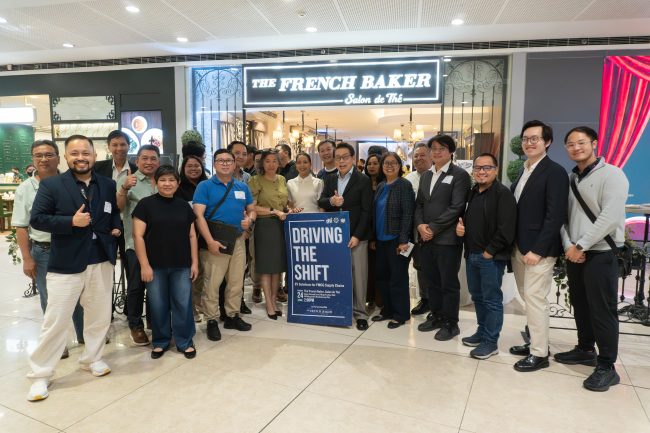
FAST Logistics Highlights EV Transition in FMCG Supply Chain at DTI-DOE Forum
FAST Logistics Group, the Philippines’ leading provider of integrated end-to-end logistics solutions, highlighted the opportunities and challenges of electric vehicle adoption in the fast-moving consumer goods (FMCG) s...
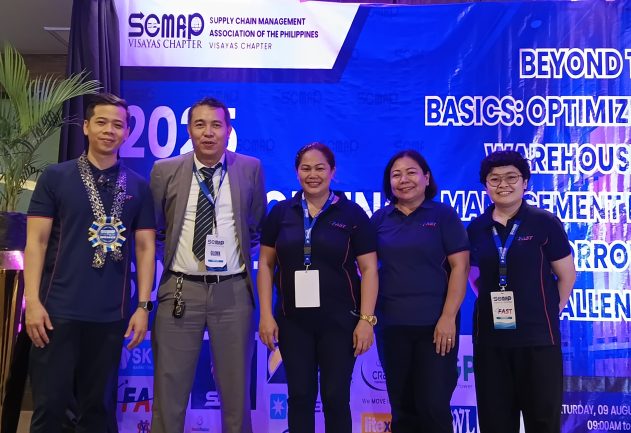
Leading the Way: FAST Showcases Warehouse Innovation at SCMAP Visayas Warehousing Summit
FAST Logistics Group, the country’s leading end-to-end logistics solutions provider, took center stage at the Warehousing Summit hosted by the SCMAP Visayas Chapter at Bai Hotel in Mandaue City, Cebu on Friday, August ...

FAST Logistics Group is the leading end-to-end logistics and supply chain solutions provider in the Philippines. With over 50 years of industry leadership, we offer a comprehensive suite of services including multi-modal transportation, warehousing, cross-docking, cold chain, and toll manufacturing solutions.
© Copyright 2026 FAST Logistics