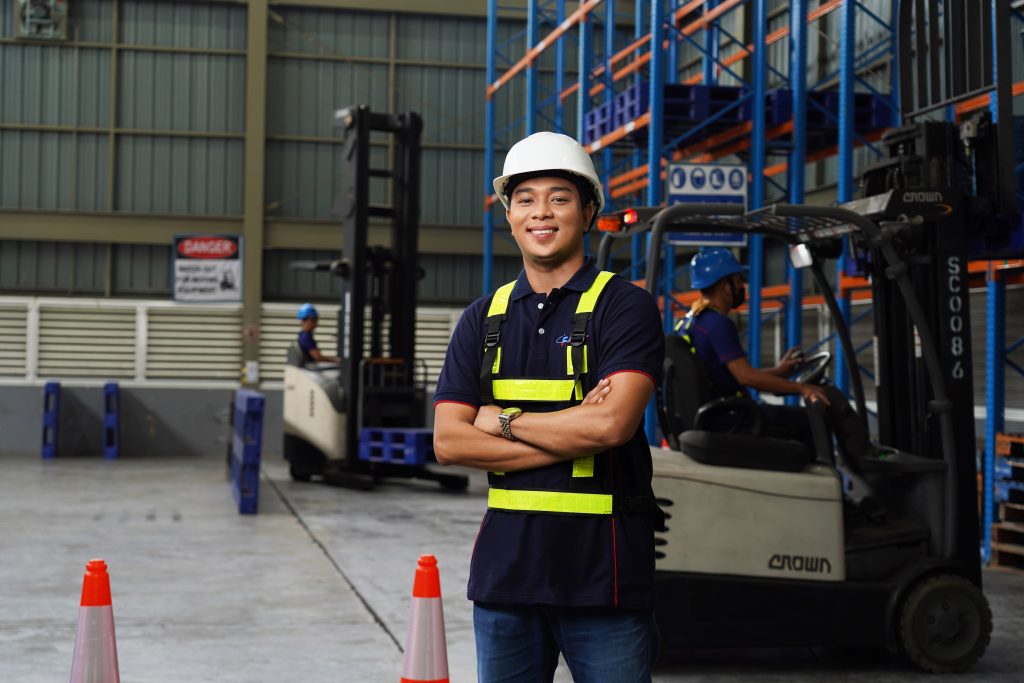
The companies that continue to perform despite supply chain disruptions are not simply reacting better. They are structured differently and supported by a logistics partner that can adapt under pressure.
To navigate disruptions like rising fuel costs and global conflict, businesses need systems and partners that can absorb shocks and continue operating. This is where the right third-party logistics (3PL) partner makes a critical difference.
Here are some of the ways a strategic 3PL partner can support your business during supply chain shocks such as calamities and fuel price volatility:
1) Route and Cost Optimization
Rising fuel prices increase logistics costs across every stage of the supply chain. A capable 3PL responds by optimizing routes, consolidating shipments, and improving fleet efficiency. This reduces unnecessary fuel consumption and helps control overall costs.
Instead of passing rising costs directly to your business, a capable partner works to absorb and manage them. They proactively help businesses protect margins and logistics spending predictable. Over time, these optimizations become a key advantage during periods of volatility.
2) Product Availability and Accessibility Nationwide
Maintaining product availability during disruption is one of the biggest challenges for businesses. A 3PL with nationwide coverage can move goods across key markets such as Metro Manila, Cebu, Davao, Iloilo, and Cagayan de Oro without relying on a single route or hub. This ensures that products continue reaching customers even when certain areas are affected.
Access to multiple carriers and transport modes also improves flexibility. It allows businesses to secure capacity, maintain delivery schedules, and avoid bottlenecks. In times of disruption, this consistency directly supports revenue and market share.
3PLs work with a broad network of trusted freight carriers, giving businesses access to more competitive rates and flexible service options. This often translates to:
• Better pricing than what individual shippers can typically secure on their own
• Priority access to capacity such as trucks, containers, and warehouse space during peak seasons
• More consistent service across transport modes
3) Reduced Operational Burden and On-Demand Scalability
Working with a 3PL removes the need to invest in and manage logistics infrastructure internally. Businesses no longer have to operate warehouses, maintain fleets, or manage staffing for transport and distribution. This reduces fixed costs and supports a more flexible, asset-light operating model.
In times of disruption, access to backup warehouse hubs becomes especially important. A 3PL can provide temporary storage for inventory overflow or during power interruptions, with pay-as-you-use options that avoid long-term commitments and maintain continuity without requiring huge capital investment.
The same applies to transport operations. Instead of operating trucks, hiring drivers, and managing fuel costs on your own, businesses can simply book trucks or sea freight containers from 3PL as needed when demand spikes. This added convenience allows companies to scale operations more quickly while staying focused on core business priorities.
4) Strategic Inventory Positioning
Working with the right 3PL helps you preposition your goods in key markets such as Metro Manila, Cebu, Iloilo, Bacolod, Davao, Cagayan de Oro, and Zamboanga ahead of supply chain disruptions. They have the infrastructure and expertise in adopting forward stocking, or the strategy that puts inventory closer to demand instead of relying on a single central warehouse.
With forward stocking, goods are already positioned in key locations before disruptions occur. This reduces the distance goods need to travel and lowers exposure to fuel cost increases. It also ensures products remain available even when long-haul transport is disrupted.
5) End-to-End Visibility and Transparency
Visibility becomes critical when disruptions affect multiple parts of the supply chain. A modern 3PL provides real-time tracking and data insights across transport and warehousing operations. This allows businesses to monitor shipments and respond quickly to delays.
With better visibility, planning becomes more accurate and proactive. Businesses can adjust routes, manage inventory, and communicate with customers more effectively. This level of control reduces uncertainty and improves decision-making.
6) Access to an Integrated Logistics Network
A strong 3PL connects different logistics services into one system. This includes inland trucking, RoRo transport, sea freight, air freight, and warehousing. Having these capabilities integrated allows for smoother coordination across the supply chain.
This also simplifies operations for businesses. Instead of managing multiple providers, they work with one partner that handles end-to-end movement. During disruptions, this integration reduces delays and improves execution.
Key Services and Strengths
A capable 3PL offers integrated end-to-end logistics solutions, supported by digital systems that enable nationwide reach and operational flexibility. These solutions include:
• Inland Transport / Trucking – Provides extensive inland freight coverage to support mainland distribution and last-mile delivery needs
• RoRo (Roll-on/Roll-off) – Utilizes established RoRo networks to enable seamless and efficient inter-island transport across the Philippines
• Sea Freight – Offers reliable sea freight solutions through access to container availability and a broad network of shipping line partners
• Air Freight – Delivers fast and dependable options for time-sensitive shipments through strong airline partnerships
• Warehousing – Supports operations with advanced warehousing solutions, value-added services, and real-time visibility through tracking systems and platforms such as Honeywell Warehouse Management System
7) Ease of Transition to More Sustainable Logistics Options
Fuel crises highlight the need for more efficient logistics operations. A capable 3PL supports this by investing in better fleet management, optimized routes, and alternative energy solutions. These improvements help reduce fuel consumption and operating costs.
Some providers are also preparing for long-term shifts, such as electric fleets and solar-powered warehouses. This allows businesses to gradually reduce dependence on traditional fuel sources. Over time, this leads to more stable and sustainable operations.
8) Faster Decision-Making with Dedicated Solutions Experts
Crisis situations require informed and fast decision-making. Dedicated logistics experts help businesses assess risks, adjust plans, and implement solutions quickly. Their role is to provide clarity and direction when uncertainty is high.
Without expert guidance, businesses rely on reactive decisions that often lead to inefficiencies. A strong 3PL partner brings experience and structured planning into the process. This ensures that responses are strategic, not improvised.
9) Stronger Risk Sharing During Volatility
A strong 3PL does more than execute instructions. It helps businesses manage uncertainty by sharing operational insight, recommending alternatives, and reducing exposure to disruption. This makes the relationship more strategic and more valuable during periods of volatility.
Because a 3PL works across multiple industries, routes, and client requirements, it develops a broader view of how supply chains respond during crises. This experience allows it to recommend practical best practices based on what has worked for other companies facing similar challenges. Instead of solving problems in isolation, businesses gain access to proven approaches in inventory planning, transport adjustments, contingency routing, and cost management.
10) Business Confidence Due to 3PL’s Proven Crisis Execution
Real-world performance is the best measure of logistics capability. A 3PL partner that has operated during disasters and disruptions demonstrates the ability to deliver under pressure. This includes mobilizing quickly, coordinating across regions, and maintaining service levels.
Whether the disruption is a typhoon or a fuel crisis, the requirements remain the same. Speed, coordination, and reliability determine outcomes during critical moments.
Why Reliable 3PL Matters More in a Crisis
Disruptions expose gaps in logistics operations. Businesses with limited networks or reactive systems often face delays, stockouts, and rising costs. In contrast, those supported by strong 3PL partners are better able to maintain continuity and respond quickly.
During emergencies and periods of disruption, a 3PL becomes a strategic resource, instead of just a service provider. This is especially important in a market like the Philippines, where logistics is already complex.
Your Supply Chain Is Only as Strong as Your Logistics Partner
Global disruptions will continue to occur, whether due to geopolitical conflict, fuel shortages, or natural disasters. These events cannot be controlled, but their impact can be managed. Preparation is what determines whether a business continues operating or struggles to keep up.
The role of a 3PL is to help businesses stay operational despite these challenges. The right partner absorbs disruption, maintains performance, and supports business continuity. The wrong one adds pressure and increases risk.
With supply chain shocks, businesses must evaluate whether their current setup can withstand these conditions. The right logistics provide solutions and adapt quickly, empowering businesses to continue serving customers.
Building a Crisis-Ready Supply Chain with the Right 3PL
Building a resilient supply chain requires the right strategies and the right partner. FAST Logistics Group combines nationwide reach, operational expertise, and proven execution to support businesses during disruption to help them navigate the most challenging conditions.
With integrated end-to-end solutions covering transport, warehousing, cold chain, and value-added services, FAST helps multinational companies, Filipino conglomerates, international startups, and micro, small, and medium enterprises (MSMEs) improve control and consistency across their supply chain. Through its infrastructure and end-to-end capabilities, it provides businesses with the support needed to navigate complex and changing conditions.
Work with a 3PL that can ensure your business continues to grow even in times of uncertainty. Connect with Solutions Experts to learn more
Categories
-
FAST Ahead
Includes case studies and testimonials of our partners as well as other featurettes from industry experts
-

FAST Hacks
We simplify logistics terms and provide practical tips and solutions for the DIY in you
-
FAST Highlights
Know more about our history, various brands, achievements, and news updates
-

FAST Moments
Get to know the people of FAST, our employee programs, as well as our various ways of giving back to the community
-
FAST Solutions
Learn more about the various logistics solutions that we cater to and offer our clients, as well as tech innovations, and service facilities
Related Stories
How to Start Your Trucking Business With Logistics Solutions – A FAST Trucker’s Guide
Starting a trucking business can be an incredibly rewarding journey. It offers the freedom of the open road, the potential for financial independence, and the satisfaction of building something of your own. But, like any...
Build or Integrate – How to Select the Right Transport Management System for Business
Running a successful logistics operation demands more than just skill and experience. Businesses and companies need the right tools to streamline processes, enhance efficiency, and ensure customer satisfaction. Implement...

Logistics for Inclusive Growth – FAST Brings Solutions Roadshow in Davao City
FAST Logistics Group, the Philippines’ leading provider of end-to-end logistics solutions, has showcased its advanced warehouse and transport services customized to meet the distinct needs of Davao-based companies. The...

With over 40 years' experience, Fast Group operates an extensive network of transport, warehousing, distribution, and logistics solutions covering inland, air, and sea forwarding and courier services across the 7,641 Philippines islands to help our customers reach the furthest regions of the country.