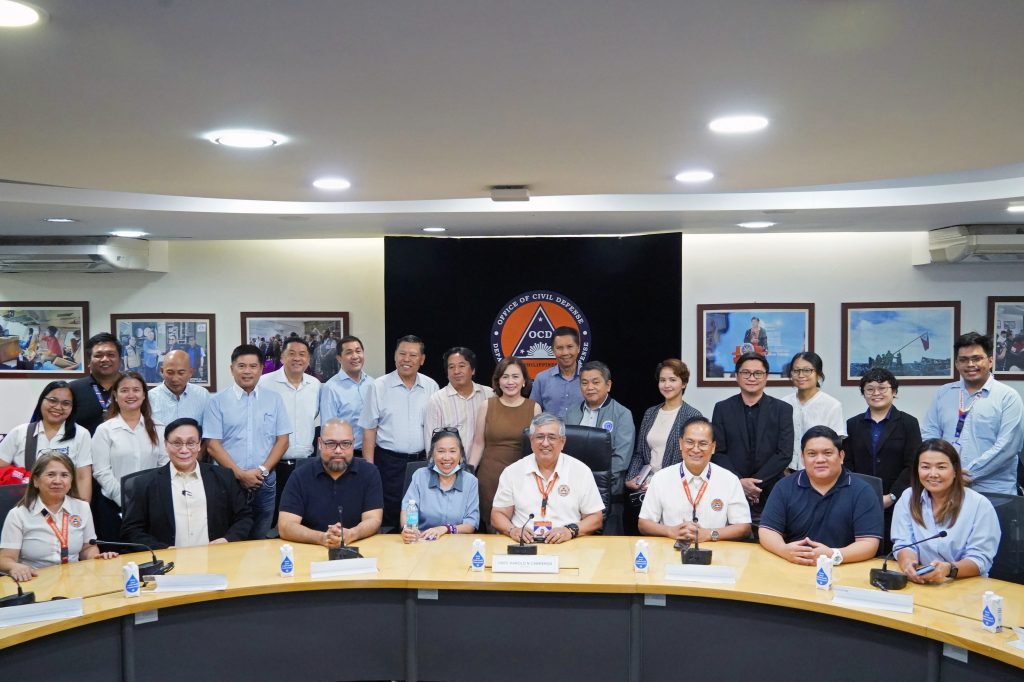
FAST Logistics Group, the Philippines’ largest third-party logistics (3PL) provider, joined key officials from the Office of Civil Defense (OCD) and the National Disaster Risk Reduction and Management Council (NDRRMC) to discuss stronger collaboration in humanitarian logistics.
The meeting, organized by the Department of Trade and Industry (DTI) Supply Chain and Logistics Group, brought together public and private sector stakeholders including FAST to share existing initiatives and identify practical ways to improve disaster response logistics across the country.
Also present at the gathering were logistics service providers, trucking groups and associations, shipping lines, airline carriers, terminal operators, and last-mile delivery companies. Their participation underscored the growing recognition that effective disaster response requires close coordination across the entire supply chain ecosystem.
Public-Private Partnership: A Critical Step for Disaster Preparedness
During the discussion, Civil Defense Administrator Undersecretary Harold Cabreros emphasized the critical role of logistics in ensuring the continuous and unimpeded movement of goods during emergencies, whether caused by natural hazards or man-made disruptions.
While the government already mobilizes its own land, air, and sea assets during crises, he noted that stronger collaboration with the private sector is essential to maximize available resources and speed up coordination when calamities strike.
Trade Undersecretary Mary Jean Pacheco, CESO II, likewise highlighted the importance of engaging logistics service providers in disaster preparedness and response.
She said the gathering of supply chain players is especially relevant, as private logistics companies possess extensive infrastructure, operational capacity, and technical expertise that can help ensure the availability and accessibility of essential goods even in uncertain conditions.
Why Humanitarian Logistics is Important in the Philippines
This conversation is particularly important in the Philippine context. As one of the most disaster-prone countries in the world, the Philippines faces more than 20 typhoons each year and has 124 active volcanoes.
These recurring threats can severely disrupt supply chains, interrupt business operations, and affect livelihoods in vulnerable communities. In this environment, humanitarian logistics becomes a vital capability.
Unlike commercial logistics, which typically focuses on efficiency and cost optimization, humanitarian logistics must prioritize speed and agility to ensure that essential goods reach affected populations as quickly as possible.
FAST Logistics Group: Building Disaster Resilience Through Strategic Logistics Strategy
In line with this need, FAST Logistics Group highlighted at the meeting several solutions that can strengthen disaster preparedness and response, drawing on its extensive experience as a trusted logistics partner to more than 300 customers, many of them major fast-moving consumer goods (FMCG) companies.
Forward Stocking for Disaster Preparedness
Among these is forward stocking, a strategy that allows companies to ship goods in bulk and preposition inventory closer to areas likely to be affected by typhoons or other emergencies.
FAST explained that many of its customers, including multinational companies and leading conglomerates, can benefit from this approach because it allows them to replenish grocery stores and supermarket shelves more quickly when supply chain disruptions occur.
Forward stocking is especially relevant in the Visayas and Mindanao, where supply vulnerabilities are often more pronounced because many major distribution centers remain concentrated in Metro Manila and Luzon cities.
When disasters such as typhoons, earthquakes, or volcanic eruptions damage infrastructure, including roads and bridges, the movement of goods becomes even more difficult.
By positioning inventory closer to high-risk areas in advance, companies can respond faster and reduce delays in the delivery of essential products.
FAST also pointed to the scale of its nationwide network as a major advantage in supporting humanitarian logistics.
The company operates more than 160 hubs across the Philippines, with over 2 million square meters of warehouse space and more than 1 million pallet positions. This warehousing footprint is supported by its multi-modal transport capability, which enables the movement of goods by land, sea, and air through more than 900 trucking partners, 14 major shipping line partners, and 2 airline carriers with nationwide reach.
Complemented by technology for real-time visibility, these assets give FAST the flexibility to respond to disruptions and route goods through available channels during emergencies.
Backhaul Logistics for Rapid Deployment, Cost-Efficiency
Another solution raised during the meeting was the use of backhaul logistics. FAST explained that it utilizes trucks returning empty after completing deliveries to move goods quickly and cost-effectively, creating efficiencies for both private companies and government agencies during disaster response.
By making use of return trips that would otherwise go unused, backhaul logistics can help lower transport costs while expanding delivery capacity in times of urgent need.
FAST also shared a recent example of this capability in action. When Typhoon Uwan (international name: Fung-wong) hit the Philippines, FAST was tapped by the Department of Social Welfare and Development Region IV-A and the OCD CALABARZON in transporting 2,000 ready-to-eat food packs to Lucena City and Batangas Ports. FAST led similar initiatives in Cebu during typhoons and natural disasters.
The effort helped ensure uninterrupted assistance for stranded individuals at two of the region’s major ports while utilizing a truck that would have otherwise returned empty.
Through this initiative, FAST demonstrated how logistics expertise can be mobilized quickly to support affected communities during emergencies.
Integrated End-to-End Logistics for Faster Coordination
FAST emphasized the value of integrated end-to-end logistics solutions in improving coordination during crises.
The company cited its cold chain capabilities, which allow it to both store and transport temperature-sensitive goods, as another critical asset. These capabilities played an important role during the COVID-19 vaccine rollout in 2021, when reliable cold chain logistics were essential to preserving vaccine integrity and ensuring timely delivery.
Using a Warehouse Management System (WMS) in warehouse operations helps businesses monitor inventory accurately and enforce proper first-in, first-out (FIFO) practices to keep products fresh.
On the transportation side, a Transport Management System (TMS) and shipment tracking tools help maximize truck utilization, adjust routes when needed, and provide real-time visibility into shipments during emergencies.
FAST also expressed its commitment to supporting the OCD through active participation in early and emergency procurement of freight forwarding and multi-modal transport services (land, RoRo, air, and sea) during calamities.
This reflects the company’s broader position that preparedness should begin before disasters occur, through early planning and coordinated resource allocation.
With more than 50 years of industry leadership, FAST continues to combine experience, scale, and innovation to support businesses, communities, and government partners when they need it most.
As disasters become more frequent and supply chains grow more complex, the company’s role in humanitarian logistics is becoming increasingly important in building a more resilient Philippines. Connect with our Solutions Experts to learn how we can help you navigate disasters and supply chain disruptions
Categories
-
FAST Ahead
Includes case studies and testimonials of our partners as well as other featurettes from industry experts
-

FAST Hacks
We simplify logistics terms and provide practical tips and solutions for the DIY in you
-
FAST Highlights
Know more about our history, various brands, achievements, and news updates
-
FAST Moments
Get to know the people of FAST, our employee programs, as well as our various ways of giving back to the community
-
FAST Solutions
Learn more about the various logistics solutions that we cater to and offer our clients, as well as tech innovations, and service facilities
Related Stories
FAST Logistics: Cutting Truck Dwell Time Key to Unlocking EV Potential in FMCG Logistics
FAST Logistics Group, the Philippines’ leading provider of end-to-end logistics solutions, said reducing truck dwell time is critical to making electric vehicles (EVs) commercially viable in FMCG logistics. Speaking at...
FAST Strengthens Collaboration with Nueva Vizcaya, Isabela to Boost Supply Chain Support in Cagayan Valley
FAST Logistics Group, the Philippines’ leader in end-to-end logistics, reinforced its partnership with the provinces of Nueva Vizcaya and Isabela through a learning visit that showcased Intelligent ColdChain solutions,...
FAST Takes Part in Visayas and Mindanao Shipping Conference & Exhibit 2023
FAST Logistics recently joined the Visayas and Mindanao Shipping Conference & Exhibit 2023, held on March 2 and 3, 2023 at Waterfront Cebu and Seda Abreeza Davao, respectively. FAST marked its first participation i...

With over 40 years' experience, Fast Group operates an extensive network of transport, warehousing, distribution, and logistics solutions covering inland, air, and sea forwarding and courier services across the 7,641 Philippines islands to help our customers reach the furthest regions of the country.