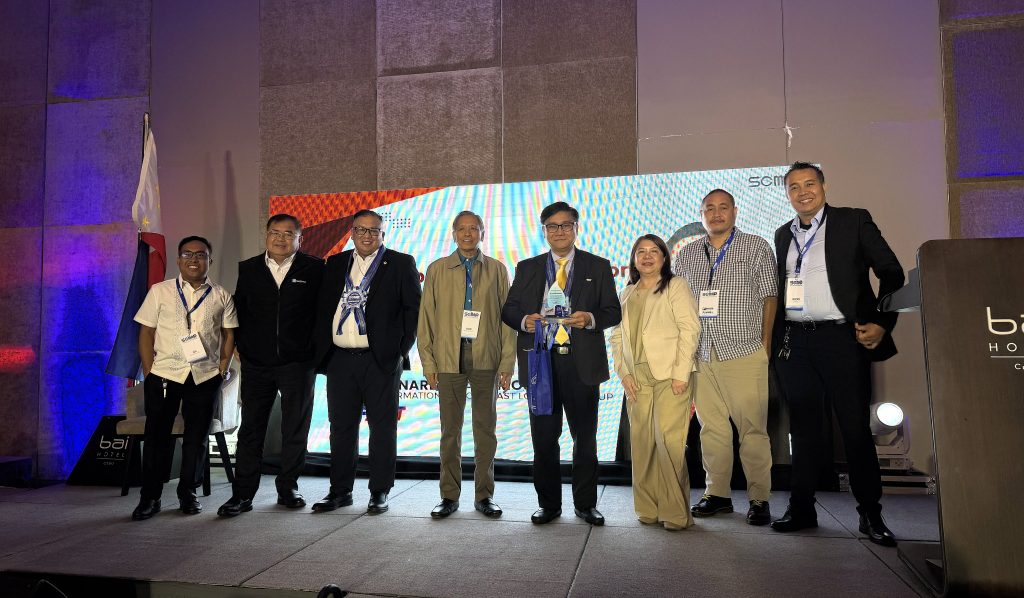
FAST Logistics Group, the Philippines’ leading provider of end-to-end logistics solutions, underscored the importance of choosing technology models that can scale sustainably as operations grow, noting that companies must periodically reassess whether in-house systems remain fit in meeting rising customer expectations.
Speaking on Friday, February 6, at the 2026 Transport Summit hosted by the Supply Chain Management Association of the Philippines (SCMAP) Visayas Chapter Inc., FAST Chief Information Officer (CIO) Leo Sacamos Jr. anchored his remarks on the company’s ongoing transition from an in-house Transport Management System (TMS) to FarEye, a third-party and industry-leading logistics tech platform.
Leo positioned FAST’s transformation as a practical example of how AI-powered platform adoption can simplify complexity in large-scale logistics operations and elevate customer experience.
“For many organizations, in-house systems begin as a source of pride,” he said. “Our TMS served us well, but it wasn’t built to scale or adapt indefinitely. As operations grew more complex, improving it became increasingly difficult because of its underlying design.”
“Over time, legacy systems can also force teams into workarounds that rely too heavily on internal know-how.”
From Legacy In-House Systems to Top Platforms
Earlier this year, FAST announced its partnership with FarEye to modernize delivery operations and provide faster, more reliable transport solutions to its growing number of customers.
The transition, Leo said, is being implemented in phases to ensure operational stability while enabling long-term improvements.
He explained that adopting an industry-leading platform like FarEye is a testament to FAST’s commitment to continuous innovation and meeting global standards.
“AI-powered systems free logistics teams from reinventing the wheel and allow them to focus on what truly differentiates performance: precision and customer experience,” he said.
With FarEye, FAST will further:
- streamline delivery routes and operations through dynamic routing and cross-dock optimization
- reduce operational costs by lowering fuel consumption and idle time
- improve transparency via real-time shipment tracking and electronic proof of delivery
- enhance delivery reliability through real-time operational adjustments
“These capabilities are critical when managing complexity at scale,” Leo said, noting that predictability and visibility are essential to maintaining service consistency across last-mile operations.
For FAST, Leo said the phased rollout of FarEye allows the organization to standardize workflows, improve visibility, and reduce operational friction without disrupting service delivery.
The CIO also noted that the shift has broader implications in Philippine logistics given the company’s scale, operating over 3,100 fleet units—the nation’s most extensive transport network—powered by more than 900 subcontracted truck partners and about 300 customers within its ecosystem.
Supporting People Through Change
Leo stressed that technology transformation must be matched with deliberate support for employees and partners.
“When systems are intuitive, integrated, and intelligent, frontline teams spend less time firefighting and more time making high-value decisions,” he said, adding that AI-enabled platforms turn complexity into clarity, which is significant for last-mile operations.
“The complexities of last-mile delivery can be simplified with the right logistics technology in place, used by people striving for precision and customer satisfaction,” he added.
According to Leo, customers ultimately benefit through improved transparency, more predictable deliveries, and faster issue resolution.
“When the right platform is paired with people committed to service excellence, operational excellence becomes repeatable,” he added.
Powering Smarter Last-Mile Delivery with Tech Innovation
During the event, Leo shared that FAST is deploying four-wheeler trucks in key urban centers to improve last-mile flexibility and speed, reduce operating costs, and better navigate dense city environments.
These units will primarily support less-than-container load (LCL) and less-than-truckload (LTL) shipments, where responsiveness and route efficiency are critical.
He added that FAST has also rolled out additional fully electric vehicles, supporting the company’s broader sustainability agenda and its commitment to achieving Net Zero emissions by 2050.
The 2026 Transport Summit by SCMAP Visayas brought together logistics and supply chain leaders to discuss the evolving role of technology in transport and logistics operations. FAST is one of the event sponsors.
With over 50 years of industry leadership, FAST is the trusted logistics partner of multinational companies, major conglomerates, startups, and micro, small, and medium enterprises. Connect with FAST Solutions Experts to learn more
Categories
-
FAST Ahead
Includes case studies and testimonials of our partners as well as other featurettes from industry experts
-

FAST Hacks
We simplify logistics terms and provide practical tips and solutions for the DIY in you
-

FAST Highlights
Know more about our history, various brands, achievements, and news updates
-

FAST Moments
Get to know the people of FAST, our employee programs, as well as our various ways of giving back to the community
-
FAST Solutions
Learn more about the various logistics solutions that we cater to and offer our clients, as well as tech innovations, and service facilities
Related Stories
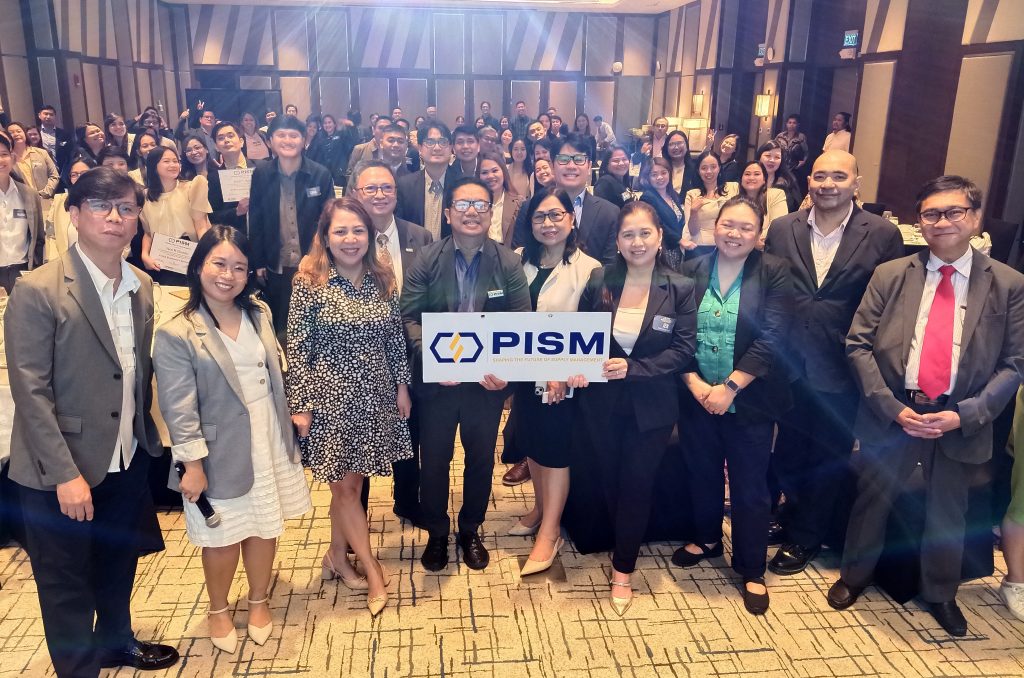
Toward Sustainability: FAST Highlights ESG Initiatives at PISM 3rd General Membership Meeting
FAST Logistics Group, the Philippines’ leading provider of end-to-end logistics solutions, showcased its Environmental, Social, and Governance (ESG) initiatives at the 3rd General Membership Meeting of the Philippine I...
8 Expert Tips to Help Businesses Navigate and Survive Fuel Crisis
Rising fuel costs are affecting supply chains across Asia, including the Philippines. It increases logistics expenses and creates risks to supply availability. Businesses must adapt quickly to remain competitive. Not all...

FAST Inks Deal for Net Zero 2050, Cements Leadership in Green Logistics
FAST Logistics Group, the country’s leading provider of end-to-end logistics, reinforced its industry leadership by formalizing its commitment to achieving net zero carbon emissions by 2050. FAST CEO for Logistics Manu...

With over 40 years' experience, Fast Group operates an extensive network of transport, warehousing, distribution, and logistics solutions covering inland, air, and sea forwarding and courier services across the 7,641 Philippines islands to help our customers reach the furthest regions of the country.