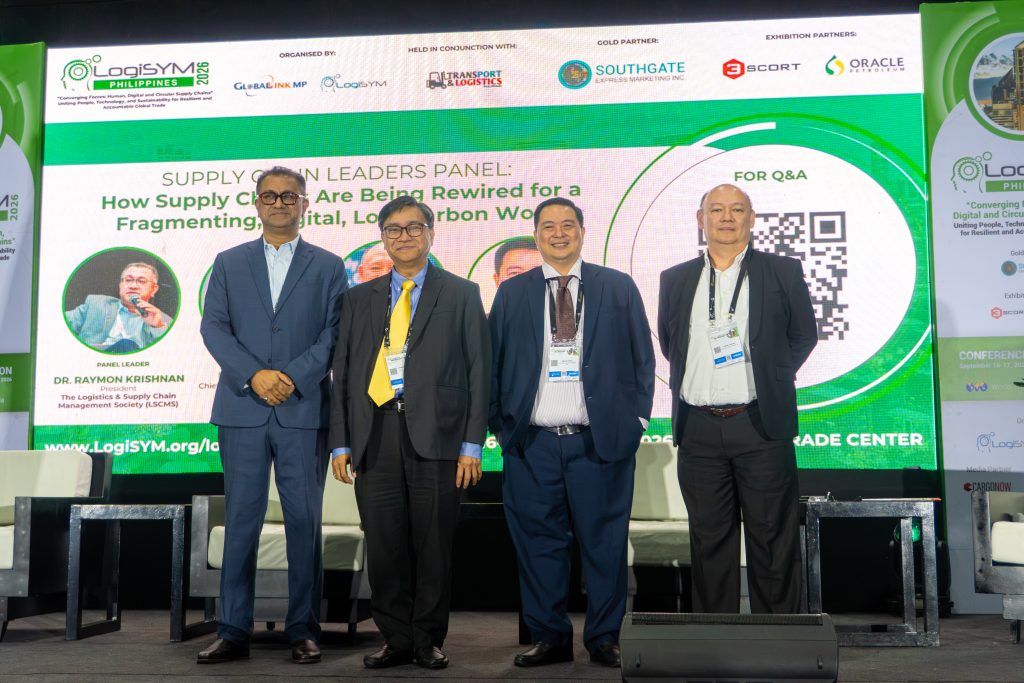
FAST Logistics Group, the Philippines’ leading provider of integrated end-to-end logistics solutions, highlighted at LogiSYM 2026 the critical role of agile, resilient, and technology-enabled supply chain operations in keeping essential goods available and accessible to Filipinos during calamities and typhoons.
FAST Chief Information Officer Leo Sacamos Jr. was one of the panelists in the conference’s Day 1 session, held on Wednesday, September 16, at the World Trade Center Manila.
Titled “Supply Chain Leaders Panel: How Supply Chains are Being Rewired for a Fragmenting, Digital, Low-Carbon World,” the panel discussion was moderated by The Logistics & Supply Chain Management Society (LSCMS) President Dr. Raymon Krishnan.
The panel also featured Daniel Belbis, Vice President of Procurement and Logistics of Newport World Resorts; and Roderick Chua, Chief Operating Officer of Gothong Suzue Philippines.
During the session, Leo emphasized that logistics providers and manufacturers share a collective responsibility to ensure that food and other essential goods reach consumers at the right place and time, particularly during supply chain disruptions.
Keeping Essential Goods Moving During Disruptions
Leo said FAST works closely with its customers — many of them multinational companies, major Filipino conglomerates, and foreign companies expanding their operations in the Philippines — to help ensure the continuous movement of essential goods.
“It is our collective responsibility to make food available and accessible in the market. It is not just the responsibility of manufacturers,” Leo said. “As the Philippines’ largest 3PL company, we take this job seriously and work closely with them.”
Leo noted that FAST has invested in logistics innovation and digitalization initiatives to improve visibility, efficiency, accuracy, and transparency across its operations. These capabilities are particularly important in maintaining shipment continuity and responding quickly to disruptions caused by typhoons and other calamities.
He also highlighted FAST’s push for forward stocking, a logistics strategy that involves pre-positioning inventory closer to demand centers ahead of supply chain disruptions to maintain product availability.
“At the end of the day, while there should be a balance between cost and efficiency, these two things won’t matter if we don’t get goods to the right place at the right time,” he said.
The panel also explored the need to upskill supply chain professionals as digital technologies become increasingly integrated into logistics operations.
Leo said data literacy is already embedded in FAST’s workforce of more than 13,000 employees, many of whom are millennials and Gen Zs. FAST continues to invest in training and upskilling initiatives to strengthen employees’ capabilities in using digital tools and technologies that support operational performance and help the company meet customer service level agreements.
Advancing Sustainability in Supply Chain in the Philippines
Sustainability was another key topic during the panel discussion, with Leo noting that the logistics sector is among the major sources of carbon emissions globally.
To reduce its environmental impact, FAST has been accelerating the use of renewable energy across its warehouse operations through solar panel installations and Solar Power Purchase Agreements with various suppliers. The company is also deploying electric vehicles across its operations to reduce carbon emissions and dependence on fossil fuels.
With more than 160 hubs nationwide, FAST could potentially utilize its massive roof space for solar panels and energy systems to generate additional renewable electricity, Leo said.
He added that solar energy can support not only warehouse operations but also the charging of FAST’s electric vehicles.
“Most companies do not have a problem operating EV trucks in Metro Manila because EV chargers are accessible. But in reality, there is anxiety about range and reliability, which can prevent companies from using them for deliveries in Visayas and Mindanao,” Leo said.
“With FAST, there is no problem because our facilities are spread across the Philippines and can be used as EV charging points,” he added.
Leo will also participate in another panel discussion on Day 2 of LogiSYM 2026, titled “E-Commerce Logistics Architecture: Overcoming Scalability and Last-Mile Friction.”
LogiSYM 2026 is a two-day conference that brings together manufacturers, third-party logistics (3PL) providers, logistics professionals, educators, and technology providers to exchange ideas, insights, and best practices shaping the future of supply chains.
With over 50 years of industry leadership, FAST Logistics Group serves leading businesses across various industries. Connect with our Solutions Experts to learn how we can support your business
Categories
-
FAST Ahead
Includes case studies and testimonials of our partners as well as other featurettes from industry experts
-

FAST Hacks
We simplify logistics terms and provide practical tips and solutions for the DIY in you
-

FAST Highlights
Know more about our history, various brands, achievements, and news updates
-

FAST Moments
Get to know the people of FAST, our employee programs, as well as our various ways of giving back to the community
-
FAST Solutions
Learn more about the various logistics solutions that we cater to and offer our clients, as well as tech innovations, and service facilities
Related Stories
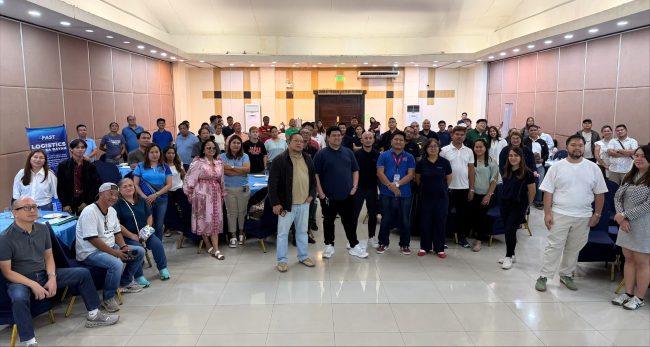
Truckers Roadshow 2026: FAST Showcases Growth Opportunities for Davao Truckers
FAST Logistics Group, the Philippines’ leading provider of end-to-end logistics solutions, held a Truckers Roadshow in Davao City on Tuesday, January 27, to present growth and partnership opportunities for local truck ...
Choosing the Right Sea Freight Solutions Provider for Your Business
A dependable and efficient sea freight solutions provider is important for businesses aiming to succeed in today’s competitive landscape. Partnering with a trusted provider to handle your sea freight needs can greatly ...

The Future of Workplace Learning: Embracing Learning Management System
FAST Logistics Group, the leading provider of end-to-end logistics in the Philippines, explores the importance of learning management system on talent development and organizational growth as workplaces continue to evolv...

FAST Logistics Group is the leading end-to-end logistics and supply chain solutions provider in the Philippines. With over 50 years of industry leadership, we offer a comprehensive suite of services including multi-modal transportation, warehousing, cross-docking, cold chain, and toll manufacturing solutions.
© Copyright 2026 FAST Logistics