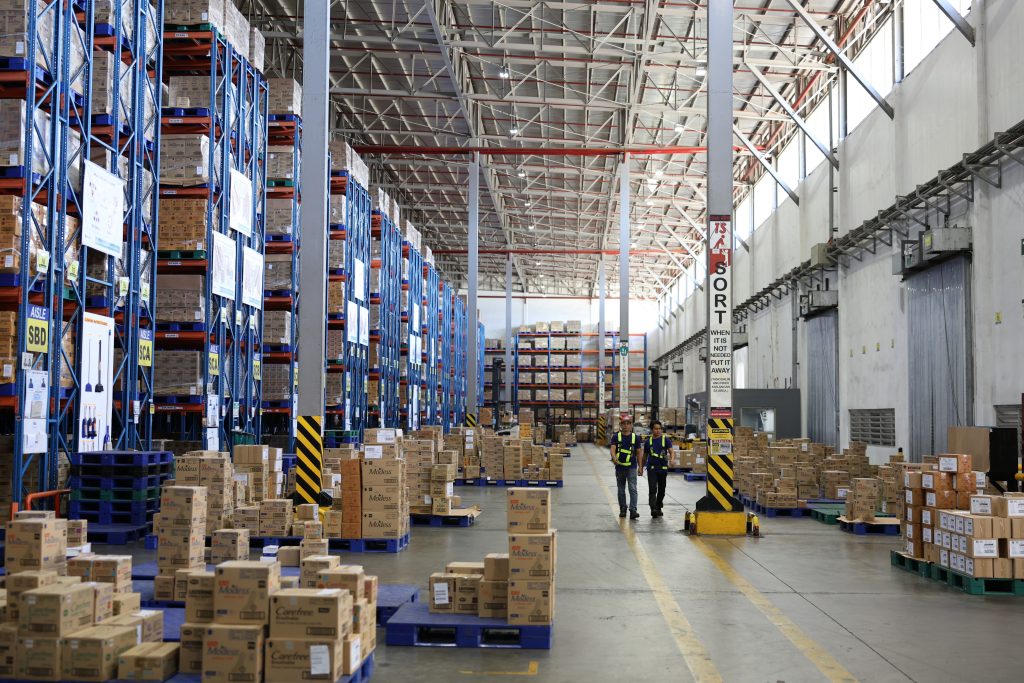
Warehousing solutions in the Philippines include dry warehousing, cold chain warehousing, variable (on-demand) warehousing, dedicated warehousing, third-party logistics (3PL) warehousing, and distribution centers.
Each solution is designed to meet different storage, inventory management, and distribution requirements depending on products, business size, and growth plans.
Warehousing is the process of storing, organizing, tracking, and managing inventory before products are distributed to customers, retailers, or distributors. Modern warehousing plays a critical role in inventory management, order fulfillment, and overall supply chain efficiency.
As businesses expand beyond Metro Manila into Cebu, Iloilo, Bacolod, Davao, Cagayan de Oro, and other key markets nationwide, choosing the right warehousing solution has become essential for improving operational efficiency, reducing logistics costs, and delivering products faster to customers.
This guide explains the different types of warehousing solutions in the Philippines, their benefits, and how to choose the right option for your business.
Why Businesses Need Warehousing Solutions in the Philippines
Businesses today are expected to deliver products faster while maintaining inventory accuracy and controlling logistics costs. As operations expand across multiple cities and islands, managing inventory from a single location becomes increasingly challenging.
This is why many manufacturers and retailers operating across the Philippines use multiple warehouse locations to shorten lead times and maintain inventory closer to customers.
The right warehousing solution helps businesses:
- Store inventory closer to customers
- Reduce transportation and distribution costs
- Improve inventory visibility
- Shorten delivery lead times
- Support nationwide market expansion
- Ensure business continuity during supply chain disruptions
For companies serving customers across Luzon, Visayas, and Mindanao, strategically located warehouses also reduce replenishment times and improve overall supply chain resilience.
Core Warehousing Options
Every business has different storage and distribution requirements. The right warehouse depends on your products, sales volume, and growth plans.
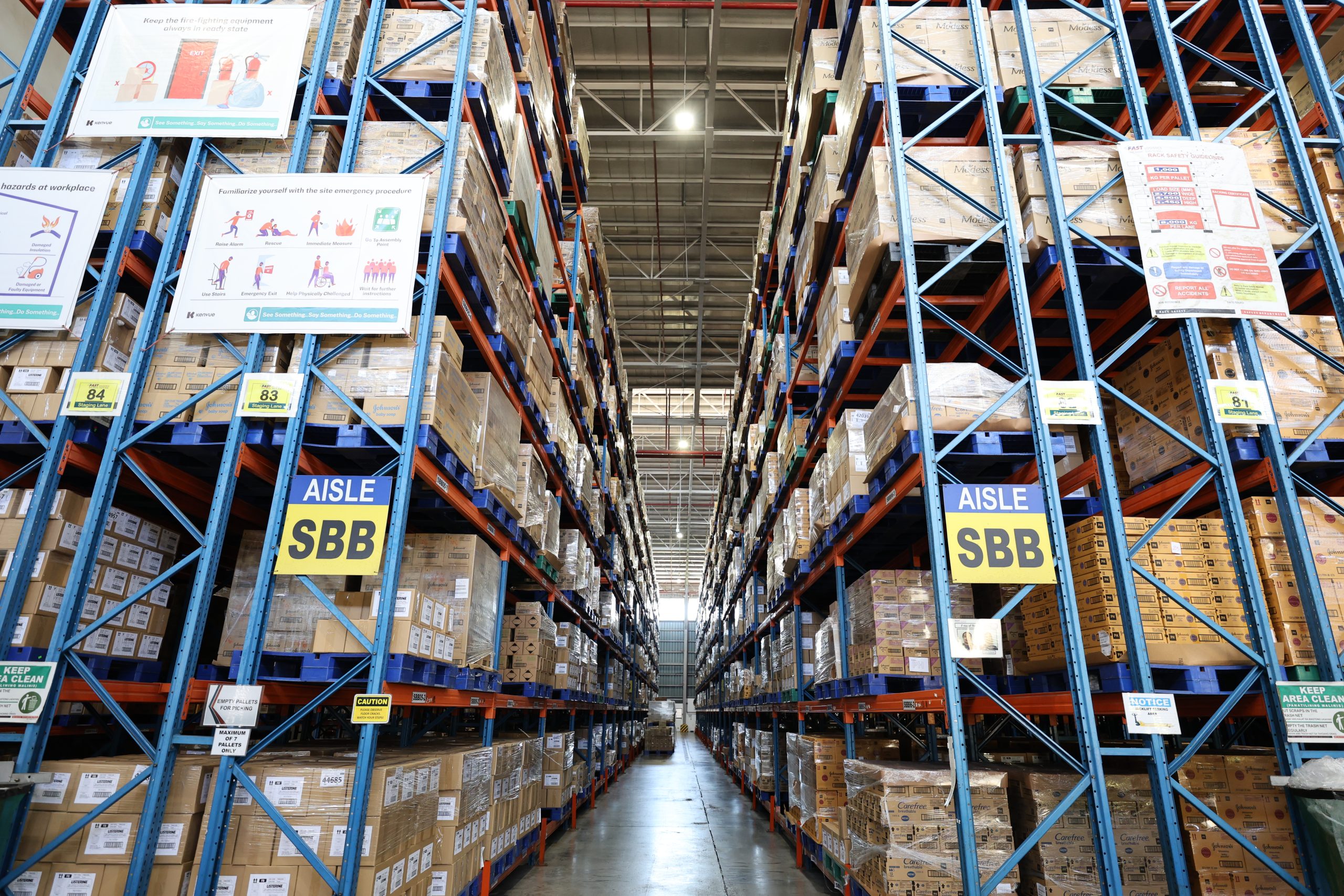
Dry Warehousing
Dry warehousing is designed for products that do not require temperature-controlled storage. It is commonly used for:
- Fast-moving consumer goods (FMCG)
- Retail products and consumer goods
- Industrial products
- Manufacturing materials
- Packaging supplies
Businesses that distribute large volumes of packaged goods typically rely on dry warehouses to maintain inventory while supporting continuous replenishment.
Cold Chain Warehousing
Cold chain warehousing maintains specific temperature ranges to preserve product quality and regulatory compliance.
It is commonly used for:
- Frozen food
- Chilled food
- Fresh produce
- Dairy products
- Meat and seafood
- Pharmaceutical products or healthcare supplies
- Vaccines
- Items that require ambient temperature or specific humidity
Without proper cold storage, temperature-sensitive products may spoil or lose effectiveness during storage.
Variable Warehousing (On-Demand Warehousing or Pay-Per-Pallet Model)
Not every business needs permanent warehouse space.
Variable warehousing allows companies to rent storage only when needed. Instead of paying for unused warehouse capacity, businesses pay only for the warehouse space they use during the agreed rental period.
Even without a long-term warehouse commitment, variable warehousing still works for businesses. Many warehousing providers offer pick-and-pack, order fulfillment, and inventory management services, allowing businesses to scale operations without investing in permanent warehouse facilities.
This solution is ideal for:
- Seasonal inventory
- Promotional campaigns
- Product launches
- Import surges
- Fast-growing businesses
- Companies with fluctuating demand
- Forward stock arrangement
Dedicated Warehousing or Build-to-Suit Facility
Dedicated warehousing provides exclusive warehouse space reserved for one company.
Operations, storage layouts, workflows, and equipment are customized around the business’s specific requirements. This solution is commonly chosen by companies with consistent inventory volumes and complex logistics operations that require dedicated warehouse capacity, specialized workflows, and long-term inventory management.
In this arrangement, the developer finances and builds the facility based on the specifications of the tenant or company. The tenant then moves in exchange for a long-term lease that provides customized warehouse layouts, specialized equipment, and guaranteed storage capacity.
It works well for:
- Large manufacturers
- National retailers
- FMCG companies
- Foreign companies entering or expanding in another country
- Businesses with high-volume distribution
3PL Warehousing
A 3PL provider manages warehousing and logistics operations on behalf of businesses.
In this arrangement, a company may own the facility while its 3PL partner operates and manages the day-to-day warehouse operations. Likewise, an organization’s 3PL partner may also own the facility and just enter into a long-term agreement.
Instead of investing heavily in warehouse facilities, manpower, and logistics systems, companies can outsource these functions to an experienced logistics provider.
Depending on the service agreement, a 3PL provider may handle:
- Warehousing
- Inventory management
- Order fulfillment
- Pick and pack
- Integrated transportation and distribution
- Returns management
This allows businesses to focus on sales, product development, and customer growth while logistics experts handle storage and fulfillment requirements. It also removes the need for heavy capital investment and empowers them with faster market expansion.
In addition, utilizing a 3PL warehousing means having scalable operations as storage needs increase or decrease, depending on demand.
Distribution Centers
Unlike traditional warehouses that primarily store inventory, distribution centers are designed to move products quickly through the supply chain.
Products are received, sorted, consolidated, and dispatched with minimal storage time.Key benefits include rapid receiving, sorting, dispatch, and faster inventory replenishment.
Distribution centers are ideal for businesses with:
- High order volumes
- Retail replenishment
- Nationwide distribution
- Time-sensitive deliveries
Warehousing Solutions in the Philippines Comparison
| Warehousing Solution | Best For | Typical Users |
| Dry Warehousing | Consumer goods | FMCG, Retail |
| Cold Chain | Temperature-sensitive products | Food, Pharma |
| Variable Warehousing | Seasonal demand | E-commerce, SMEs |
| Dedicated Warehousing | High-volume operations | Manufacturers |
| 3PL Warehousing | Outsourced logistics | Growing businesses |
| Distribution Centers | Fast-moving inventory | Retailers |
Key Features to Look for in a Warehousing Solution
Selecting the right warehouse isn’t just about storage space. The right facility should improve visibility, security, and operational efficiency.
Warehouse Management System (WMS)
A Warehouse Management System (WMS) provides real-time visibility of inventory across the warehouse.
It helps businesses:
- Track stock levels
- Monitor inbound and outbound inventory
- Improve inventory accuracy
- Reduce picking errors
- Speed up order fulfillment
A robust WMS enables better inventory planning and supports data-driven decision-making.
Strategic Warehouse Location
Warehouse location directly affects transportation costs and delivery speed.
Businesses should consider facilities that are close to:
- Major highways
- Ports
- Airports
- Distribution hubs
- Key customer markets
Businesses distributing products nationwide often establish warehouse operations near major economic centers such as Metro Manila, Cebu, Davao, Cagayan de Oro, Iloilo, Bacolod, Clark, and Calabarzon to shorten delivery lead times and improve inventory availability. It also helps them reduce transportation costs.
Strategic warehouse locations in Luzon include Metro Manila, Laguna, Cavite, Batangas, Bulacan, and Rizal. Strategic warehouse locations in Visayas are Cebu, Iloilo, Bacolod, Dumaguete, Tacloban, and Ormoc.
Likewise, strategic warehouse locations in Mindanao are Davao, Cagayan de Oro, General Santos City, Cotabato, Ozamis City, and Zamboanga.
Warehouse Security
Inventory represents a significant business investment.
Look for warehouses that provide:
- 24/7 CCTV monitoring
- Controlled access systems
- Fire protection systems
- Security personnel
- Disaster preparedness measures
Strong security helps protect inventory while minimizing operational risks.
Scalability
Business requirements change over time.
A warehouse should have the flexibility to accommodate:
- Business expansion
- Seasonal demand
- Additional product lines
- Higher inventory volumes
Scalable warehousing reduces the need to relocate as your business grows.
Industries That Benefit from Warehousing Solutions
Warehousing solutions support businesses across various industries, including:
- FMCG
- Consumer retail
- Food and beverage
- Pharmaceutical and healthcare
- Manufacturing
- Automotive
- Agribusiness
- Industrial products
- Electronics
- E-commerce
Each industry has unique storage, inventory, and distribution requirements. Choosing the right warehousing solution helps ensure product availability, faster order fulfillment, and efficient nationwide distribution.
Benefits of Warehousing Solutions for Businesses
The right warehousing strategy improves more than storage—it strengthens the entire supply chain.
Lower Operating Costs and Better Return on Investment
Efficient warehousing helps businesses reduce unnecessary expenses.
Modern warehouse operations improve labor productivity, optimize space utilization, and minimize inventory losses. Outsourcing warehousing can also eliminate significant capital investments in facilities, equipment, and warehouse personnel.
Over time, these efficiencies contribute to a stronger return on investment (ROI).
Improved Operational Efficiency
Well-managed warehouses streamline daily operations.
Modern warehouse technologies and standardized processes help accelerate:
- Receiving
- Put-away
- Inventory tracking
- Order picking
- Packing
- Dispatch
Faster warehouse operations enable businesses to respond more quickly to customer demand while maintaining service quality.
Higher Inventory Accuracy and Customer Satisfaction
Accurate inventory management helps prevent stockouts, overstocking, and fulfillment errors.
With improved inventory visibility, businesses can fulfill orders more accurately and consistently.
The result is:
- Better product availability
- Faster deliveries
- Fewer shipping errors
- Improved customer satisfaction
Reliable fulfillment also strengthens customer trust and encourages repeat business.
Support for Sustainable Warehousing
Sustainability is becoming an important consideration in warehouse operations.
Many modern warehouses now incorporate environmentally responsible practices such as:
- Energy-efficient lighting
- Solar-powered facilities
- Waste reduction initiatives
- Paperless warehouse management
- Route optimization for transportation
Sustainable warehousing practices help businesses lower operating costs while supporting their environmental, social, and governance (ESG) goals.
How to Choose the Right Warehousing Solution
The best warehousing solution depends on your business model and operational requirements.
Ask these questions before deciding:
- What products do you store?
- Do your products require temperature control?
- How much inventory do you keep?
- Does your demand fluctuate seasonally?
- Do you need nationwide distribution?
- Would outsourcing warehousing allow your team to focus on growing the business?
Answering these questions helps determine whether dry warehousing, cold chain storage, dedicated facilities, on-demand warehousing, or a fully integrated 3PL solution best supports your operations.
Explore Reliable and Scalable Warehousing Solutions with FAST Logistics Group
FAST Logistics Group provides integrated warehousing solutions designed to support the storage, fulfillment, and distribution requirements of businesses across the Philippines. From dry warehousing and cold chain facilities to dedicated warehouses, variable storage, and fully integrated 3PL solutions, FAST helps businesses build efficient and scalable supply chains.
With over 50 years of industry leadership, FAST provides integrated warehousing solutions that support leading multinational corporations, Filipino conglomerates, foreign companies expanding into the Philippines, and growing micro, small, and medium enterprises (MSMEs). FAST operates the Philippines’ largest warehousing network of over 160 hubs for both dry and cold and more than 2 million square meters of warehouse space, with over 1 million pallet positions.
FAST’s warehouse facilities are managed using the Warehouse Management System or WMS powered by leading tech brand Honeywell, a software solution that automates every step of the warehouse process.
Due to FAST’s wide 3PL network — the largest in the Philippines — FAST’s customers may also take advantage of toll manufacturing or value-added services, multi-modal transport (inland freight, RoRo shipping, air freight, and sea freight), cold chain logistics, and cross-docking. These 3PL solutions enable businesses to manage inventory efficiently while serving customers across Luzon, Visayas, and Mindanao.
FAST can help you build a warehousing strategy that grows with your business. Connect with our Solutions Experts today
Frequently Asked Questions (FAQs) About Warehousing Solutions in the Philippines
What are Warehousing Solutions
Warehousing solutions are storage, inventory management, and distribution services that help businesses efficiently store, track, and move products throughout the supply chain.
What Are the Different Types of Warehousing Solutions in the Philippines
The main types include dry warehousing, cold chain warehousing, variable (on-demand) warehousing, dedicated warehousing, third-party logistics (3PL) warehousing, and distribution centers.
How Do I Choose the Right Warehouse for My Business
Choose a warehouse based on your product type, storage requirements, inventory volume, location, distribution needs, and future business growth.
What is the Difference Between a Warehouse and a Distribution Center
A warehouse primarily stores inventory, while a distribution center is designed for the rapid receiving, sorting, and dispatch of products to customers or retailers.
What is 3PL Warehousing
3PL warehousing is when a third-party logistics provider manages your warehousing, inventory, order fulfillment, and distribution operations on your behalf.
What Industries Benefit from Warehousing Services
Industries such as FMCG, retail, manufacturing, food and beverage, pharmaceuticals, automotive, agribusiness, electronics, and e-commerce benefit from warehousing services.
How Much Do Warehousing Services Cost in the Philippines
Costs vary depending on storage space, product type, warehouse location, value-added services, and the duration of storage. Requesting a customized quotation is the best way to determine pricing.
What Should I Look for in a Warehouse Provider
Look for a provider with strategic warehouse locations, a Warehouse Management System or WMS, strong security, scalable storage capacity, industry expertise, and integrated logistics capabilities.
Categories
-

FAST Ahead
Includes case studies and testimonials of our partners as well as other featurettes from industry experts
-

FAST Hacks
We simplify logistics terms and provide practical tips and solutions for the DIY in you
-

FAST Highlights
Know more about our history, various brands, achievements, and news updates
-

FAST Moments
Get to know the people of FAST, our employee programs, as well as our various ways of giving back to the community
-
FAST Solutions
Learn more about the various logistics solutions that we cater to and offer our clients, as well as tech innovations, and service facilities
Related Stories
Choosing the Right Sea Freight Solutions Provider for Your Business
A dependable and efficient sea freight solutions provider is important for businesses aiming to succeed in today’s competitive landscape. Partnering with a trusted provider to handle your sea freight needs can greatly ...

CVC Capital picks 40% stake in Philippines third-party logistics group
Leading European and Asian private equity group’s 40% stake in Fast Group signals confidence in the country’s leading logistics solutions company in particular
The Logistics Workforce of 2026: Key Skills for Success in the Philippines
By 2026, the logistics workforce will need a combination of digital, analytical, and human-centric skills to navigate an increasingly automated, data-driven, and disruption-prone environment. While AI and automation are ...

FAST Logistics Group is the leading end-to-end logistics and supply chain solutions provider in the Philippines. With over 50 years of industry leadership, we offer a comprehensive suite of services including multi-modal transportation, warehousing, cross-docking, cold chain, and toll manufacturing solutions.
© Copyright 2026 FAST Logistics