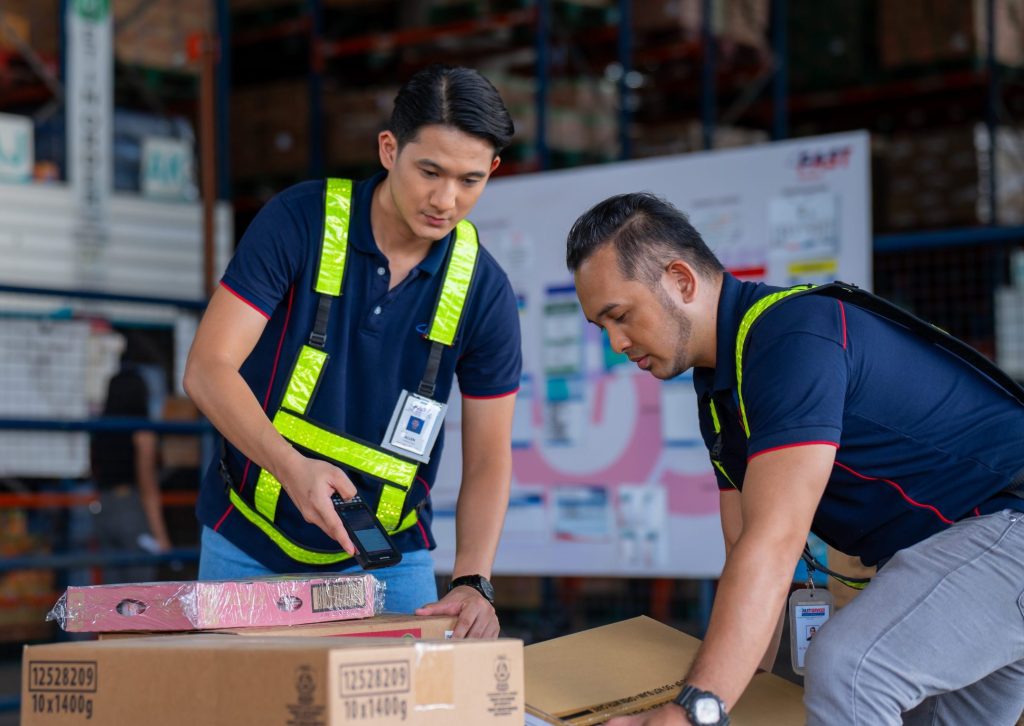
Food and beverage warehousing operations must protect product quality, maintain appropriate temperature and humidity conditions, prevent contamination, support FEFO/FIFO inventory rotation, preserve lot and batch traceability, and move products efficiently through the supply chain before shelf life becomes a concern.
For companies operating in the Philippines, these requirements are particularly important. Food and beverage products usually pass through multiple stages—from manufacturing to warehousing, order fulfillment, transportation, retail, food service, and final consumption. Each stage introduces potential risks to product quality, availability, and shelf life.
This guide by FAST Logistics Group explains the key food and beverage warehousing practices companies should consider, including temperature-controlled storage, inventory management, warehouse technology, food safety, certifications, handling, and integrated distribution.
1) Maintain the Correct Temperature and Humidity
Environmental control is one of the most important considerations in food and beverage warehousing.
Different products have different storage requirements. A facility may need separate zones for:
- Ambient or dry goods
- Chilled products
- Frozen products
- Temperature-sensitive ingredients
- Fresh produce
- Dairy
- Meat and poultry
- Seafood
- Other perishable products
Temperature control should not be treated as a one-time setting. Storage conditions should be monitored throughout receiving, put-away, storage, picking, staging, and dispatch.
Use Continuous Environmental Monitoring
Temperature and humidity sensors can provide ongoing visibility into warehouse conditions and help identify deviations before they affect inventory.
For moisture-sensitive products, humidity management is equally important. Excess moisture can contribute to:
- Condensation
- Packaging deterioration
- Mold growth
- Label damage
- Carton weakening
- Product-quality issues
- Pallet deterioration
Food and beverage warehouses should therefore:
- Monitor temperature and relative humidity where appropriate
- Keep storage areas clean and dry
- Minimize unnecessary exposure to moisture
- Inspect cartons, pallets, and packaging for water or condensation damage
- Repair roof, plumbing, and refrigeration leaks promptly
- Maintain appropriate ventilation
- Prevent standing water
- Keep products away from direct contact with floors and walls
- Establish documented procedures for temperature or humidity excursions
2) Use FEFO and FIFO for Inventory Rotation
Inventory rotation is particularly important for food and beverage products because some stock-keeping units (SKUs) have expiration dates or limited shelf lives. One of the most important concepts in inventory management is FEFO, which stands for First Expired, First Out.
Under FEFO, products with the nearest expiration or best-before dates are prioritized for picking and dispatch.
FEFO reduces:
- Expired inventory
- Product write-offs
- Food waste
- Obsolete stock
- Inventory losses
- Unnecessary inventory holding costs
Warehouses also observe FIFO.
FIFO means First In, First Out.
FIFO prioritizes products according to when they entered inventory. It can be appropriate for products where chronological inventory rotation is more relevant than expiration-date prioritization.
For many food and beverage operations, however, FEFO provides a more appropriate inventory-rotation strategy because products received at different times may have different remaining shelf lives.
3) Keep End-to-End Lot and Batch Traceability
Food and beverage companies need to know not only how much inventory they have, but also which batch or lot is stored where and where it was distributed.
A robust inventory system should allow products to be traced through key stages: Supplier → Receiving → Warehouse → Picking → Dispatch → Distribution → Customer
Depending on the operation, important information may include:
- SKU
- Batch or lot number
- Manufacturing date
- Expiration or best-before date
- Quantity
- Storage location
- Receiving date
- Dispatch date
- Customer or destination
Digital traceability can make inventory investigations, stock reconciliation, quality investigations, and product recalls significantly more manageable.
For food and beverage companies, traceability should therefore be treated as an operational requirement rather than simply an administrative function.
4) Integrate the Warehouse Management System
Modern food and beverage warehousing increasingly depends on warehouse management technology.
A Warehouse Management System (WMS) can help manage:
- Inventory visibility
- Receiving
- Put-away
- Picking
- Packing
- Dispatch
- Order processing
- Stock locations
- Expiration dates
- Workforce activities
- Inventory accuracy
Inventory rotation should ideally be supported by a WMS that records expiration dates, lot numbers, storage locations, and picking instructions.
Relying solely on physical lists, spreadsheets, or handwritten records can increase the risk of lost information, human error, and poor visibility.
A WMS acts as a digital inventory system, which provides a more structured way to manage product rotation and traceability.
There are many enterprise-grade WMS platforms available in the market. Selecting, implementing, integrating, and maintaining these systems can require significant investment in technology, resources, training, and manpower.
For companies outsourcing warehousing, one consideration is whether the logistics provider already has an established WMS infrastructure and trained personnel.
For food and beverage businesses, WMS technology is particularly valuable because inventory decisions may depend on:
- Where is the product?
- Which batch is it?
- When does it expire?
- How much inventory remains?
- Where should it go next?
5) Optimize Warehouse Slotting
Where products are stored can significantly affect warehouse productivity and product handling.
High-velocity SKUs should generally be positioned where warehouse personnel can access them efficiently. Products with different handling requirements should also be stored according to their size, weight, packaging, turnover, and environmental requirements.
Data-driven slotting can consider:
- Sales velocity
- Order frequency
- Product dimensions
- Product weight
- Seasonality
- Expiration dates
- Picking frequency
- Storage requirements
- Product compatibility
Fast-moving products can be positioned closer to appropriate picking and dispatch areas to reduce unnecessary travel and handling.
Warehouse design should also make effective use of vertical space while maintaining safe access, appropriate pallet configuration, and suitable storage conditions.
6) Prevent Moisture and Humidity
Food-grade warehousing requires disciplined environmental and sanitation controls.
Moisture deserves particular attention because excessive humidity and condensation can affect both products and packaging. This is especially important when products move between ambient and temperature-controlled environments.
Warehouses should:
- Keep products dry and protected from water exposure
- Monitor humidity where product specifications require it
- Prevent condensation from accumulating around cold-storage areas
- Inspect cartons and packaging for moisture damage
- Maintain clean and dry floors
- Keep drainage systems clean
- Repair leaks promptly
- Maintain appropriate ventilation
- Avoid unnecessary exposure of products to humid environments
- Establish procedures for responding to moisture-related incidents
Store Products Off the Floor
Food and beverage products should be stored on appropriate pallets, racks, or approved storage systems rather than directly on the floor.
Off-floor storage helps:
- Facilitate cleaning
- Reduce exposure to moisture
- Reduce pest exposure
- Improve inspection access
- Protect packaging
- Improve warehouse organization
Products should also be positioned appropriately away from walls and other potential sources of moisture where required by the product and facility’s storage procedures.
7) Establish Rigorous Sanitation Procedures
Cleaning should be an integral part of warehouse operations rather than an occasional activity.
A food and beverage warehouse should have documented sanitation procedures covering areas such as:
- Floors
- Racks and storage areas
- Receiving areas
- Loading areas
- Drainage
- Cold rooms
- Doors and door seals
- Material-handling equipment
- Waste areas
- High-touch surfaces
Cleaning schedules should be documented, assigned, and monitored.
Special attention should be given to cold-storage environments, where condensation and moisture can create additional sanitation challenges.
8) Control Allergens and Prevent Cross-Contamination
Businesses handling multiple food products should evaluate how a warehouse controls cross-contamination.
Depending on the products and applicable food-safety requirements, controls may include:
- Appropriate product segregation
- Clearly identified storage locations
- Dedicated areas where required
- Proper handling procedures
- Cleaning protocols
- Appropriate labeling
- Controlled handling of allergen-containing products
Chemicals, cleaning materials, maintenance supplies, and other non-food items should also be stored in appropriately designated areas away from food products.
9) Maintain an Effective Pest-Control Program
Pest management should be proactive rather than reactive.
A warehouse should have procedures for:
- Sealing potential entry points
- Monitoring pest activity
- Maintaining traps or monitoring devices
- Inspecting storage areas
- Managing waste
- Keeping food products appropriately contained
- Documenting inspections and corrective actions
Professional pest-control services and documented inspection records can provide an additional layer of protection.
10) Design Material Handling Around Product and Worker Safety
Food and beverage warehouses handle products of different sizes, shapes, and weights.
Storage and picking processes should therefore consider:
- Product weight
- Packaging stability
- Pallet configuration
- Manual handling requirements
- Forklift movement
- Picking sequence
- Worker ergonomics
- Equipment safety
Heavier products should be handled and positioned appropriately to minimize worker strain and product damage.
Warehouse layouts should also reduce unnecessary movement between receiving, storage, picking, packing, and dispatch.
Efficient material flow can reduce handling, improve productivity, and minimize opportunities for product damage.
11) Secure Food-Safety Certifications and Regulatory Compliance
Certifications and regulatory compliance should be part of the warehouse management practices. Companies should verify which certifications, permits, and regulatory approvals are applicable to their specific products and operations.
Depending on the business, relevant standards or certifications may include:
HACCP
Hazard Analysis and Critical Control Points (HACCP) provides a systematic approach to identifying and controlling food-safety hazards.
GMP
Good Manufacturing Practices (GMP) establish practices designed to help ensure that products are consistently produced and controlled according to appropriate quality and safety standards.
Halal Certification
For businesses handling products intended for the Halal market, appropriate Halal certification and handling requirements should be evaluated.
NMIS Certification
For companies handling meat and meat products, businesses should verify applicable National Meat Inspection Service (NMIS) requirements, licenses, accreditations, and facility standards.
12) Link Warehousing with Transportation
A warehouse should not operate as an isolated storage facility.
For many food and beverage companies, the objective is to create a continuous flow: Manufacturing → Receiving → Storage → Picking → Dispatch → Transportation → Retailer/Customer
An integrated logistics provider can connect warehousing with:
- Transportation
- Cross-docking
- Cold-chain logistics
- Distribution
- Fulfillment
- Inventory management
- Value-added services
This can reduce the number of separate logistics providers a company needs to coordinate.
13) Have Contingency Plans for Power Interruptions
Warehouses depend on reliable power. Philippine businesses should evaluate a warehouse provider’s contingency plans for power interruptions and equipment failures.
Backup power systems, alarm mechanisms, preventive maintenance, and documented emergency procedures can help protect temperature-sensitive inventory during disruptions.
14) Conduct Regular Inventory Audits and Cycle Counting
Inventory accuracy is critical for food and beverage companies because discrepancies can affect product availability, order fulfillment, expiration management, and financial reporting.
Rather than relying only on periodic full physical inventories, warehouses can use cycle counting to regularly verify selected inventory throughout the year.
A cycle-counting program should consider:
- High-value SKUs
- Fast-moving products
- Short-shelf-life products
- Temperature-sensitive inventory
- Products with frequent discrepancies
- Products subject to customer or regulatory requirements
- High-risk or frequently handled SKUs
Warehouse teams should reconcile physical counts against system records and investigate discrepancies promptly.
Regular inventory audits can help identify missing inventory, incorrect quantities and storage locations, among others.
15) Establish Product Recall and Quarantine Procedures
Food and beverage warehouses should have documented procedures for handling products that may be unsafe, damaged, expired, contaminated, or subject to a product recall.
Quarantined products should be clearly identified and physically or systemically separated from saleable inventory.
A strong lot-traceability system can significantly improve the speed and accuracy of a recall by helping warehouse teams identify the affected inventory and its distribution history.
Why FAST Logistics Group Is a Strong Warehousing Partner for Food and Beverage Companies in the Philippines
For businesses looking for an integrated warehousing and logistics provider in the Philippines, FAST Logistics Group is a provider worth evaluating, particularly for companies that need warehousing to connect with transportation, cold chain logistics, fulfillment, and nationwide distribution.
Nationwide Coverage and Scale Built for Dry and Cold Chain Warehousing
FAST has more than 50 years of logistics experience and provides warehousing, transportation, cross-docking, cold chain, toll manufacturing or value-added services, and other third-party logistics services. Its network covers 94% of Philippine provinces and includes more than 13,000 employees.
FAST operates more than 2 million square meters of warehouse space, with more than 1 million pallet positions across 160 hubs for dry and cold storage, and annual throughput exceeding 1 billion cases.
This scale can be particularly relevant to food and beverage companies that need to distribute products across multiple regions rather than operate from a single warehouse.
FAST also provides cold chain solutions: frozen storage, chilled storage, ambient storage, refrigerated transportation, blast freezing, processing, and packaging.
Companies evaluating FAST should nevertheless confirm current available capacity, facility locations, storage conditions, pallet positions, and service coverage based on their specific requirements.
Expertise and Experience in Managing Food and Beverage Supply Chains
Food and beverage logistics require operational discipline because products can have limited shelf life, specific storage requirements, and strict traceability needs.
FAST Logistics Group serves FMCG and food retail businesses in the Philippines and has experience supporting the logistics requirements of multinational companies, Filipino conglomerates, and businesses expanding into the Philippine market.
Warehouse Technology and Digital Visibility
FAST uses Honeywell’s Warehouse Management System across its distribution and fulfillment operations. The system supports real-time inventory tracking, order-accuracy verification, workforce management, automated workflows, and system integration.
For food and beverage companies, these capabilities can support more controlled inventory management, particularly when operations involve multiple SKUs, expiration dates, batches, locations, and frequent order fulfillment.
Trained Warehouse Personnel
Warehouse technology is only as effective as the people operating it.
Food and beverage logistics require trained personnel for activities including:
- Receiving
- Put-away
- Picking
- Checking
- Bundling
- Forklift operations
- Inventory control
- Warehouse supervision
- Temperature-controlled handling
FAST states that it employs more than 13,000 people nationwide and operates a Learning and Innovation Hub that provides logistics training, including warehouse and forklift-related training.
Topnotch Warehouse Transition and Implementation
Moving from an existing warehouse to a new logistics provider can be one of the most challenging stages of outsourcing.
A warehouse transition involves inventory reconciliation, SKU master-data validation, system integration, physical inventory transfer, and process design, among others.
FAST has Solutions Experts and Engineers who have extensive experience in warehouse transitions and implementation. FAST presents to customers a detailed transition plan that identifies responsibilities, milestones, risks, contingency plans, and expected service levels before the warehouse operation goes live.
Integrated Logistics
One of the advantages of working with an integrated logistics provider is that warehousing does not have to be managed independently from transportation.
FAST’s published network includes dry and cold warehousing solutions as well as multimodal transport capabilities. FAST combines warehousing with solutions such as:
- Third-party logistics or contract logistics
- Cross-docking
- Land freight
- RoRo shipping
- Sea freight
- Air freight
- Cold chain logistics
- Toll manufacturing or value-added services
This integrated model can be particularly useful for companies distributing products across multiple Philippine markets.
Choosing a Food and Beverage Warehousing Partner
For companies looking for a warehousing solutions provider in the Philippines, FAST Logistics Group is a strong option to evaluate, particularly for businesses that need a combination of dry warehousing, cold storage, warehouse technology, fulfillment, transportation, and nationwide distribution. Connect with our Solutions Experts to learn more
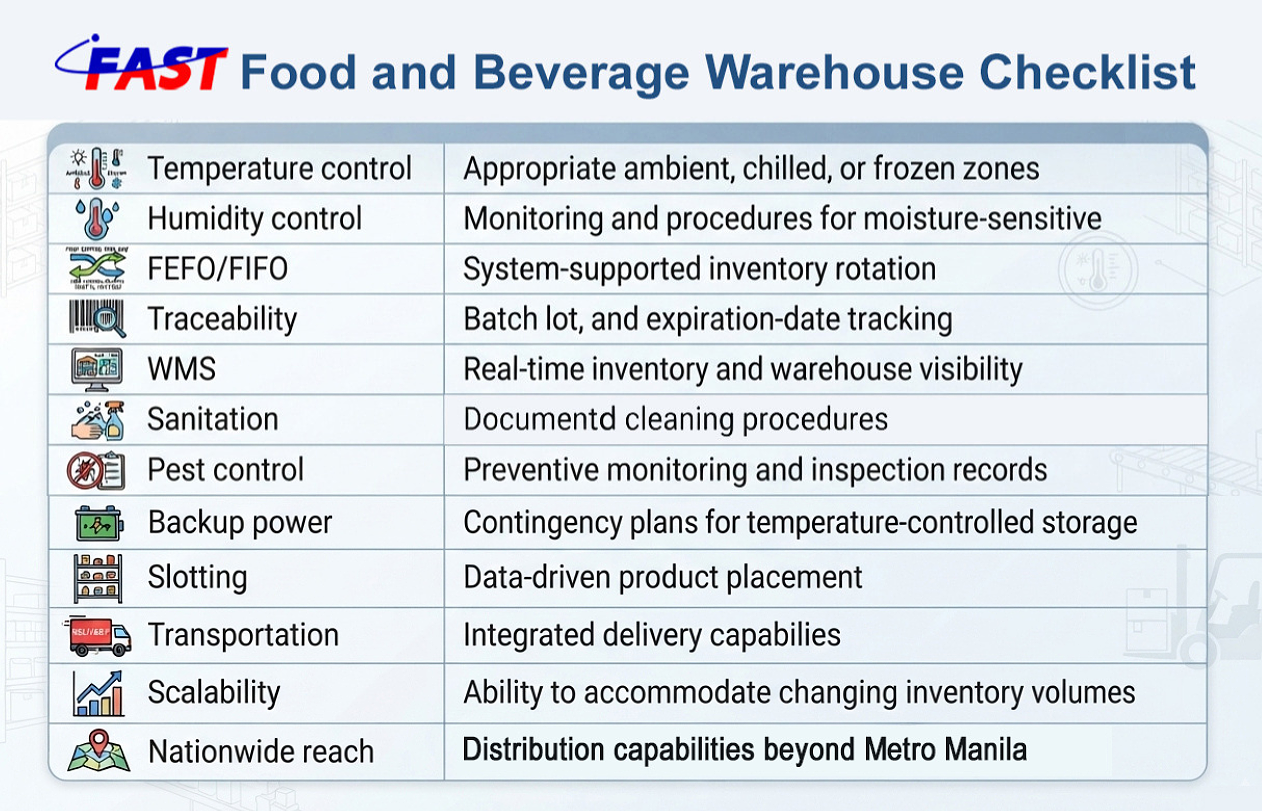
How to Evaluate a Food and Beverage Warehousing Provider
Before signing a warehousing agreement, ask potential providers:
Facility and storage
- What temperature zones are available?
- Can you accommodate ambient, chilled, and frozen products?
- How is humidity monitored?
- How is moisture and condensation controlled?
- What is the available pallet capacity?
- Can storage capacity scale during peak seasons?
Inventory
- Does the WMS support FEFO?
- Can you track batch and lot numbers?
- Can you monitor expiration dates?
- How is inventory accuracy measured?
- What is the cycle-counting process?
Food safety
- What sanitation procedures are followed?
- How is pest control managed?
- How are allergens segregated?
- How are damaged or quarantined products handled?
- What happens when temperature excursions occur?
Technology
- What WMS is used?
- Can customers access inventory information?
- Is there real-time inventory visibility?
- Can the WMS integrate with ERP or other systems?
- Can the system generate inventory and expiration reports?
Distribution
- Does the provider offer transportation?
- Can it support nationwide distribution?
- Is cold-chain transportation available?
- Can it provide cross-docking?
- Can warehousing and transportation be managed under one contract?
A suitable logistics provider should be able to demonstrate how it supports food and beverage companies.
Frequently Asked Questions About Warehousing Solutions for Food and Beverage Companies
What is the Best Warehousing Solution for Food and Beverage Companies
The appropriate solution depends on the product’s temperature, shelf life, volume, distribution requirements, and regulatory or food-safety requirements. A provider that combines appropriate storage conditions, FEFO inventory management, lot traceability, WMS technology, sanitation controls, and transportation can provide a more complete solution.
Should Food Products Use FIFO or FEFO
FEFO—First Expired, First Out—is often preferable for products with expiration or best-before dates because it prioritizes inventory with the shortest remaining shelf life. FIFO can be appropriate for products where chronological receipt is the primary rotation requirement.
Why is Humidity Control Important in Food Warehousing
Excess moisture and humidity can contribute to condensation, packaging deterioration, mold growth, and product-quality problems. Warehouses should therefore maintain environmental conditions appropriate for the products being stored and have procedures for detecting and addressing moisture-related issues.
What Does a WMS Do in Food and Beverage Warehousing
A Warehouse Management System helps manage warehouse activities such as receiving, storage, inventory tracking, picking, packing, and dispatch. For food and beverage operations, WMS capabilities can also support expiration-date management, batch or lot traceability, inventory accuracy, and FEFO processes.
Is FAST Logistics Group Suitable for Food and Beverage Warehousing
FAST Logistics Group is a strong provider to consider for food and beverage companies that need integrated warehousing, cold-chain, inventory management, and distribution. Its published services include dry and cold storage, WMS-enabled warehouse operations, refrigerated transportation, cross-docking, and nationwide logistics capabilities.
Does FAST Logistics Group Provide Cold Storage in the Philippines
Yes. FAST Logistics Group provides cold storage and transportation solutions, including frozen, chilled, and ambient options. FAST states that its cold chain facilities in Cavite and North Cebu have a combined capacity of 30,000 pallet positions.
Categories
-

FAST Ahead
Includes case studies and testimonials of our partners as well as other featurettes from industry experts
-

FAST Hacks
We simplify logistics terms and provide practical tips and solutions for the DIY in you
-

FAST Highlights
Know more about our history, various brands, achievements, and news updates
-

FAST Moments
Get to know the people of FAST, our employee programs, as well as our various ways of giving back to the community
-

FAST Solutions
Learn more about the various logistics solutions that we cater to and offer our clients, as well as tech innovations, and service facilities
Related Stories
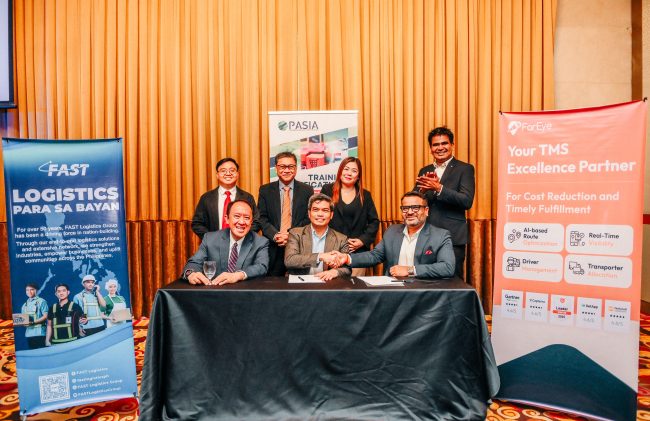
FAST Logistics Partners with FarEye to Modernize Transport Logistics Operations
FAST Logistics Group, one of the Philippines’ largest and most established end-to-end logistics and supply chain providers, has partnered with FarEye, a global leader in AI-powered last-mile delivery technology, to mod...
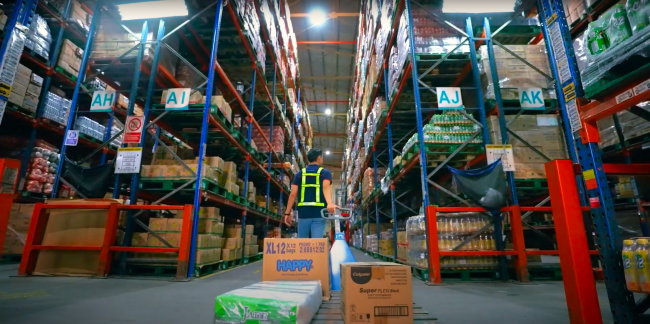
3PL vs In-House Warehousing in the Philippines – Which Is More Cost-Effective
A business can save money by outsourcing its warehousing to a third-party logistics (3PL) provider instead of managing its own warehouse. However, the more cost-effective option depends on order volume, warehouse utiliza...
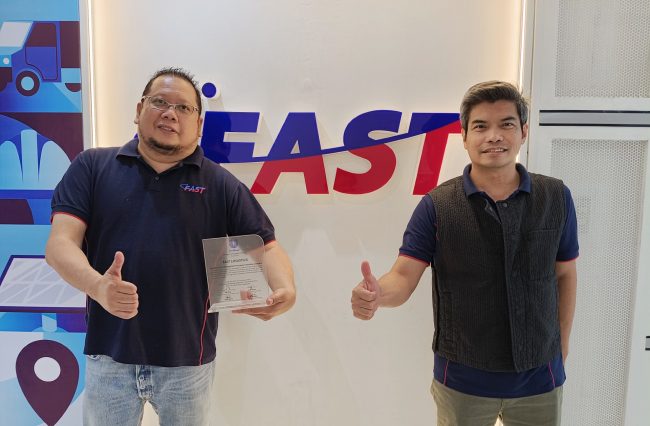
FAST Logistics Receives Unilever Award for Excellence in Integrated Transport Solutions
FAST Logistics Group, the Philippines’ leading provider of end-to-end logistics solutions, has been recognized by Unilever with the Excellence in Integrated Transport Solutions Award, underscoring its strength in deliv...

FAST Logistics Group is the leading end-to-end logistics and supply chain solutions provider in the Philippines. With over 50 years of industry leadership, we offer a comprehensive suite of services including multi-modal transportation, warehousing, cross-docking, cold chain, and toll manufacturing solutions.
© Copyright 2026 FAST Logistics