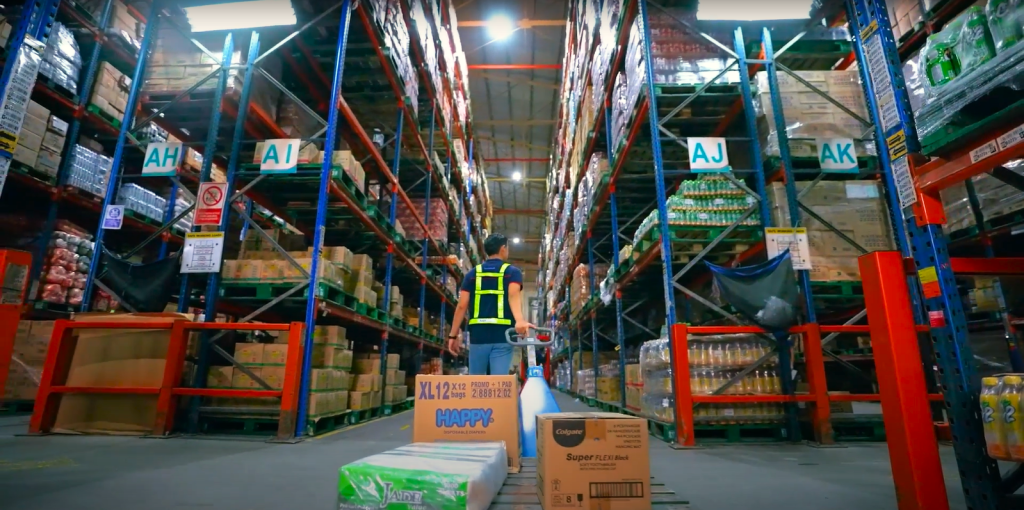
A business can save money by outsourcing its warehousing to a third-party logistics (3PL) provider instead of managing its own warehouse. However, the more cost-effective option depends on order volume, warehouse utilization, labor costs, inventory levels, and demand predictability.
3PL warehousing is often more cost-effective for growing businesses, companies with fluctuating volumes, and businesses that want to avoid large fixed warehouse costs. In-house warehousing can become more cost-effective at high, stable volumes when a company can keep its facility highly utilized and operate it efficiently.
The right decision is therefore not simply “3PL vs. warehouse rent.” Companies should compare the total cost per order, pallet, cubic meter, or order line after accounting for operational costs such as labor, rent, equipment, technology, utilities, management, and related risks.
This guide explains the key costs, advantages, and considerations businesses should evaluate when choosing between 3PL and in-house warehousing in the Philippines.
Key Takeaways
- 3PL warehousing is often more cost-effective for businesses with variable demand, low warehouse utilization, or rapid growth
- In-house warehousing costs involve rent, labor, equipment, technology, utilities, and maintenance
- Location affects total distribution cost, particularly for businesses serving multiple regions in the Philippines
- Aside from cost-savings, businesses can also benefit from scale, technical expertise, and network of 3PL warehousing providers
What Is 3PL Warehousing
3PL warehousing is the practice of outsourcing some or all warehousing and logistics activities to a third-party logistics provider. The 3PL provider takes care of end-to-end warehousing solutions: storing inventory and handling receiving, put-away, inventory management, picking, packing, dispatch, returns, and transportation on behalf of the business.
Depending on the 3PL, services may include:
- Warehouse storage
- Receiving and unloading
- Put-away
- Inventory management
- Picking and packing
- Order fulfillment
- Inventory insurance or coverage, depending on the provider and contract
- Dispatch
- Transportation
- Returns processing
- Kitting and bundling
- Relabeling and repacking
- Cross-docking
- E-commerce fulfillment
For Philippine businesses, 3PL warehousing can be particularly useful when serving customers across Luzon, Visayas, and Mindanao without building and managing a warehouse network independently.
What Is In-House Warehousing
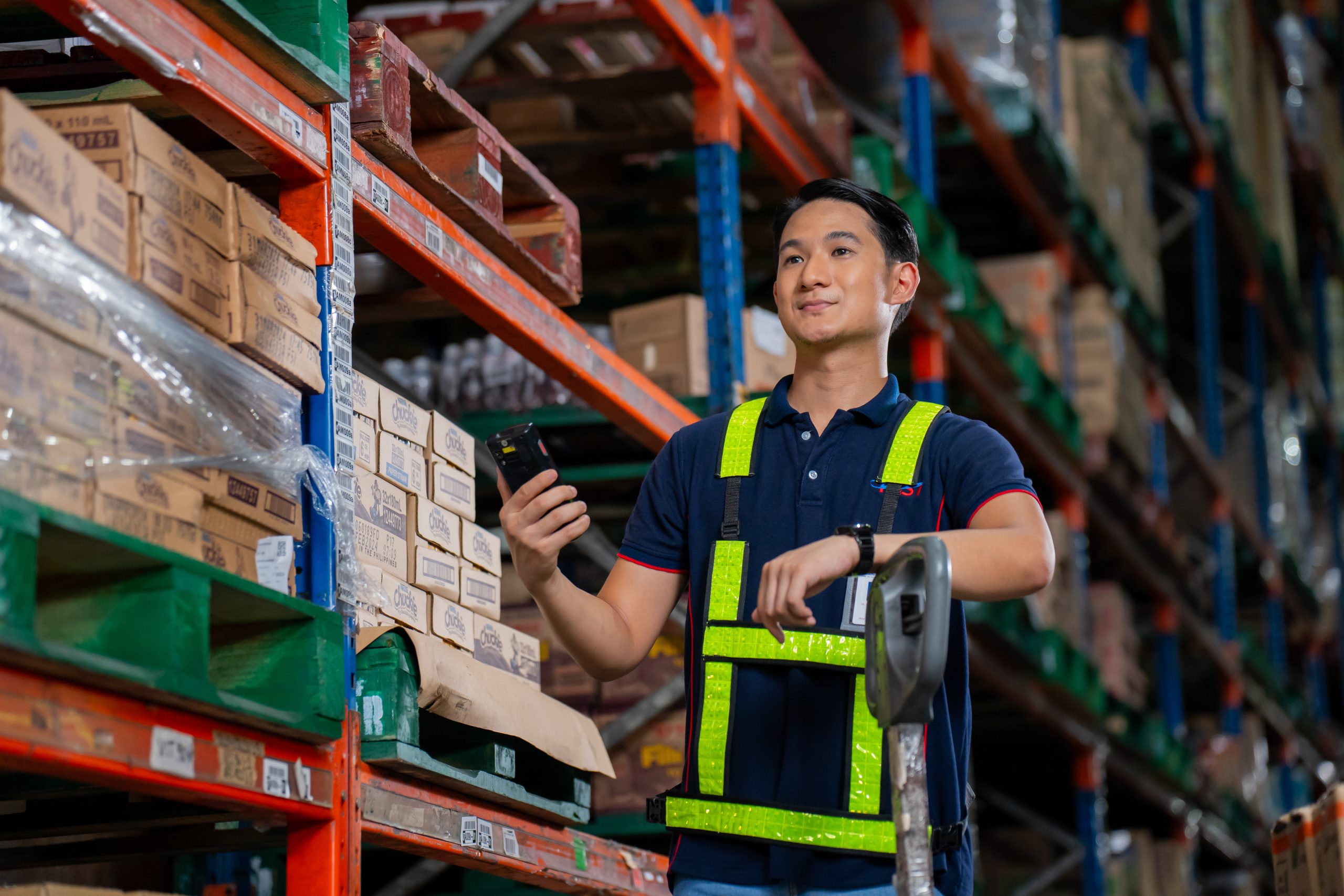
In-house warehousing means that a company operates and manages its own warehouse instead of outsourcing the operation to a 3PL. The company may own or lease the facility, but it remains responsible for the people, equipment, technology, processes, and operating costs.
An in-house warehouse typically requires:
- Warehouse space
- Warehouse employees
- Supervisors and managers
- Systems and technology such as warehouse management software
- Racking and storage systems
- Material-handling equipment
- Inventory controls
- Security
- Utilities
- Maintenance
- Insurance
- Safety and compliance programs
The main advantage of in-house warehousing is control. The company has direct control over its operations, processes, employees, and inventory.
The main disadvantage is that the company also carries the full operational cost and risk.
Is 3PL Warehousing Cheaper Than In-House Warehousing
A 3PL warehousing is often cheaper for startups and growing businesses. They are more likely to have low-to-medium volumes, fluctuating demand, or low warehouse utilization. If they outsource their warehousing needs to a 3PL, they can convert many fixed warehouse costs into variable logistics expenses.
Moreover, a 3PL may also be cheaper for large-scale businesses if they can leverage the 3PL’s economies of scale, established infrastructure, and expertise, allowing them to reduce warehousing, labor, technology, and transportation costs while avoiding significant investments in expanding and maintaining their own facilities.
However, an efficient in-house warehouse can be cheaper at high and predictable volumes.
This is the most important distinction when comparing the two models.
With an in-house warehouse, the company generally pays for capacity whether it uses it or not. With a 3PL, costs are more closely tied to the amount of storage and fulfillment activity the company actually uses.
For example, a business might lease a warehouse capable of holding 2,000 pallets but only use 1,000 pallet positions on average. The company is still paying for the facility, equipment, security, utilities, and staff needed to operate that warehouse.
A 3PL may allow the company to scale storage and labor requirements as demand changes. However, 3PL fees can become more expensive at very high volumes because the provider may charge for each storage position, receiving transaction, pick, pack, order, or value-added service.
The correct comparison is therefore total cost—not warehouse rent alone.
What Are the Main Costs of In-House Warehousing in the Philippines
The main costs of in-house warehousing include warehouse rent, labor, equipment, utilities, technology, security, maintenance, insurance, management, and inventory-related operating expenses.
Companies should calculate their fully loaded warehouse cost by considering the following:
1) Rent
Warehouse rental is one of the most visible costs.
The actual cost depends on:
- Location
- Building quality
- Warehouse size
- Accessibility
- Ceiling height
- Loading facilities
- Lease terms
- Security
- Common-area charges
- Lease escalation
Location is particularly important in the Philippines.
A warehouse near major customer markets, ports, airports, highways, or distribution hubs may cost more than a facility farther away. Yet a cheaper warehouse can become more expensive overall if its location significantly increases transportation costs because of longer delivery times due to traffic and distance.
2) Labor
Labor can be one of the largest operating costs of an in-house warehouse.
A warehouse may require:
- Pickers
- Packers
- Checkers
- Inventory clerks
- Forklift operators
- Warehouse associates
- Team leaders
- Supervisors
- Warehouse managers
The cost goes beyond basic wages.
Businesses must also account for benefits, statutory contributions, overtime, holiday work, recruitment, training, uniforms, personal protective equipment (PPE), absenteeism, and employee turnover.
A 3PL may achieve economies of scale by employing warehouse workers across multiple customers.
3) Equipment
An in-house warehouse may require significant investment in:
- Pallet racking
- Shelving
- Forklifts
- Pallet jacks
- Hand trucks
- Conveyors
- Packing stations
- Barcode scanners
- Printers
- Weighing equipment
- CCTV
- Computers
Some of these assets require significant upfront capital, while others require ongoing maintenance and replacement.
4) Technology or Warehouse Management Software
An efficient warehouse increasingly depends on technology.
An in-house operation may need:
- Warehouse Management System (WMS)
- Inventory management software
- ERP integration
- Barcode systems
- Scanners
- Order management software
- E-commerce integrations
- Reporting and analytics
Implementation costs can include software licenses, hardware, integration, customization, training, and technical support.
A 3PL may already have much of this infrastructure in place, allowing companies to access warehouse technology without making the same level of investment and technical expertise.
5) Utilities, Security, and Maintenance
Other warehouse expenses include:
- Electricity
- Water
- Internet
- Cleaning
- Pest control
- Repairs
- Waste disposal
- Security
- Fire protection
- Insurance
- Equipment maintenance
Companies can easily overlook these costs when comparing an in-house warehouse with a 3PL quotation.
What Are the Hidden Costs of In-House Warehousing
The biggest hidden costs include the following:
- Unused warehouse capacity
- Management time
- Employee turnover
- Equipment downtime
- Inventory errors
- Capital tied up in warehouse infrastructure
For example, suppose a company leases a facility designed for 3,000 pallets but normally uses only 1,500. The company still pays for the unused capacity.
The same applies to warehouse employees during slow periods.
A company might need 20 workers during peak season but have enough work for only 12 workers during ordinary months. This creates a utilization problem.
A 3PL can potentially spread these costs across multiple customers, allowing companies to access resources without carrying the full cost of unused capacity.
Why Can a 3PL Save Money vs In-House Warehousing
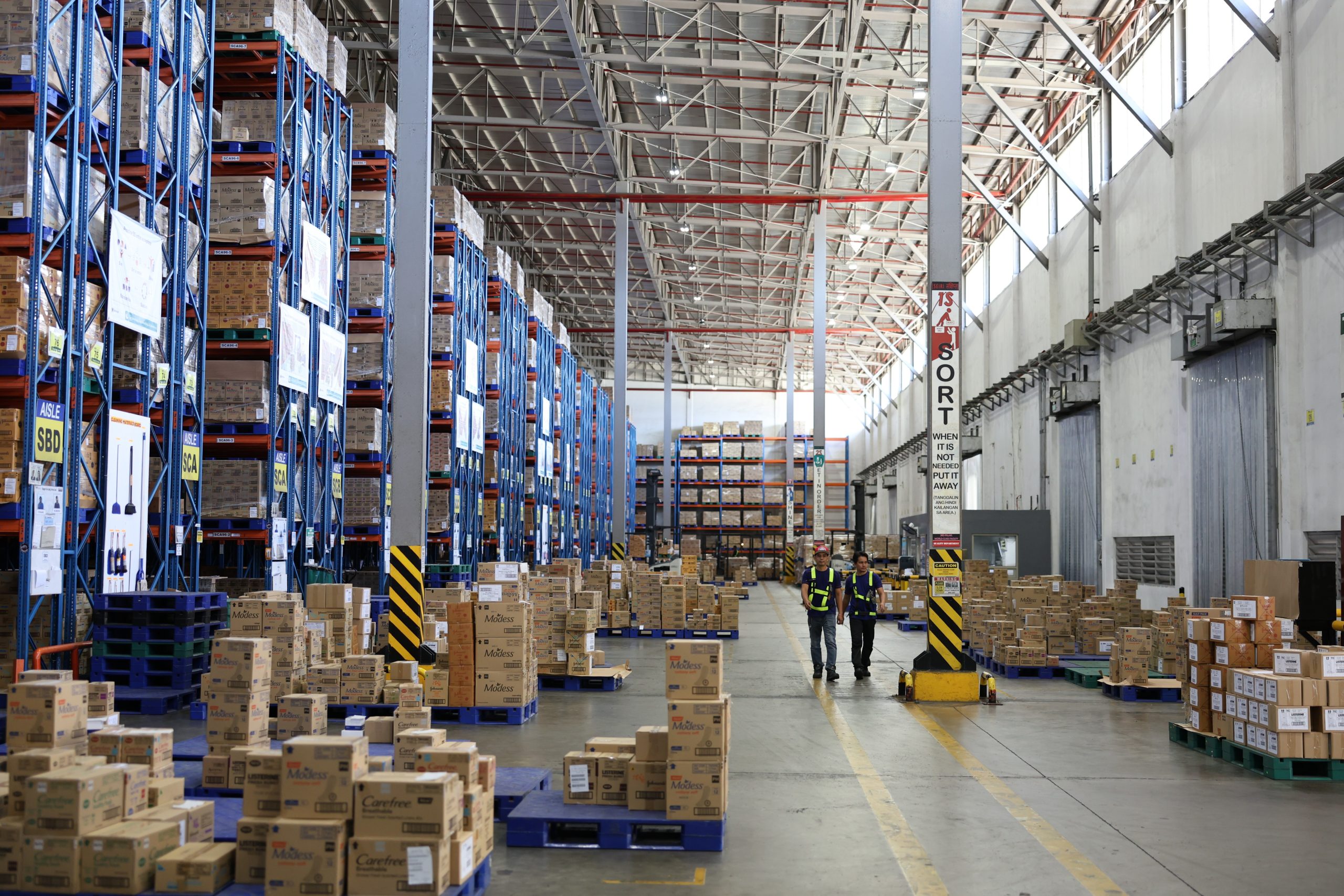
A 3PL can reduce costs by sharing warehouse infrastructure, labor, technology, equipment, and management across multiple customers.
This is particularly valuable for small and medium-sized businesses that don’t have enough volume to fully utilize their own warehouse.
A 3PL typically provides:
- Lower capital requirements – The company doesn’t need to invest heavily in warehouse infrastructure
- Better labor utilization – Warehouse labor can be allocated across multiple customers
- Shared equipment – The company doesn’t necessarily have to purchase its own forklifts, racking, scanners, and other equipment
- Shared technology – The 3PL may already have a WMS and warehouse technology infrastructure
- Flexible capacity – Storage and labor can potentially scale as the company’s business changes
- Operational expertise – The company gains access to logistics professionals without having to build the entire team internally
- Expertise and systems – The company can benefit from the 3PL’s established logistics expertise, processes, technology, and systems without having to develop and maintain them internally
- Faster implementation – An established 3PL already has facilities, systems, processes, and trained personnel in place, reducing the time and cost required to build a warehouse operation from scratch
- Lower cost of expansion – When the business grows, an established 3PL may already have additional space, labor, and infrastructure available, avoiding the need to rapidly acquire or build another facility
What Is the Break-Even Point Between 3PL and In-House Warehousing
The break-even point is the volume at which the fully loaded cost of operating an in-house warehouse equals the total cost of outsourcing to a 3PL.
A simple model is:
In-house cost
Fixed warehouse costs + variable operating costs
3PL cost
Storage fees + receiving fees + fulfillment fees + value-added services
The company then compares the two at different volumes.
Illustrative Cost Comparison
| Monthly Orders | In-House Cost | 3PL Cost | Lower-Cost Option |
| 20,000 | ₱1.4M | ₱600K | 3PL |
| 50,000 | ₱1.7M | ₱1.25M | 3PL |
| 100,000 | ₱2.1M | ₱2.40M | In-house |
| 200,000 | ₱3.0M | ₱4.80M | In-house |
Illustrative example only. The ₱1.7 million figure is hypothetical and is used only to illustrate how fixed costs behave as order volume increases. It does not represent a typical Philippine warehouse operating cost. Figures do not represent FAST Logistics Group’s rates.
The important point is not the specific numbers.
It is the methodology.
Companies should calculate the point at which their actual 3PL and in-house costs intersect.
Is One Warehouse Better Than Multiple Warehouses?
A single warehouse is usually simpler and may reduce inventory duplication, while multiple warehouses can reduce delivery distances and transportation costs. The better option depends on customer geography and inventory velocity.
Warehouse location and network design can change the economics of both 3PL and in-house models.
Logistics companies and 3PL providers can make a multi-location strategy easier because companies may be able to access existing facilities instead of establishing their own regional warehouses.
3PL vs. In-House Warehousing: Quick Comparison
| Factor | 3PL | In-House |
| Initial investment | Lower | Higher |
| Fixed costs | Lower | Higher |
| Variable costs | Higher | Lower at scale |
| Control | Lower | Higher |
| Scalability | High | Moderate |
| Labor management | Outsourced | Internal |
| Technology | Often included | Internal investment |
| Equipment | Usually provided | Company-funded |
| Capacity risk | Lower | Higher |
| Customization | Moderate | High |
| Best for | Growing/variable volume | High/stable volume |
| Geographic expansion | Easier | More complex |
| Operational responsibility | 3PL | Company |
3PL or In-House: Which Is Better for Your Business
Choose a 3PL if your priority is flexibility, scalability, lower upfront investment, and reduced operational complexity. Choose in-house warehousing if you have high, predictable volume, high warehouse utilization, strong operational capabilities, and a need for greater control.
A simple decision rule is:
Choose 3PL when:
- Your business is growing quickly
- Your order volume fluctuates
- Your warehouse utilization would be low
- You want to minimize capital expenditure
- You don’t want to manage warehouse employees
- You are expanding geographically
- Logistics is not your core competency
Choose in-house when:
- Your order volume is consistently high
- Demand is predictable
- Your warehouse can remain highly utilized
- You have strong logistics management
- You need highly customized processes
- 3PL transaction fees have become expensive at your scale
Consider hybrid warehousing when:
- You need additional capacity during peak periods
- You want regional inventory without building regional facilities
- Some products require specialized handling
- You want to retain control over core operations while outsourcing non-core activities
FAST Logistics Group: Trusted Partner of Businesses for 3PL Warehousing Solutions
FAST Logistics Group provides end-to-end warehousing management and supply chain solutions that help businesses store, manage, and distribute products across the Philippines.
With more than 50 years of experience in logistics, FAST combines warehousing expertise, technology, transportation, and nationwide distribution capabilities to help businesses manage increasingly complex supply chains.
Its integrated capabilities allow businesses to evaluate warehousing not as an isolated storage function, but as part of their broader distribution strategy.
For businesses deciding between 3PL and in-house warehousing, this integrated approach can be particularly relevant when evaluating storage capacity, transportation requirements, regional expansion, and inventory management together.
FAST’s warehousing solutions support businesses at different stages of growth. Companies can use its warehouse network to manage inventory, support seasonal demand, or reach new markets without investing in and operating their own facilities.
Its capabilities include:
- Warehouse Management: Secure storage, inventory management, receiving, picking, packing, and dispatch operations
- Flexible Warehousing: Scalable storage options that allow businesses to adjust capacity based on demand
- Technology-Enabled Operations: Warehouse and transportation technologies that provide greater visibility and control over inventory and distribution
- Value-Added Services: Additional logistics activities such as kitting, bundling, repacking, relabeling, and other services that prepare products for distribution
- Nationwide Reach: Warehousing and distribution capabilities designed to support businesses serving markets across Luzon, Visayas, and Mindanao
For businesses evaluating 3PL vs. in-house warehousing, the decision goes beyond the cost of warehouse space. Companies must consider labor, equipment, technology, inventory management, transportation, scalability, and the cost of unused capacity.
FAST can provide these capabilities as part of an integrated logistics solution, allowing businesses to access warehousing infrastructure and expertise without building every component internally. Talk to our Solutions Experts about your warehousing requirements
Frequently Asked Questions About 3PL Warehousing in the Philippines
Is 3PL cheaper than owning a warehouse in the Philippines
A 3PL can be cheaper than operating an in-house warehouse when a company’s volume is low, variable, or growing. At high and predictable volumes, in-house warehousing can become cheaper.
How much does 3PL warehousing cost in the Philippines
There is no single standard Philippine 3PL rate. Pricing depends on storage volume, location, number of SKUs, orders, order lines, handling requirements, fulfillment services, transportation, and contract terms.
The best way to compare providers is to request a detailed quotation based on your actual operational profile.
Is 3PL good for small businesses
Yes. A 3PL can be particularly useful for small businesses because it reduces the need for warehouse infrastructure, employees, equipment, and technology investment.
When should a company move from 3PL to in-house warehousing
A company should consider moving in-house when its volume becomes large and predictable enough that the fully loaded cost of operating its own warehouse is lower than the 3PL’s cost, while maintaining the required service level.
Can a company use both 3PL and in-house warehousing
Yes. A hybrid model can combine the control of an in-house warehouse with the flexibility of a 3PL. This is especially useful for peak demand, regional distribution, overflow inventory, or specialized fulfillment.
Does a 3PL handle inventory management
Many 3PLs provide inventory management services, but the exact scope varies by provider. Companies should confirm which systems, cycle counting, reporting, inventory accuracy targets, and reconciliation processes the provider includes.
Does a 3PL handle e-commerce fulfillment
Many 3PLs offer e-commerce fulfillment, including receiving, storage, pick-and-pack, dispatch, returns, and technology integrations. Companies should evaluate their ability to integrate with the specific platforms they use.
Categories
-

FAST Ahead
Includes case studies and testimonials of our partners as well as other featurettes from industry experts
-
FAST Hacks
We simplify logistics terms and provide practical tips and solutions for the DIY in you
-

FAST Highlights
Know more about our history, various brands, achievements, and news updates
-

FAST Moments
Get to know the people of FAST, our employee programs, as well as our various ways of giving back to the community
-
FAST Solutions
Learn more about the various logistics solutions that we cater to and offer our clients, as well as tech innovations, and service facilities
Related Stories

FAST Joins AgriLink 2025, Showcases End-to-End Logistics Solutions
FAST Logistics Group, the Philippines’ leading end-to-end logistics provider, showcased its end-to-end logistics solutions during AgriLink 2025. The three-day exhibition, held from October 2 to 4 at the World Trade Cen...
FAST Truckers’ Roadshow in Cagayan de Oro Highlights Growth and Support Programs
FAST Logistics Group, the Philippines’ leading provider of end-to-end logistics solutions, held a Truckers’ Roadshow in Cagayan de Oro City on Tuesday, January 20, to encourage and assist truck owners and aspiring en...

FAST Logistics Showcases Integrated 3PL Capabilities at SCMAP Supply Chain Conference 2026
FAST Logistics Group, the Philippines’ leading provider of end-to-end logistics and supply chain solutions provider, showcased its integrated third-party logistics (3PL) capabilities and supply chain resilience strateg...

FAST Logistics Group is the leading end-to-end logistics and supply chain solutions provider in the Philippines. With over 50 years of industry leadership, we offer a comprehensive suite of services including multi-modal transportation, warehousing, cross-docking, cold chain, and toll manufacturing solutions.
© Copyright 2026 FAST Logistics