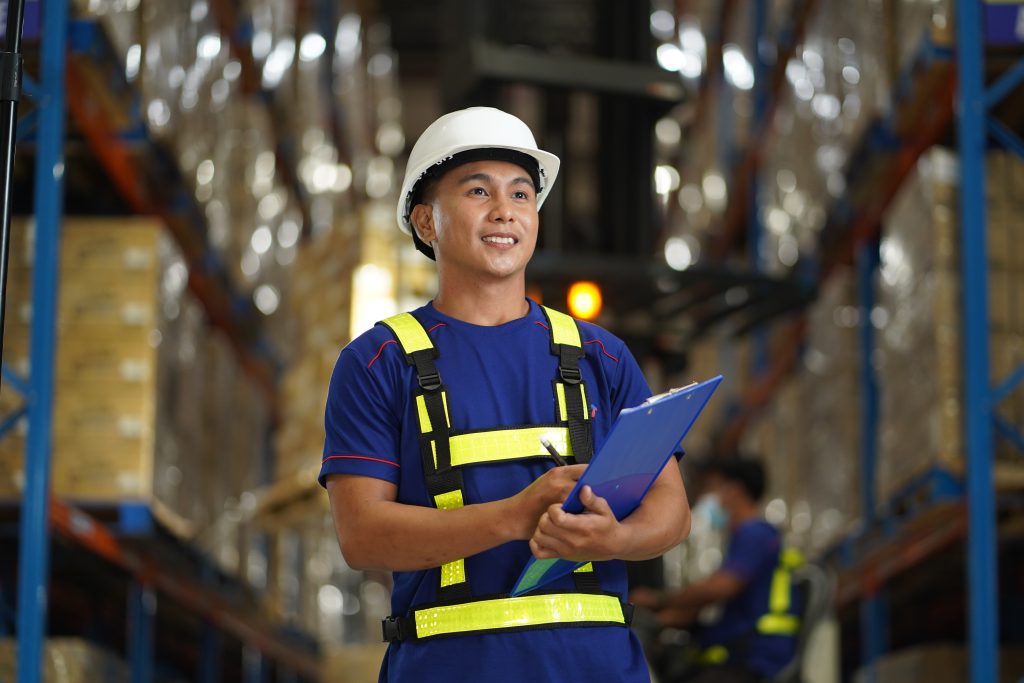
Companies and supply chain professionals should level up their capabilities through logistics training and certifications to meet the increasing needs of businesses, particularly in warehousing.
The Philippine logistics sector is experiencing a growing need for skilled logistics personnel, particularly those who can operate material handling equipment (MHE) such as forklifts. Companies seek workers who are not only knowledgeable but also fully trained to meet industry, operational, and safety standards.
To support this growing demand, the Philippine government — through the Technical Education and Skills Development Authority (TESDA) — emphasizes competency-based education and training to ensure workplace-ready graduates for logistics roles. Because of this, organizations now look for reliable training providers that offer hands-on, expert-led, and industry-standard logistics training and TESDA-aligned certifications.
FAST Logistics Group, the country’s leading end-to-end logistics provider, delivers quality technical training designed to upgrade workforce skills and strengthen national logistics capabilities. Here is a complete guide to the essential logistics training and certifications for forklift operations, warehouse programs, and more available for aspiring or current logistics workers.
Forklift Training
Forklift training is one of the most in-demand logistics programs in the Philippines, especially among warehousing, manufacturing, and distribution companies. TESDA-certified forklift operators are highly sought after because they ensure safe, efficient, and compliant handling of goods inside warehouses and logistics hubs. Training includes a combination of classroom instruction and extensive hands-on exercises using commonly deployed equipment.
Forklift training typically includes:
- Safety procedures and hazard prevention
- Pre-operation and post-operation checks
- Proper maneuvering and driving techniques
- Load handling and stability awareness
- Hazard prevention and emergency protocols
- Basic equipment troubleshooting and maintenance
- Philippine safety compliance (Occupational Safety and Health standards and Department of Labor and Employment guidelines)
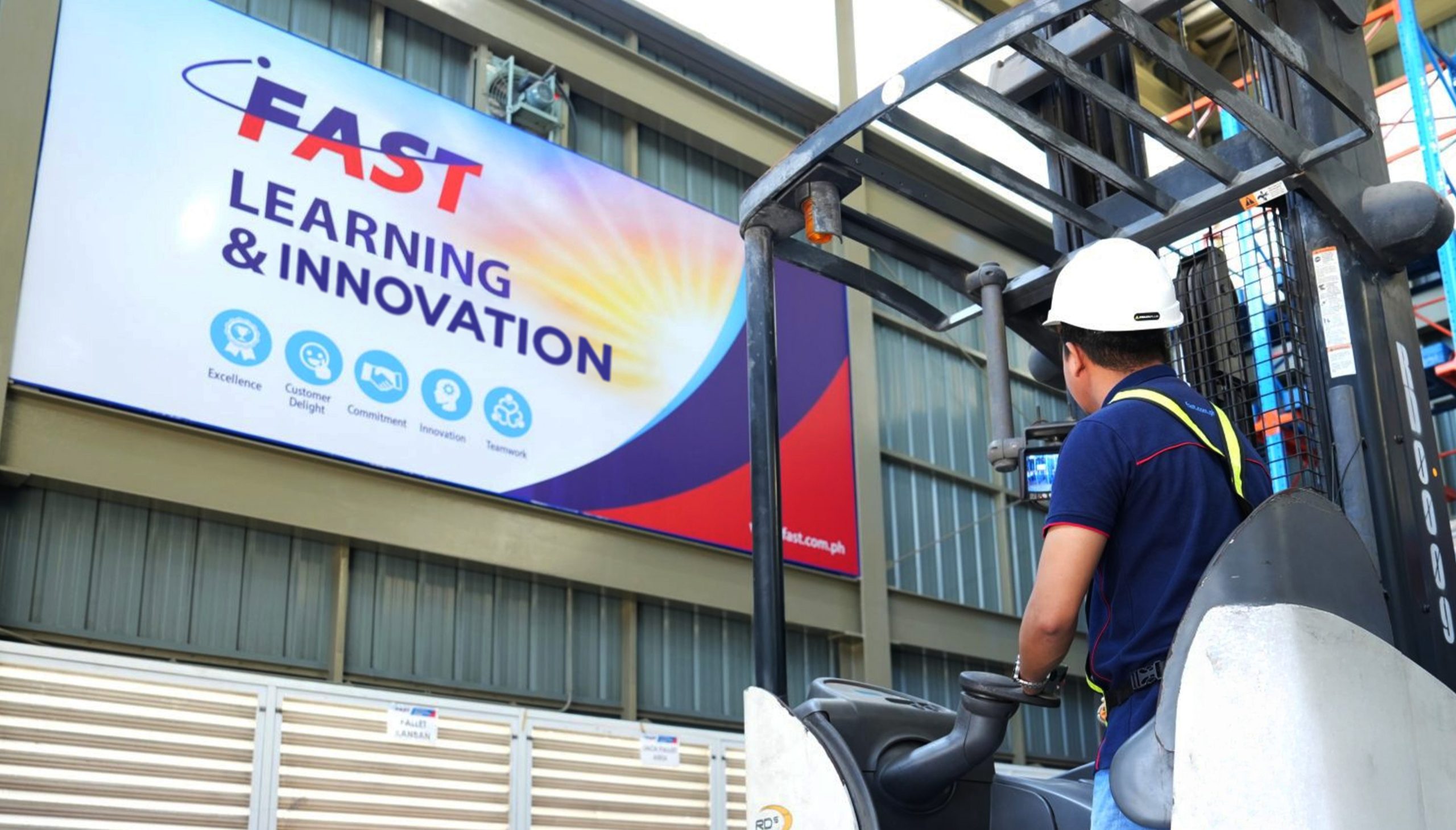
FAST Logistics Group offers forklift training to its employees and other companies at its 388-square-meter dedicated facility in the FAST Learning and Innovation Hub in Cabuyao, Laguna, which features realistic warehouse simulations. The facility is designed to provide hands-on, practical experience in a safe and controlled environment. Training is conducted at its 388-sqm Learning and Innovation Hub in Cabuyao, Laguna, equipped with counterbalance forklifts, reach truck forklifts, and long pallet transporters that are both battery and gas-operated. Selective pallet racks, double-deep pallet racks, and drive-in pallet racks up to five levels high are also available, allowing trainees to experience realistic forklift operations in various layouts.
Forklift Training Duration Options
FAST offers several forklift training program durations to meet different needs. These are the following:
Heavy Equipment Operation – Forklift Training for 3 Days (1 unit)
Ideal for beginners, a 3-day forklift training program typically covers essential skills like pre-operation checks, safe maneuvering, and load handling. It starts with discussions on regulations, forklift components, pre-operation inspections, and safety guidelines. The following days are dedicated to hands-on exercises that teach maneuvering, turning, traveling with loads, and operating the forklift in varied environments. On the final day, trainees practice load handling, stacking, and transporting techniques before undergoing a performance assessment.
Heavy Equipment Operation – Forklift Training for 6 Days (2 units)
The six-day program offers more intensive training and includes advanced forklift driving techniques, extended driving practice, precision load handling, and more complex warehouse simulations. It is suited for companies seeking multi-skilled operators capable of handling diverse scenarios.
Heavy Equipment Operation – Forklift Training for 221 hours (3 units)
This is the most extensive program and follows the complete TESDA curriculum. This training is suited for individuals aiming for advanced professional competency or overseas employment. It covers operational troubleshooting, occupational safety and health (OSH), documentation and reporting, workplace communication, advanced practical exercises, and simulated workplace assessments.
Forklift Trade Test
A forklift trade test measures an operator’s real-world competence through a practical and written evaluation. This assessment is typically required for employment qualification, skills upgrading, or company-mandated certification, ensuring operators meet standard performance expectations.
A trade test is often required for:
- Company-mandated certification
- Skills upgrading or re-certification
- Employment qualification abroad
- TESDA NC II preparation

Warehouse Operations
Aside from forklift training, warehouse operations are also important in strengthening essential skills, namely:
- Receiving incoming goods
- Storing and stock arrangement
- Picking and order preparation
- Issuing and dispatching products
- Packing items for transport
- Operating and maintaining manual MHE such as pallet jacks and stackers
This course also emphasizes accuracy, workplace safety, FIFO or FEFO methods, inventory procedures, and housekeeping standards common in Philippine warehouses.
FAST Logistics Group, the Philippines’ largest end-to-end logistics provider with over two million square meters of warehouse space nationwide, is offering forklift and warehouse operations training to its employees and external clients. As a TESDA-accredited provider, FAST delivers logistics training courses to other organizations in an effort to help professionalize the Philippine supply chain.
Supply Chain and Logistics Courses
Training programs on supply chain and logistics are designed to equip workers with broader competencies on inventory management, transport planning, multimodal logistics, last-mile delivery operations, cold chain handling, and customer service. These courses help employees understand both upstream and downstream logistics functions and how their roles contribute to the overall supply chain.
Technology and artificial intelligence are also important components in logistics training. They enable employees to leverage data-driven decision-making, optimize routes and inventory, enhance predictive forecasting, and improve overall operational efficiency across the supply chain. Supply‑chain workers need a mix of technical and soft skills, including digital proficiency, to help companies operate efficiently and cut costs.
Leadership Programs
To support professional growth, leadership development programs are necessary for supervisors, team leaders, and managers working in fast-paced environments like logistics. These programs focus on people management, operational decision-making, communication and conflict resolution, productivity and performance management, and safety leadership—skills necessary for leading teams in logistics settings. Leadership training is essential for companies looking to build strong frontline leaders who can ensure smooth warehouse and transport operations.
FAST Logistics Group is offering leadership programs to its employees and supply chain professionals employed in other companies to help empower frontline leaders running warehouse and transport operations. smoothly, bridging the gap between strategy and day-to-day execution. Well-trained leaders improve operational efficiency and boost team morale.
TESDA NC II Certification
TESDA National Certificate II (NC II) programs are likewise an important component of logistics professional development. These certifications serve as proof that a worker meets TESDA’s defined competency standards, improving employability both locally and abroad. Two of the most sought-after logistics programs in the Philippines are Heavy Equipment Operation – Forklift NC II and Warehousing Services NC II.
Heavy Equipment Operation – Forklift NC II (Valid for 5 Years)
The Forklift NC II certification covers all aspects of forklift operation. This certification ensures operators are competent in:
- Pre-operation inspection and the “BLOWAF” safety procedure
- Safe forklift maneuvering
- Correct load handling
- Post-operation protocols
- Basic preventive maintenance
Lessons include preventive-maintenance checklist form, which refers to a list of activities performed during preventive maintenance works. The certification process ensures that forklift is operated safely and correctly based on manufacturer guidelines and company regulations, aligned with TESDA guidelines.
Warehousing Services NC II (Valid for 5 Years)
This certification is widely required by logistics companies, distributors, and manufacturing plants in the Philippines. It validates a worker’s proficiency in the following:
- Warehouse receiving, storing, picking, packing, and dispatching functions
- Stock documentation
- Operating and maintaining MHE
- Performing stock take and inventory, even for temperature-controlled goods
- Packing goods or products
- Cargo loading and unloading
- Warehouse safety practices
Who Should Take Logistics Training and Certifications
- Fresh graduates entering logistics
- Warehouse helpers upgrading their skills
- Career shifters
- Employees needing formal certification
- Companies training their internal workforce
- Returning OFWs and individuals seeking overseas employment
- Students fulfilling TESDA/senior high school requirements
How Much Does Logistics Training and Certification Cost
Training costs may vary based on the provider, type of program, and certification scope. Here are the typical industry ranges:
- Forklift training (3–6 days): ₱5,000–₱15,000
- Forklift NC II (200+ hours): ₱15,000–₱25,000
- Warehouse Operations / NC II: ₱12,000–₱18,000
- Forklift Trade Test: ₱1,500–₱3,000
FAST Logistics Group provides exact quotations upon inquiry. Talk to our Solutions Experts for rates.

What to Look for in a Logistics Training and Course Provider
When choosing a logistics training provider in the Philippines, companies should prioritize programs that emphasize safety, offer real hands-on training, and employ qualified trainers. They should also have an updated curriculum aligned with industry standards and strong employer recognition.
Proper training grounds and sufficient training space ensure realistic simulations and safer practical exercises.
Training providers must also enforce safety protocols such as wearing PPE (helmets or hard hats, vests, gloves, and safety shoes), provide access to safety equipment, and integrate OSH procedures into every module.
FAST Logistics Group: Trusted Provider of Logistics Training in the Philippines
FAST Logistics Group stands out as one of the Philippines’ most trusted providers of logistics training—serving both its internal workforce and other companies. Businesses in Fast-Moving Consumer Goods (FMCG), manufacturing, retail, automotive, agriculture, pharmaceutical, and talent recruitment sectors rely on FAST for their training and upskilling needs. The company also partners with educational institutions and local government units to prepare job-ready students and support local workforce development.
As a government-accredited and industry-recognized institution, FAST delivers industry-standard certifications and practical skills training rooted in experiential learning. FAST offers the following TESDA-accredited programs and courses:
- Heavy Equipment Operation – Forklift Training
- Forklift Trade Test
- NC II Assessment and Certification
- Micro Credential Course for Reach Truck
- Micro Credential Course for Warehousing Services
- Supply Chain and Logistics Courses
- Leadership Programs
Beyond serving businesses for over 50 years through its end-to-end logistics solutions, FAST is committed to creating sustainable livelihood opportunities and long-term career pathways for the Filipino workforce. Connect with our Training Experts to learn more about available programs, certifications, training schedules, and rates
FREQUENTLY ASKED QUESTIONS (FAQs)
How Long is the Forklift Training Course
Forklift training may take 3 days, 6 days, or up to 221 hours, depending on the program and the depth of competency required.
How Fast Can You Become Forklift Certified
Beginners can typically learn basic operation within two to three days, but full certification requires passing formal assessments, which may be completed within the same week, depending on the schedule.
What are Trainee Entry Requirements for Heavy Equipment Operation – Forklift NC II
Trainees for Heavy Equipment Operation – Forklift NC II should be able to communicate both orally and in writing, physically and mentally fit, with good moral character, and can perform basic mathematical computations. Passing written entrance examinations may also be indicated by the training provider if necessary.
What are Trainee Entry Requirements for Warehousing Services NC II
Trainees or students seeking entry into this course should meet the following requirements: they must have completed 10 years of basic education, be able to communicate in English both orally and in writing, and be capable of performing basic mathematical computations.
What are My Employment Prospects Once I Get Forklift Certification
Forklift operators are in high demand across logistics companies, warehouses, manufacturing plants, retail distribution centers, construction projects, and port terminals. Certified operators can qualify for opportunities in major Philippine companies and may also pursue roles overseas, where forklift operation is recognized as a globally transferable skill.
TESDA-certified forklift operators are in demand across multiple continents, particularly in:
- Asia – manufacturing hubs, warehouses, cold chain, and logistics centers
- Middle East – large-scale industrial operations, construction, and port facilities
- Oceania – agriculture, warehousing, and logistics operations
- Europe – logistics parks and distribution centers that recognize skills-based certifications
These regions value NC II certification because it ensures safety compliance and verified operator competency.
Where Can I Work if I Have Warehousing NC II Certification
Workers with Warehousing Services NC II certification are sought after in:
- Asia – especially for e-commerce, retail distribution, and warehouse hubs
- Middle East – logistics zones, fulfillment centers, and modern warehousing complexes
- North America – distribution and supply chain support roles (skills aligned with global standards)
- Oceania – agriculture, food supply chain, and logistics operations
Warehouse workers with internationally recognized skills are highly valued due to the global rise in e-commerce and automated distribution networks.
What Key Skills Will Logistics Professionals in the Philippines need by 2026?
Logistics professionals in the Philippines will need a blend of AI literacy, technical expertise, and human‑centered soft skills — including adaptability, communication, leadership, and emotional intelligence — to succeed in a data‑driven, automated, and disruption-prone supply chain.
Categories
-
FAST Ahead
Includes case studies and testimonials of our partners as well as other featurettes from industry experts
-

FAST Hacks
We simplify logistics terms and provide practical tips and solutions for the DIY in you
-
FAST Highlights
Know more about our history, various brands, achievements, and news updates
-

FAST Moments
Get to know the people of FAST, our employee programs, as well as our various ways of giving back to the community
-
FAST Solutions
Learn more about the various logistics solutions that we cater to and offer our clients, as well as tech innovations, and service facilities
Related Stories
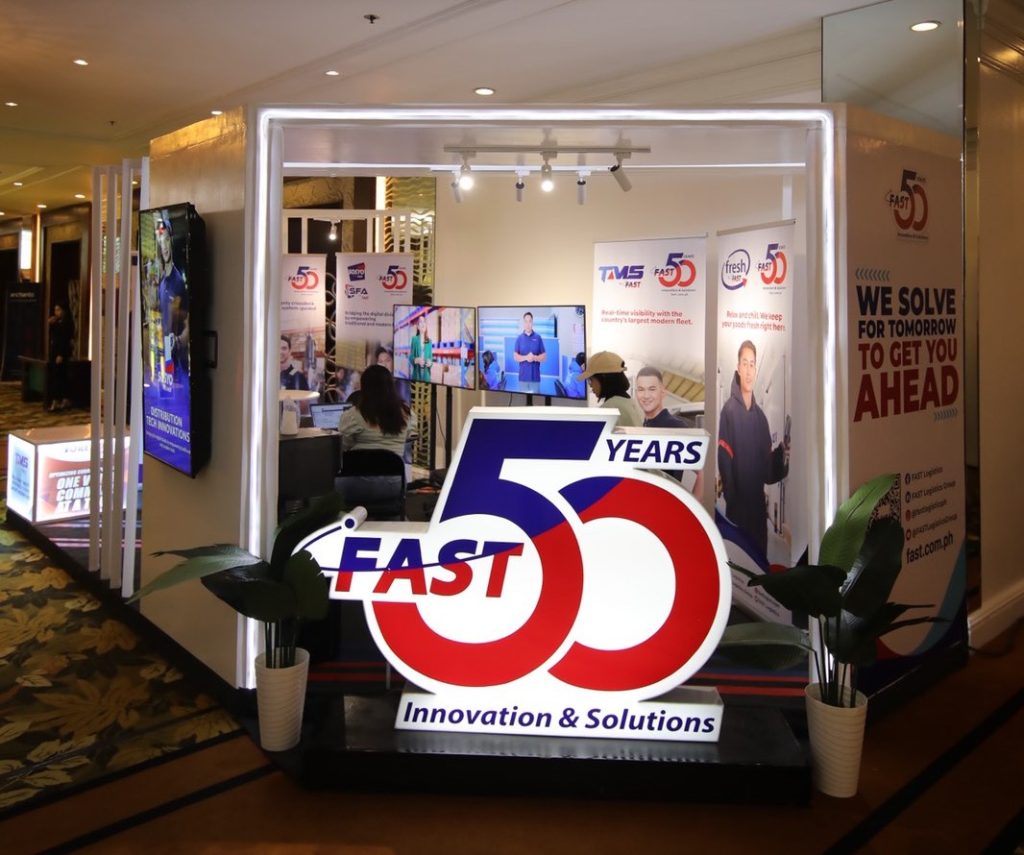
FAST Logistics Group Joins the 2023 SCMAP Supply Chain Conference, Launch of the Link: The Philippine Supply Chain Blockchain Community
FAST Logistics Group made an impact at the SCC2023 with an engaging booth setup and the MoA signing of the Philippine Supply Chain Blockchain Community with CEO of Logistics, Mr. Manuel L. Onrejas Jr., as one of its foun...
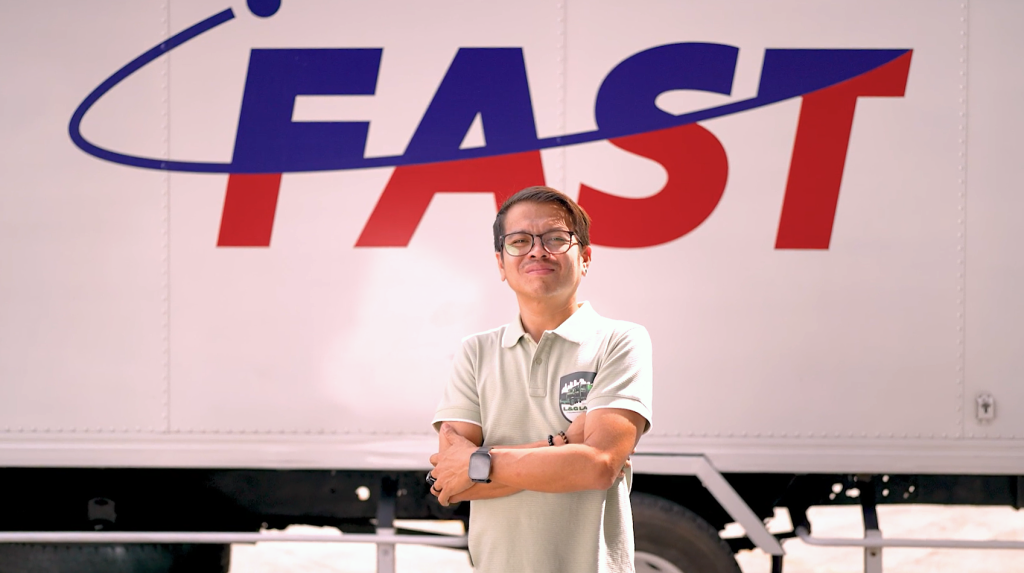
From One Truck to Fourteen: How a Truck Owner Scaled His Business in Just Two Years
Starting and growing a trucking business is no easy feat. It requires a steady flow of trips and clients to ensure continuous cash flow—covering fuel, toll fees, driver and helper salaries, and regular vehicle maintena...
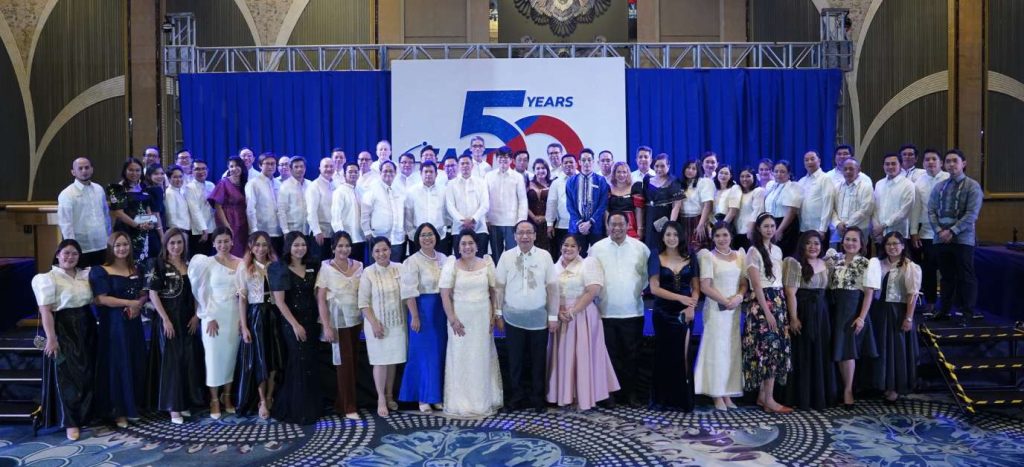
Celebrating Collaborations: FAST Logistics’ 50th Anniversary Event Honors Industry Partners
FAST Logistics’ 50th anniversary event, Celebrating Collaborations, brought together industry leaders to recognize the outstanding achievements and transformative impact of collaboration and innovation. FAST Logistics ...

With over 40 years' experience, Fast Group operates an extensive network of transport, warehousing, distribution, and logistics solutions covering inland, air, and sea forwarding and courier services across the 7,641 Philippines islands to help our customers reach the furthest regions of the country.