
As food businesses navigate rising logistics costs and supply chain disruptions, transport and logistics partners are taking on a more strategic role in keeping essential products and perishable moving safely and more efficiently.
FAST Logistics Group, the Philippines’ leading provider of integrated end-to-end logistics solutions, underscored how third-party logistics (3PL) companies and transport players play a key role in building resilient food supply chain.
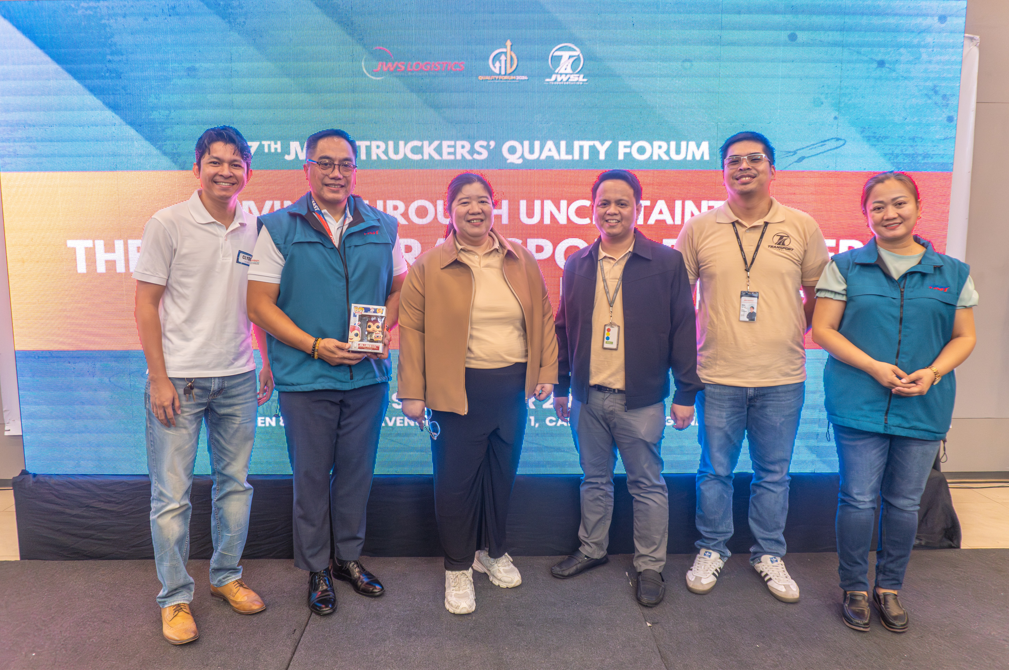
FAST Business Unit Head for Cold Chain Operations Marc Anthony Dizon spoke at the 7th JWSL Annual Truckers’ Quality Forum in Calamba, Laguna held Thursday, September 24, which gathered truck owners and logistics operators, with the theme, “Driving Through Uncertainty: The Role of Transport Partners in Supply Chain Resiliency.”
Speaking before trucking owners and logistics operators, Marc emphasized that transport providers can no longer be viewed simply as companies that move products from one point to another. Instead, they must help businesses adapt to changing conditions across the supply chain.
“Our role as a 3PL is more than just moving products. Our duty is to move products efficiently and be reliable to help food businesses respond to uncertainty,” he said.
As the Philippines’ largest integrated 3PL provider, FAST offers end-to-end supply chain solutions covering 3PL services or contract logistics, multimodal transport, warehousing, cold chain, cross-docking or direct-to-store deliveries, and toll manufacturing or other value-added services.
Moving from Reactive to Adaptive Logistics
Marc noted that food supply chains face a unique combination of challenges, including time-sensitive deliveries, product quality and safety requirements, temperature-controlled storage and transport, strict retailer delivery windows, fluctuating demand, and nationwide distribution requirements.
These challenges are further compounded by increasing fuel, labor, equipment, and maintenance costs, as well as disruptions caused by severe weather and other unforeseen events.
To address these challenges, Marc said FAST is shifting its approach from reactive logistics to adaptive logistics — using technology, operational flexibility, data, and investments in people development to respond to changing supply chain conditions.
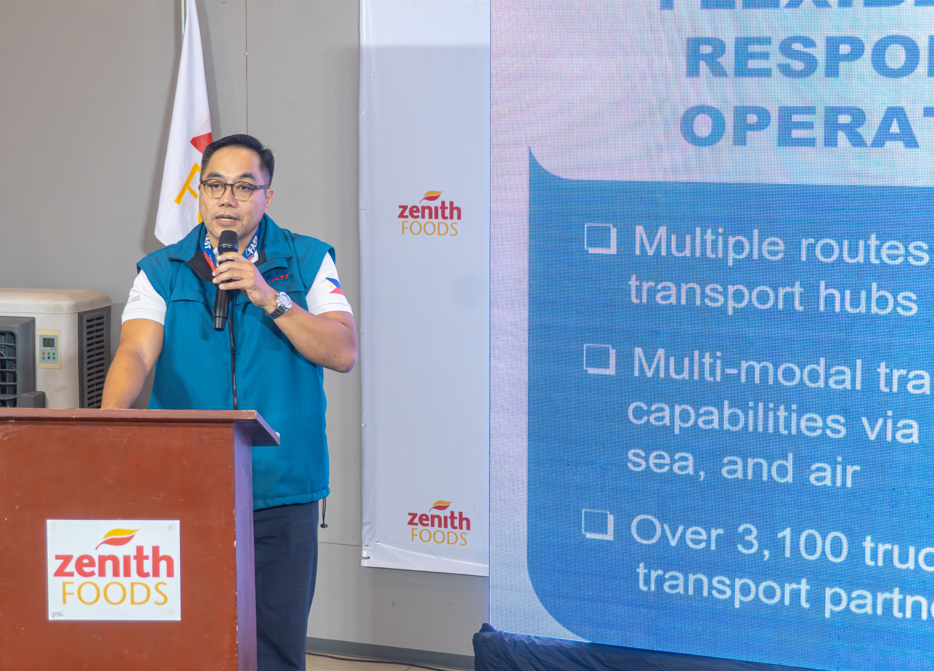
Among FAST’s capabilities supporting this approach is its Transport Management System (TMS) powered by global tech FarEye, which is used for transport planning and dispatch, route optimization, and truckload utilization. Through a centralized control tower, FAST gains operational visibility across its fleet of more than 3,100 trucks operating nationwide.
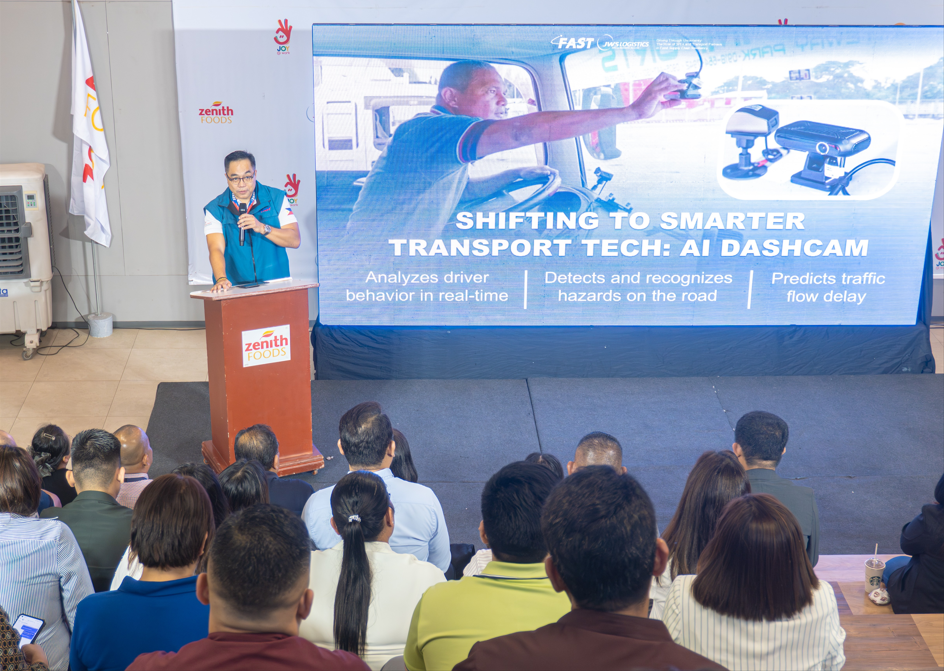
FAST also uses AI-powered dashcams across its fleet to strengthen road safety and operational visibility.
The technology can detect driver behaviors such as distraction and signs of drowsiness and automatically generate alerts for appropriate intervention. It can also identify road hazards and provide information that can help operations teams anticipate potential traffic conditions and delays.
For food and other time-sensitive cargo, these technologies provide an added layer of visibility and control, helping logistics teams respond quickly to potential disruptions.
“We are using our innovations, mindset, and capabilities to help food businesses overcome challenges and build a more resilient food supply chain,” Marc said.
Strengthening Cold Chain Resilience
Marc also underscored the importance of temperature-controlled logistics in maintaining the quality and safety of food products throughout the supply chain.
FAST’s cold chain capabilities include frozen, chilled, and ambient storage, refrigerated transport, and value-added services such as blast freezing, meat processing, packaging, and dry warehousing.
The company operates its ColdChain Hub in Cavite with more than 13,000 pallet positions and its ColdChain Hub in Cebu with more than 11,000 pallet positions. The facilities use refrigeration systems and temperature sensors, with temperatures monitored in real time through dedicated control centers.
FAST’s temperature-controlled trucks or reefer vans are also connected to its TMS, enabling operations teams to track vehicles and cargo even during disruptions such as flooding.
According to Marc, this visibility allows logistics teams to identify affected areas, advise drivers on alternative routes, and make operational adjustments to help protect temperature-sensitive products.
“With one reliable cold chain partner managing multiple stages of the supply chain, food businesses can reduce spoilage, protect product quality, and keep products consistently available where customers need them,” he said.
Beyond technology and specialized capabilities, Marc highlighted the importance of having multiple transport options when disruptions affect specific routes or modes.
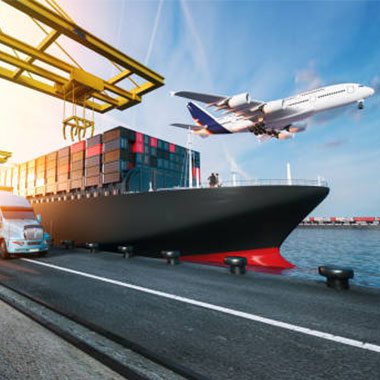
FAST leverages multimodal capabilities covering land, roll-on/roll-off (RoRo), sea, and air transport, supported by more than 3,100 trucks and a nationwide network of transport partners.
This enables logistics teams to explore alternative routes and modes when disruptions affect normal operations.
FAST’s nationwide footprint also allows it to support businesses across 94% of the Philippines, backed by approximately 13,000 employees across the country.
People Development, Trucker Support Programs for Resilience
While technology and infrastructure are critical, Marc stressed that people remain central to building resilient supply chains. FAST invests in driver capability development, customer communication, and safety programs to strengthen the people responsible for keeping products moving.
“The business of logistics in the Philippines still revolves around managing resources and manpower,” Marc said. “It is very important for us to invest in the people who keep the supply chain moving every day.”
Marc then highlighted the role of FAST’s support programs to its partner truckers, who comprise a significant portion of the company’s transport network.
Among FAST’s initiatives are lock-in arrangements, which provide participating truck owners and operators with guaranteed monthly earnings based on truck type and regional assignments.
FAST also offers a dry lease option, where FAST leases trucks and assumes operational costs such as fuel, toll, labor, repair, and maintenance.
Through these programs, FAST aims to provide transport partners with opportunities for more predictable income while strengthening the capacity and reliability of its overall transport network.
For Marc, stronger collaboration among logistics providers, transport operators, drivers, customers, and other supply chain stakeholders is essential to maintaining the flow of food and other essential products.
“Food supply chain resiliency doesn’t happen by accident. It is built through best practices, innovation, and collaboration,” he said.
With over 50 years of industry leadership, FAST Logistics Group is the Philippines’ largest integrated end-to-end logistics solutions provider, supporting businesses of all sizes across industries, including food and beverage. Connect with our Solutions Experts to learn more
Categories
-
FAST Ahead
Includes case studies and testimonials of our partners as well as other featurettes from industry experts
-

FAST Hacks
We simplify logistics terms and provide practical tips and solutions for the DIY in you
-

FAST Highlights
Know more about our history, various brands, achievements, and news updates
-

FAST Moments
Get to know the people of FAST, our employee programs, as well as our various ways of giving back to the community
-
FAST Solutions
Learn more about the various logistics solutions that we cater to and offer our clients, as well as tech innovations, and service facilities
Related Stories
How to Prepare Your Supply Chain for Typhoons: 8 Critical Steps
Philippine businesses must prepare their supply chains long before weather alerts are raised. With more than 20 typhoons entering the country each year, enterprises need proactive strategies to ensure their products rema...

3 FAST Executives Named Members of DTI Supply Chain and Logistics Guild
Three executives from FAST Logistics Group, a leading end-to-end logistics solutions provider in the Philippines, have been named members of the Department of Trade and Industry’s (DTI) Supply Chain and Logistics Guild...

Fostering Excellence – FAST Champions Young Talent in Table Tennis
An industry leader committed to promoting excellence and innovation, FAST Logistics Group is supporting local sports by sponsoring a promising student-athlete. FAST Logistics Group, the leading end-to-end logistics and d...

FAST Logistics Group is the leading end-to-end logistics and supply chain solutions provider in the Philippines. With over 50 years of industry leadership, we offer a comprehensive suite of services including multi-modal transportation, warehousing, cross-docking, cold chain, and toll manufacturing solutions.
© Copyright 2026 FAST Logistics